Professor Brian Cox journeys across the vastness of time and space revealing epic moments of sheer drama that changed the universe forever. The series begins this epic exploration of the cosmos with a hymn to the great luminous bodies that bring light and warmth to the universe: the stars. It is estimated that there are two hundred trillion stars in the universe, each playing their part in an epic story of creation- a great saga that stretches from the dawn of time, with the arrival of the first star, through diverse generations until the arrival of our own star, the sun, and a civilization that has grown up in its light.
This episodes the nature of the cosmos on the micro and atomic scales, using the Ship of the Imagination to explore these realms. Tyson describes some of the micro-organism that live within a dew drop, demonstrating parameciums and tardigrades. He proceeds to discuss how plants use photosynthesis via their chloroplasts to convert sunlight into chemical reactions that convert carbon dioxide and water into oxygen and energy-rich sugars. Tyson then discusses the nature of molecules and atoms and how they relate to the evolution of species. He uses the example set forth by Charles Darwin postulating the existence of the long-tongued Morgan's sphinx moth based on the nature of the comet orchid with pollen far within the flower. He further demonstrates that scents from flowers are used to trigger olfactory centers in the brain, stimulating the mind to threats as to aid in the survival of the species. Tyson narrates how Greek philosophers Thales and Democritus postulated that all matter was made up of combinations of atoms in a large number of configurations, and describes how carbon forms the basic building block for life on earth due to its unique chemical nature. Tyson explains on the basic atomic structure of protons, neutrons, and electrons, and the nature of nuclear fusion that occurs in most stars. He then discusses the existence of neutrinos that are created by these nuclear processes in stars, and that detecting such sub-atomic particles which normally pass through matter require subterranean facilities like the Super-Kamiokande that were used to detect neutrinos from the supernova SN 1987A in the Large Magellanic Cloud before light from the explosion were observed due to their ability to pass through matter of the dying sun. Tyson compares how neutrinos were postulated by Wolfgang Pauli to account for the conservation of energy from nuclear reactions in the same manner as Darwin's postulate on the long-tongued moth. Tyson concludes by noting that there are neutrinos from the Big Bang still existing in the universe but due to the nature of light, there is a "wall of infinity" that cannot be observed beyond.
The final part examines political revolution and how art was at the forefront of throwing out 1,000 years of royal rule, from its earliest revolutionary days of enthusiasm and optimism when painting died, the poster was king and the machine-made triumphed over the handmade to the dead hand of Socialist Realism. Andrew roots out great portraits of Stalin now hidden in museum storerooms and never on public view, looks at the transformation of the Moscow metro into a great public art gallery and visits the most stunning creation of post-war Communist rule, the Space Monument. Finally, he comes to the confusion and chaos of Russia today and how it is producing some of the world's strangest art - from heroic sculptures of Russian leader Vladimir Putin to the insides of a giant erotic apple; from the recreation of the Imperial royal family facing the firing squad to sculpture in liquid oil; from Russia's embrace of the commercial art market to a return to Socialist Realism. Russia seems to stand on another brink of revolution.
Scientists investigate the way the Sun builds its power -- through fusion -- hoping to find a way to use fusion as a less dangerous and less radioactive waste-producing path to energy than fission. But there are some major difficulties along the way. Fusion really is the perfect way to make energy. We have millions of years worth of fuel. It produces no long-lived radioactive waste. If we can solve the engineering challenges, energy will become cheaper, more available for everybody.
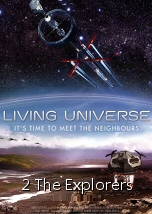
A look at the probes which explored our Solar System, laying the groundwork for a future spacecraft to search for life on a second Earth. That space craft must communicate, it must navigate, it must have power, it must have propulsion. We will have to give it all the intelligence necessary to make its own decisions. In 'The Explorers' the spacecraft Artemis initiates launch sequence and begins its 4.7 light year journey to Minerva B - an Earth-like exoplanet.
Over the last years, the world has experienced an energy revolution, driven by an urgent need to green the grid and save life on Earth as we know it. 50 years ago, a devastating oil crisis kicked off an energy revolution. The world set course to cut the costly habit of burning fossil fuels. With the urgent new threat of a changing climate, the drive to unleash the power of the sun, earth and wind has accelerated into a race for humanity's survival. Change is taken place but, is it happening fast enough to secure our future? Technologies are right here, right now, and they will enable the transition to 100% renewables, because winning the energy race means a win for the entire world.




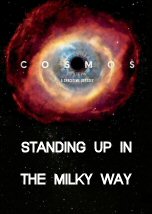






The series begins this epic exploration of the cosmos with a hymn to the great luminous bodies that bring light and warmth to the universe: the stars. It is estimated that there are two hundred trillion stars in the universe, each playing their part in an epic story of creation- a great saga that stretches from the dawn of time, with the arrival of the first star, through diverse generations until the arrival of our own star, the sun, and a civilization that has grown up in its light.