




Last Watched

"God"  Sort by

When Knowledge Conquered Fear

   2014    Science
The episode begins with Tyson describing how pattern recognition manifested in early civilization as using astronomy and astrology to predict the passing of the seasons, including how the passage of a comet was often taken as an omen. Tyson continues to explain that the origin of comets only became known in the 20th century due to the work of Jan Oort and his hypothesis of the Oort cloud. Tyson then continues to relate the collaboration between Edmond Halley and Isaac Newton in the last part of the 17th century in Cambridge. The collaboration would result in the publication of Philosophiæ Naturalis Principia Mathematica, the first major work to describe the laws of physics in mathematical terms, despite objections and claims of plagiarism from Robert Hooke and financial difficulties of the Royal Society of London. Tyson explains how this work challenged the prevailing notion that God had planned out the heavens, but would end up influencing many factors of modern life, including space flight. Tyson further describes Halley's contributions including determining Earth's distance to the sun, the motion of stars and predicting the orbit of then-unnamed Halley's Comet using Newton's laws. Tyson contrasts these scientific approaches to understanding the galaxy compared to what earlier civilizations had done, and considers this advancement as mankind's first steps into exploring the universe. The episode ends with an animation of the Milky Way and Andromeda galaxies' merging based on the principles of Newton's laws.
Series: Cosmos: A Spacetime Odyssey
Blues for a Red Planet

   1980    Science
The episode, devoted to the planet Mars, begins with scientific and fictional speculation about the Red Planet during the late nineteenth and early twentieth centuries (H. G. Wells' The War of the Worlds, Edgar Rice Burroughs' science fiction books, and Percival Lowell's false vision of canals on Mars). It then moves to Robert Goddard's early experiments in rocket-building, inspired by reading science fiction, and the work by Mars probes, including the Viking, searching for life on Mars. The episode ends with the possibility of the terraforming and colonization of Mars and a Cosmos Update on the relevance of Mars' environment to Earth's and the possibility of a manned mission to Mars.
Series: Cosmos

Age of Empire

   2012    History
Andrew Marr tells the story of the first empires which laid the foundations for the modern world. From the Assyrians to Alexander the Great, conquerors rampaged across the Middle East and vicious wars were fought all the way from China to the Mediterranean. But this time of chaos and destruction also brought enormous progress and inspired human development. In the Middle East, the Phoenicians invented the alphabet, and one of the most powerful ideas in world history emerged: the belief in just one God. In India, the Buddha offered a radical alternative to empire building - a way of living that had no place for violence or hierarchy and was open to everyone. Great thinkers from Socrates to Confucius proposed new ideas about how to rule more wisely and live in a better society. And in Greece, democracy was born - the greatest political experiment of all. But within just a few years, its future would be under threat from invasion by an empire in the east...
Series: History of the World

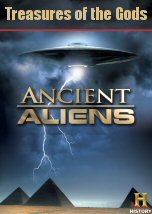
Treasures of the Gods

   2014    Culture
Researchers discuss mythic ancient treasure and curses including King Solomon's Ring, lost Aztec treasure, and the Omphalos.
Series: Ancient Aliens

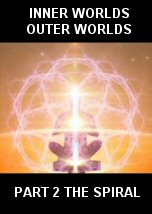
The Spiral

   2012    Science
The Pythagorian philosopher Plato hinted enigmatically that there was a golden key that unified all of the mysteries of the universe. It is this golden key that we will return to time and again throughout our exploration. The golden key is the intelligence of the logos, the source of the primordial om. One could say that it is the mind of God. With our limited senses we are observing only the outer manifestation of the hidden mechanics of self similarity. The source of this divine symmetry is the greatest mystery of our existence.
Series: Inner Worlds Outer Worlds

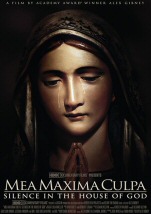
Mea Maxima Culpa: Silence in the House of God

   2012    Culture
Alex Gibney explores the charged issue of pedophilia in the Catholic Church, following a trail from the first known protest against clerical sexual abuse in the United States and all the way to the Vatican. The title is derived from the Latin phrase "mea maxima culpa". It is taken from the Confiteor that is part of the Roman Catholic Mass. It translates into English as "My most grievous fault" The film examines the abuse of power in the Catholic Church system through the story of four deaf men who set out to expose the priest who abused them during the mid-1960s. Each of the men brought forth the first known case of public protest against clerical sex abuse, which later lead to the sex scandal case known as the Lawrence Murphy case. Through their case the film follows a cover-up that winds its way from the row houses of Milwaukee, Wisconsin, through Ireland's churches, all the way to the highest office of the Vatican.
Monsters of God

Monsters of God

2026  Culture
Leaving Neverland

Leaving Neverland

2019  Culture
Chimp Empire

Chimp Empire

2023  Nature
The Universe

The Universe

2011  Science
Clarkson Farm

Clarkson Farm

2021  Nature