Professor Brian Cox tackles some of the most challenging and intriguing questions facing science. He looks back on a decade of discovery and towards the next space frontier. Brian believes we are at the start of a new age of space travel, where space flight is on the verge of becoming routine. In this episode, he explores the latest science and takes a new look at his old films and asks: how far can we go in our exploration of the cosmos?
The Sky at Night looks back at the last ten years of astronomy and ponders the most significant milestones and revelations. With the help of six distinguished astronomers, Chris and Maggie consider the state of astronomy in 2020 and wonder what new, exciting discoveries await us across the rest of the decade, as a host of new ground and space telescopes come online. Astronomer Royal Lord Martin Rees is among the guests to walk along the Astronomical Wall of Discovery in this one-hour special.
Astronomers are giving us astonishing news, visual proof of the reality of black holes. Stunning new findings are overturning conventional theories. The most common vision of black holes is that they are monstrous and mysterious bodies swallowing everything around them. However, the latest discoveries are drawing a link between black holes and the existence of life. A startling new picture is emerging. The existence of black holes is what made life on Earth possible.
Recently, the Event Horizon Telescope project captured the first image ever of a black hole. Now, new discoveries might finally reveal how supermassive black holes are made, and using the latest technology, experts are on the verge of understanding how these monsters grow and how they affect life on our planet. Supermassive black holes: Gargantuan monsters that lurk at the center of galaxies. Right now you are travelling at half a million miles an hour around a giant black hole four million times the mass of the sun. But there's a mystery about these colossal beasts. We have no idea where they came from. How did they get so big so quickly?
New technologies are making rockets cheaper and more powerful than ever before. As companies like SpaceX and Virgin Galactic make space more accessible, and NASA returns to crewed spaceflight, a new era of space exploration may be on the horizon.
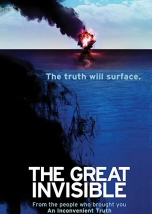
On April 20, 2010, the Deepwater Horizon oil rig exploded in the Gulf of Mexico. It killed 11 workers and caused the worst oil spill in American history. The explosion still haunts the lives of those most intimately affected, though the story has long ago faded from the front page. At once a fascinating corporate thriller, a heartbreaking human drama and a peek inside the walls of the secretive oil industry, 'The Great Invisible' is the first documentary feature to go beyond the media coverage to examine the crisis in depth through the eyes of oil executives, survivors and Gulf Coast residents who experienced it first-hand and then were left to pick up the pieces while the world moved on.









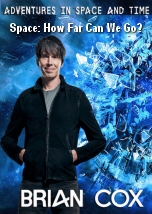


Brian believes we are at the start of a new age of space travel, where space flight is on the verge of becoming routine. In this episode, he explores the latest science and takes a new look at his old films and asks: how far can we go in our exploration of the cosmos?