This illuminating ten-part series tells the story of World War ll through the ten most pivotal turning points in the conflict. Gripping story-telling illustrated with exquisitely restored and colourised archived films and supported by a global cast of stellar historians bring this crucially important era in history to life. In the first chapter, Britain and France declare war when Hitler invades Poland. In May 1940 the Germans attack Holland and Belgium as a decoy. As the Wehrmacht comes through the Ardennes and the Luftwaffe strikes in force, French leaders are caught like rabbits in headlights. The Germans are on a drug called Pervitin, which beats off fatigue, and reach the Atlantic coast. There is a danger that the Germans will encircle the Allies and cut them off from the sea. But Hitler issues his Halt Order and some 340,000 Allies are evacuated.
In part two, Professor Al-Khalili looks at the 19th century chemists who struggled to impose an order on the apparently random world of the elements. From working out how many there were to discovering their unique relationships with each other, the early scientists' bid to decode the hidden order of the elements was driven by false starts and bitter disputes. But ultimately the quest would lead to one of chemistry's most beautiful intellectual creations - the periodic table.
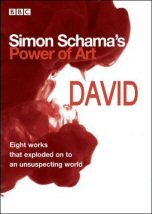
Painting became an important means of communication for David since his face was slashed during a sword fight and his speech became impeded by a benign tumour that developed from the wound, leading him to stammer. He was interested in painting in a new classical style that departed from the frivolity of the Rococo period and reflected the moral and austere climate before the French Revolution. David became closely aligned with the republican government and his work was increasingly used as propaganda with the Death of Marat proving his most controversial work.
In the 1960s and 1970s a generation of Mexican Americans, frustrated by persistent discrimination and poverty, find a new way forward, through social action and the building of a new "Chicano" identity. The movement is ignited when farm workers in the fields of California, led by Cesar Chavez and Dolores Huerta, march on Sacramento for equal pay and humane working conditions. Through plays, poetry and film, Luis Valdez and activist Corky Gonzalez create a new appreciation of the long history of Mexicans in the South West and the Mestizo roots of Mexican Americans. In Los Angeles, Sal Castro, a schoolteacher, leads the largest high school student walkout in American history, demanding that Chicano students be given the same educational opportunities as Anglos. In Texas, activists such as Jose Angel Gutierrez, create a new political party and change the rules of the electoral game. By the end of the 1970s Chicanos activism and identity have transformed what it means to be an American. Chicano and Latino studies are incorporated into school curriculum; Latinos are included in the political process.
This episode provides an overview of the nature of electromagnetism, as discovered through the work of Michael Faraday. Tyson explains how the idea of another force of nature, similar to gravitational forces, had been postulated by Isaac Newton before. Tyson continues on Faraday, coming from poor beginnings, would end up becoming interested in studying electricity after reading books and seeing lectures by Humphry Davy at the Royal Institution. Davy would hire Faraday after seeing extensive notes he had taken to act as his secretary and lab assistant. After Davy and chemist William Hyde Wollaston unsuccessfully tried to build on Hans Christian Ørsted's discovery of the electromagnetic phenomena to harness the ability to create motion from electricity, Faraday was able to create his own device to create the first electric motor by applying electricity aligned along a magnet. Davy, bitter over Faraday's breakthrough, put Faraday on the task of improving the quality of high-quality optical glass, preventing Faraday from continuing his research. Faraday, undeterred, continued to work in the Royal Institution, and created the Christmas Lectures designed to teach science to children. Following Davy's death, Faraday returned to full time efforts studying electromagnetism, creating the first electrical generator by inserting a magnet in a coil of wires.
Tyson continues to note that despite losing some of his mental capacity, Faraday concluded that electricity and magnetism were connected by unseen fields, and postulated that light may also be tied to these forces. Using a sample of the optical glass that Davy had him make, Faraday discovered that an applied magnetic field could affect the polarization of light passing through the glass sample (a dielectric material), leading to what is called the Faraday effect and connecting these three forces. Faraday postulated that these fields existed across the planet, which would later by called Earth's magnetic field generated by the rotating molten iron inner core, as well as the phenomena that caused the planets to rotate around the sun. Faraday's work was initially rejected by the scientific community due to his lack of mathematical support, but James Clerk Maxwell would later come to rework Faraday's theories into the Maxwell's equations that validated Faraday's theories. Their combined efforts created the basis of science that drives the principles of modern communications today.
This episode explores the nature of the greenhouse effect (discovered by Joseph Fourier and Svante Arrhenius), and the evidence demonstrating the existence of global warming from humanity's influence. Tyson begins by describing the long-term history of the planet Venus; based on readings from the Venera series of probes to the planet, the planet had once had an ocean and an atmosphere, but due to the release of carbon dioxide from volcanic eruptions, the runaway greenhouse effect on Venus caused the surface temperatures to increase and boiled away the oceans. Tyson then notes the delicate nature of the amount of carbon dioxide in the atmosphere can influence Earth's climate due to the greenhouse effect, and that levels of carbon dioxide have been increasing since the start of the 20th century. Evidence has shown this to be from mankind's consumption of oil, coal, and gas instead of from volcanic eruptions due to the isotopic signature of the carbon dioxide. The increase in carbon dioxide has led to an increase in temperatures, in turn leading to positive feedback loops of the melting polar ice caps and dethawing of the permafrost to increase carbon dioxide levels. Tyson then notes that humans have discovered means of harvesting solar power, such as Augustin Mouchot's solar-driven motor in the 19th century, and Frank Shuman's solar-based steam generator in the 1910's. Tyson points out that in both cases, the economics and ease of using cheap coal and oil caused these inventions to be overlooked at the time. Today, solar and wind-power systems would be able to collect enough solar energy from the sun easily. Tyson then compares the motivation for switching to these cleaner forms of energy to the efforts of the Space race and emphasizes that it is not too late for humanity to correct its course.







In the first chapter, Britain and France declare war when Hitler invades Poland. In May 1940 the Germans attack Holland and Belgium as a decoy. As the Wehrmacht comes through the Ardennes and the Luftwaffe strikes in force, French leaders are caught like rabbits in headlights. The Germans are on a drug called Pervitin, which beats off fatigue, and reach the Atlantic coast. There is a danger that the Germans will encircle the Allies and cut them off from the sea. But Hitler issues his Halt Order and some 340,000 Allies are evacuated.