












Last Watched

"Learning"  Sort by

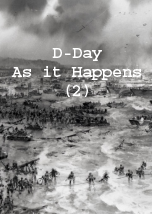
D-Day: As it Happens (2)

   2013    History
D-Day: As It Happens is a 24-hour history event to be broadcast across TV, web, mobile devices and social media, telling the story of this pivotal event in 20th-century history in a completely new way. Using newly-analysed archive footage, viewers can track the progress of seven people who were there on the day, each of them a real participant in the 1944 invasion. And they can do so moment by moment in real time, encountering the twists and turns of the fighting at the same time as the D-Day seven did, and learning their fate as the action unfolds in parallel with the present, Narrated by Peter Snow, with Channel 4 presenter and former marine Arthur Williams, and experts including former British Army officer Colonel Tim Collins and front-line journalist Lorna Ward. The second programme reveals what happened to the seven real people the event is following in real time, and also rounds up the events of D-Day.
Series: D-Day
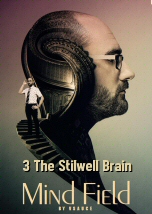
The Stilwell Brain

   2019    Medicine
A single microscopic brain cell cannot think, is not conscious, but if you bring in a few more brain cells, and a few more, and connect them all, at a certain point, the group itself will be able to think and experience emotions and have opinions and a personality and know that it exists. How can such astonishing things be made from such simple ingredients? Well, answering that question means learning not only who we are but, more importantly, how we are.
Today, using what neuroscientists know so far, we are going to make a town function like a brain, using people as neurons.
Series: Mind Field

The Promise

   2019    Technology
More than 90% of all crashes have a human driver as the cause. So if you want to solve traffic fatalities, the best solution is driverless vehicles. It's an ambitious goal, but only possible because of the recent breakthroughs in deep learning. Artificial intelligence is one of those key pieces that has made it possible now to do driverless cars where it wasn't possible ten years ago. For computers, until very, very recently, to do even the most basic visual tasks, like seeing a picture of a person and knowing that it's a person was remarkably hard. That's obviously fundamental to being able to understand the world around you with the sensors that you have. And we've made also gigantic strides in being able to perform complex tasks.
Series: In the Age of AI

The Future of Work

   2019    Technology
A.I. can be used in many ways that are very beneficial for society. But the current use of A.I. isn't necessarily aligned with the goals of building a better society, unfortunately. But, but we could change that. A.I. will be viewed as an age of enlightenment. Our children and their children will see A.I. as serendipity, that A.I. is here to liberate us from having to do routine jobs, and push us to do what we love, and push us to think what it means to be human. But what if humans mishandle this new power?
Series: In the Age of AI

Love a Bot

   2017    Technology
Here's a growing trend in artificial intelligence. Dating video games and other applications let users carry on virtual relationships with computerized girlfriends ranging from career women to Japanese schoolgirls. There's even something for the ladies. How soon will there be artificial intelligence of such complexity that protecting its well-being and rights becomes a serious political and social concern? In what year will there be an app or computer program or a device that you not only love but that possibly, within the realm of believability might actually love you ...back?
Series: Mind Field Season 1

The Surveillance Capitalists

   2019    Technology
Everywhere you go, you generate a cloud of data. You're trailing data, everything that you do is producing data. And then there are computers looking at that data that are learning, and these computers are essentially trying to serve you better. They're trying to personalize things to you. They're trying to adapt the world to you. So on the one hand, this is great, because the world will get adapted to you without you even having to explicitly adapt it. There's also a danger, because the entities in the companies that are in control of those algorithms don't necessarily have the same goals as you, and this is where I think people need to be aware that, what's going on, so they can have more control over it.
We came into this new world thinking that we were users of social media and search engines. It didn't occur to us that social media and search engines were actually using us.
Series: In the Age of AI