In this captivating film hosted by Anderson Cooper, viewers are presented with an insightful exploration of artificial intelligence (AI), its profound implications, and the ethical dilemmas it poses. The documentary begins with a startling revelation: what appeared to be Anderson Cooper was actually an AI-generated version, raising questions about the authenticity of what we see and hear. The narrative then shifts to broader concerns about AI replacing human roles across industries and its capability to outperform humans in tasks ranging from driving to creating art. Viewers are taken on a journey through various facets of AI, from the streets of San Francisco, where robot taxis hint at a future dominated by AI, to the insights of Yoshua Bengio, a pioneer in deep learning. The film also addresses the darker side of AI, including the potential for misuse and the challenges in distinguishing between reality and AI-generated content. The climax of the documentary presents a critical question: Can AI save humanity, or does it pose a threat to our existence? This thought-provoking exploration of AI's impact on our world is a must-watch for anyone curious about technology and its intersection with human life.
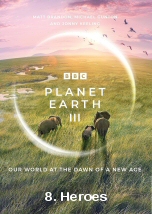
In this captivating final episode of the series we meet some incredible conservation champions on nature's front line, fighting to preserve the future of our beautiful planet. The episode opens with a dramatic rescue operation for the critically endangered black rhino, showcasing the efforts of Dumi Zwane and his team to establish a new breeding colony in a safe haven. The focus then shifts to the Centro Jambatu research center in the Andes, where Jaime Culebras works tirelessly to save the last of certain frog species. The documentary also highlights the efforts of Trang Nguyen, who bravely infiltrates the illegal wildlife trade in West Africa to protect forest elephants from ivory poachers. Meanwhile, in Vienna, Katharina Huchler undertakes a remarkable journey to reintroduce the northern bald ibis to Europe after its extinction 400 years ago. Indigenous leader Alessandra Korap's battle to preserve the Amazon rainforest from exploitation is a key focus, alongside Mohamed Nasheed's fight against climate change to save coral reefs and his country. This episode addresses the broader issue of habitat destruction, emphasizing its role as a primary driver of extinction. It poignantly demonstrates the interconnectivity of life on Earth and the critical importance of conservation efforts.
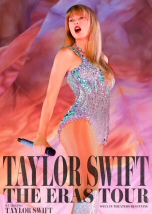
‘Taylor Swift The Eras Tour’ transcends a mere concert film, emerging as a cultural phenomenon on the big screen. It offers a once-in-a-lifetime, immersive experience, showcasing the history-making tour of Taylor Swift, one of the most iconic artists of our era. The film spans her entire career, from early country roots to the latest pop anthems, capturing the evolution of her music and the unique themes of each era with stunning cinematic quality. The visuals and sound design are crafted to create a breathtaking and intimate concert experience, highlighting the energy of Swift and her connection with the audience. This film is not only a celebration of Swift's musical journey but also a testament to her lasting impact on pop culture. It's a masterful blend of concert energy, personal storytelling, and cinematic splendor, making it an essential experience for anyone interested in witnessing the evolution of a music icon and the creation of a cultural milestone.
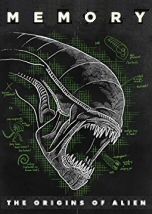
An in-depth voyage into the sci-fi film 'Alien' with the visionary filmmakers who created it. See how one of the most terrifying movies of all time came to life 40 years ago and the untold origin story behind Ridley Scott's movie. It was rooted in Greek and Egyptian mythologies and in our universal fears, and the history was inspired
by underground comics, the art of Francis Bacon, and the dark visions of Dan O'Bannon and H.R. Giger. The documentary is a contemplation on the symbiotic collaborative process of movie-making, the power of myth, and our collective unconscious.
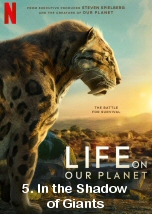
The fifth episode of the series is a fascinating exploration of the dinosaur era and its impact on the evolution of life on Earth. Through a journey of 200 million years, we discover how the breakup of Pangea and tectonic changes shaped biodiversity and created environments for dinosaurs and other forms of life to flourish. From the majestic Diplodocus to the formidable Allosaurus, the documentary brings to life the giants that once dominated our planet. Additionally, it shows the evolution of plants, highlighting the emergence of flowers and their symbiotic relationship with insects, such as termites and ants, whose social and evolutionary dynamics are explored in depth. The narrative also addresses the rise of mammals and their coexistence with dinosaurs, highlighting species such as the Numbat and their struggle for survival. With stunning imagery and a captivating narrative, this episode is an invitation to learn, marvel, and reflect on the extraordinary history of life on Earth.
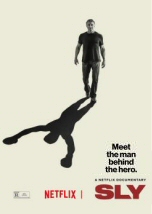
Oscar-nominated actor, screenwriter, director, and producer, Sylvester Stallone has entertained audiences for nearly half a century. This revealing documentary offers an intimate and inspiring glimpse into his life, featuring sincere, previously unreleased interviews and extensive archival footage. It explores his journey from humble beginnings to Hollywood stardom, drawing parallels between his personal underdog story and the legendary characters he's played in blockbuster franchises like 'Rocky', 'Rambo', and 'The Expendables'. This film not only highlights Stallone's remarkable career but also provides a deeper understanding of the man behind the unforgettable roles.










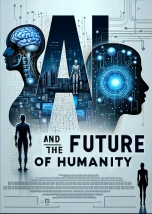


The film also addresses the darker side of AI, including the potential for misuse and the challenges in distinguishing between reality and AI-generated content. The climax of the documentary presents a critical question: Can AI save humanity, or does it pose a threat to our existence? This thought-provoking exploration of AI's impact on our world is a must-watch for anyone curious about technology and its intersection with human life.