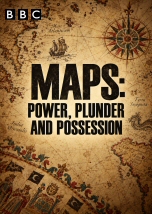
Professor Jerry Brotton reveals that maps are far more than neutral guides to places: they are expressions of the societies that create them and powerful instruments for shaping territory, belief and authority. Beginning with some of the earliest known maps, he traces how cartography evolved from marking land and ownership to serving kings, empires, scientists and governments. From Henry VIII’s coastal surveys and the Cassini family’s scientific breakthroughs to the drawing of modern national borders, the series shows how maps can define who controls land, who belongs where and even how entire peoples understand the world around them. Across the three episodes, presented here together in a single uninterrupted video, the journey moves from ancient and medieval worldviews to imperial expansion and the digital age. Brotton explores religious maps, Aztec symbolism, Victorian attempts to classify societies, the politics behind projections of the globe, and the rise of Google Earth and data-driven mapping. He then follows the mapmakers and explorers who turned distant lands into targets for conquest and profit, from Ptolemy and Columbus to Walter Raleigh and the trading empires that followed. The story ends in the Arctic, where new maps are once again being used to stake claims over oil, gas and minerals, proving that even in the twenty-first century, cartography remains inseparable from power, plunder and possession.
The documentary delves deep into the mysterious and catastrophic collapse of ancient civilizations during the late Bronze Age, as empires from Greece to ancient Egypt were wiped off the map. It explores the various theories and hypotheses that have emerged to explain their sudden downfall, revealing the tumultuous events that brought an end to a once-thriving era of human history. Through invasions, mega-droughts, natural disasters, and rebellions, we discover the complex web of factors that were involved. With stunning visual imagery, expert interviews and immersive storytelling, this film offers a fascinating glimpse into one of the most pivotal and enigmatic periods of human history. And it warns that we could be facing a similar combination of threats today.
Edgar Froese, band leader of Tangerine Dream and pioneer of electronic music, is on a lifelong mission to find the ultimate sound. His constant quest takes him and his fellow band members to worldwide success, all the way to the Hollywood studios in Los Angeles. At his death in January 2015, Edgar Froese leaves a legacy of 48 years of music history. The film shows previously unreleased footage shot by the band leader himself: For the first time, we see the band backstage, on tour in Europe and the US, at photoshoots with Jim Rakete or on holiday at the seaside. Records and interviews with his wife Bianca Froese-Acquaye, with band members, close associates and fellow artists map the unique history of Tangerine Dream: a tribute to the musician Edgar Froese and the era of electronic music.
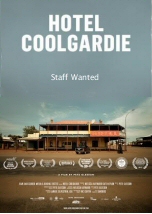
On a dusty highway between Australia's most isolated city and its largest gold pit lies Coolgardie - where the arrival every three months of a new pair of foreign backpackers to work the only bar in town is a keenly anticipated event. Fresh off the plane and lured by the promise of an authentic outback experience, Finnish travellers Lina and Steph find themselves en route to a dot on the map - to pour beers, replenish depleted travel funds, and live amongst the locals. But their working holiday quickly deteriorates into a baptism of fire. Harangued by their new boss, relentlessly pursued by booze-addled patrons, and prey to the madness and malaise of an environment as claustrophobic as it is isolated - the girls soon realise that to meet expectations out here, they'll need to do more than just serve drinks.
The film brings viewers all the amazing news-breaking advances in science in technology from 2021, unfolding around the globe. Shattering barriers and questioning assumptions and turning ideas on their head. Stories that take a leap into the future or follow footprints to the past. Startling discoveries from a prehistoric nursery to a magic bullet that could contain the pandemic. Accomplishments like harnessing a star in a bottle or mapping invisible parts of the universe. Join us for an exclusive hyper-tour from earth to space.
The film challenges many of the commonly held assumptions about our water systems and how people think about water. Its goal is to bust the global sense of impending doom by painting an alternative, optimistic water future and mapping out the ways to get there. The filmmakers believe that even one person with enough knowledge can make a difference and inspire a movement. The film tries to provide that knowledge and to envision a day when everybody has access to clean water and sanitation and in our lifetime. Narrated by Liam Neeson, featuring Matt Damon and Jaden Smith, 'Brave Blue World' paints an optimistic picture of how humanity is adopting new technologies and innovations to re-think how water is managed.















Across the three episodes, presented here together in a single uninterrupted video, the journey moves from ancient and medieval worldviews to imperial expansion and the digital age. Brotton explores religious maps, Aztec symbolism, Victorian attempts to classify societies, the politics behind projections of the globe, and the rise of Google Earth and data-driven mapping. He then follows the mapmakers and explorers who turned distant lands into targets for conquest and profit, from Ptolemy and Columbus to Walter Raleigh and the trading empires that followed. The story ends in the Arctic, where new maps are once again being used to stake claims over oil, gas and minerals, proving that even in the twenty-first century, cartography remains inseparable from power, plunder and possession.