This four-part docuseries traces Mike Tyson’s extraordinary journey from the violent streets of Brooklyn to becoming the youngest heavyweight champion in boxing history. Through Tyson’s own reflections, archival footage and testimony from those closest to him, the series explores the fearsome talent, fame, excess, controversy and personal struggles that made him one of the most compelling and polarizing figures in sport. In the first two episodes of the series, Tyson’s troubled childhood, repeated arrests and life in Brownsville seem to point toward disaster until trainer Cus D’Amato recognizes his potential and transforms his future. Tyson rises with astonishing speed, conquering the heavyweight division and becoming a global superstar, but after D’Amato’s death his life begins to unravel. A turbulent marriage, the influence of promoter Don King, sudden wealth and destructive vices threaten both his career and the discipline that made him champion.
Electric bikes are transforming Britain’s streets, offering a fast and convenient way to travel, but the boom has also brought a growing wave of controversy. The documentary investigates the rise of illegal, high-powered e-bikes capable of speeds far beyond those allowed on public roads, examining dangerous riding, collisions, police seizures and the growing concern of pedestrians and other road users. It also looks at the blurred line between legal pedal-assist bikes and modified machines that behave more like motorbikes, asking whether current laws and enforcement can keep pace with a rapidly changing form of transport. As e-bikes become ever more common, the film explores whether they represent the future of urban mobility or a new threat on Britain’s streets.
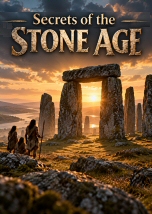
Around 12,000 years ago, humans began one of the most important transformations in history: the shift from hunting and gathering to farming and permanent settlements. Archaeological sites such as Gobekli Tepe reveal how these early communities lived, what they believed and how agriculture transformed diet, population and social life. Across Europe and the Middle East, prehistoric societies also created huge stone monuments, tombs and ceremonial sites, moving blocks weighing many tons with surprisingly limited technology. Presented here with both episodes combined into a single video, the documentary explores the birth of farming, organized communities, belief systems and monumental architecture during the Stone Age.
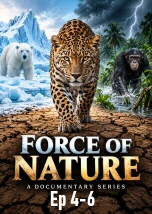
In the final three episodes, the series follows animals being pushed to the edge as melting ice, extreme heat and prolonged drought reshape the environments they depend on. In the Himalayas, a snow leopard is forced from familiar territory, while an Arctic ground squirrel in Alaska undertakes an extraordinary migration and a young Arctic fox in Svalbard faces her first winter alone. These cold-adapted animals must rapidly change behaviours that once worked for generations as their frozen worlds become increasingly unstable. The struggle then shifts to the opposite extreme, where wombats, leopards and kangaroo rats are tested by record heat and worsening drought, pushing their remarkable physical and behavioural adaptations to their limits. In the final episode, attention turns to the people working directly to help wildlife survive these new extremes, revealing rescue efforts, scientific interventions and conservation strategies in some of the planet’s harshest environments. Together, these final chapters show that survival now depends not only on the animals’ ability to adapt, but increasingly on how far humans are willing to go to protect them.
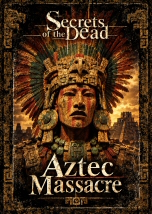
A mass grave at Zultepec, Mexico, containing more than 400 mutilated skeletons forces archaeologists to reconsider one of the most familiar stories of the Spanish conquest. Led by Aztec specialist Elizabeth Baquedano, the investigation follows forensic clues hidden in skulls, bones and artifacts to identify the victims and reconstruct what happened. Some remains prove to be European, including women, while Spanish-made iron objects and evidence of horses link the dead directly to the conquistadors who entered Mexico in the early sixteenth century. The evidence reveals a far more violent confrontation than the traditional image of an easy Spanish victory. Captured Spaniards and members of their entourage appear to have been imprisoned, ritually sacrificed, dismembered and, in some cases, consumed as part of ceremonial practices. By combining archaeology, forensic anthropology and Aztec codices, the documentary shows that indigenous resistance to the conquistadors could be organized, successful and terrifyingly effective, transforming Zultepec into crucial physical evidence of a conflict that history had long oversimplified.
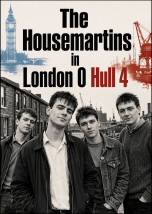
The Housemartins return to Hull during their breakthrough year of 1986 and revisit the places where the band began. Paul Heaton, Stan Cullimore, Norman Cook and Hugh Whitaker talk about forming the group, their sudden success and their determination to remain rooted in ordinary life despite growing fame. The film follows them through Hull, mixes informal conversations with rehearsals and performances, and includes songs such as Happy Hour, Sheep, Think for a Minute and Caravan of Love. The members also speak openly about their socialist views, religion, money and their distrust of the music industry, revealing the ideas behind their deliberately unglamorous image and sharply observant lyrics. Ending with a concert for their home audience, this documentary captures The Housemartins at the moment they were becoming nationally famous while still maintaining the humour, friendship and political convictions that defined the band.











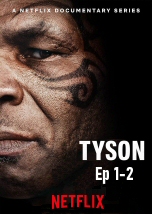

In the first two episodes of the series, Tyson’s troubled childhood, repeated arrests and life in Brownsville seem to point toward disaster until trainer Cus D’Amato recognizes his potential and transforms his future. Tyson rises with astonishing speed, conquering the heavyweight division and becoming a global superstar, but after D’Amato’s death his life begins to unravel. A turbulent marriage, the influence of promoter Don King, sudden wealth and destructive vices threaten both his career and the discipline that made him champion.