In 1914, Ernest Shackleton set out with 27 men aboard the Endurance on one of the boldest expeditions of the Heroic Age of Antarctic exploration: an attempt to cross the frozen continent from the Weddell Sea to the Ross Sea. But before they could even reach land, the ship became trapped in pack ice. Months later, crushed by the pressure, the Endurance was lost, leaving the crew stranded in one of the most hostile environments on Earth with no contact with the outside world. What follows is an extraordinary story of survival, leadership and endurance. Shackleton abandons the original goal and focuses entirely on bringing every man home alive, leading his crew across drifting ice, open ocean and some of the most dangerous seas on the planet. Using Frank Hurley’s remarkable original photographs and film footage, archived voices and letters from expedition members, interviews with their descendants and newly filmed images of the actual locations, the documentary brings this legendary 1914-1916 ordeal vividly back to life.
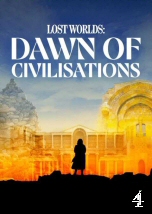
Historian Bettany Hughes journeys across ancient Anatolia, modern-day Türkiye, to uncover some of the earliest foundations of civilisation. From Göbeklitepe and Karahantepe to Sardis, Gordion, Ephesus and Cappadocia, she explores how the first settled communities developed agriculture, religion, trade and urban life, while remarkable discoveries such as early monumental buildings, ancient weapons and life-sized human sculptures reveal a world far more sophisticated than once imagined. Moving through landscapes where myth and history constantly overlap, Hughes follows the rise of kingdoms and empires, encounters the world of King Midas, and traces how Anatolia became a crossroads connecting cultures across continents. Presented here with both episodes combined into a single video, the series offers a sweeping archaeological journey into the places where some of humanity’s most important ideas, beliefs and institutions first began to take shape.
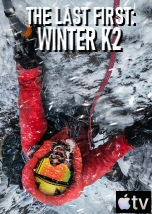
Click CC for subtitles. In the winter of 2021, K2 remained the last great prize of high-altitude mountaineering: the only 8,000-meter peak never climbed in winter. Icelandic climber John Snorri Sigurjónsson and the legendary Pakistani father-and-son team Ali and Sajid Sadpara arrive determined to claim that historic first, facing temperatures far below zero, hurricane-force winds, exhaustion and a mountain already infamous for killing even the strongest climbers. But the expedition soon becomes more than a battle against nature. Commercial teams, influencer climbers, professional film crews and a fiercely ambitious all-Nepalese team converge on the same slopes, turning the ascent into a tense contest of strategy, reputation and national pride. As the climb unfolds, the documentary exposes the changing culture of modern mountaineering: the pressure of social media, the commercialization of the world’s highest peaks, the unequal recognition historically given to Western climbers, and the determination of Nepali and Pakistani mountaineers to claim achievements in their own names. The race for the summit culminates in triumph for one team and tragedy for others, leaving five climbers dead and forcing survivors to confront questions of ambition, responsibility and what a “first” is really worth. Built from extraordinary footage shot during the expedition and testimony from those who were there, the film transforms one of mountaineering’s last untouched records into a gripping story about ego, class, nationalism, family and the deadly cost of pushing beyond human limits.
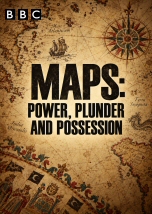
Professor Jerry Brotton reveals that maps are far more than neutral guides to places: they are expressions of the societies that create them and powerful instruments for shaping territory, belief and authority. Beginning with some of the earliest known maps, he traces how cartography evolved from marking land and ownership to serving kings, empires, scientists and governments. From Henry VIII’s coastal surveys and the Cassini family’s scientific breakthroughs to the drawing of modern national borders, the series shows how maps can define who controls land, who belongs where and even how entire peoples understand the world around them. Across the three episodes, presented here together in a single uninterrupted video, the journey moves from ancient and medieval worldviews to imperial expansion and the digital age. Brotton explores religious maps, Aztec symbolism, Victorian attempts to classify societies, the politics behind projections of the globe, and the rise of Google Earth and data-driven mapping. He then follows the mapmakers and explorers who turned distant lands into targets for conquest and profit, from Ptolemy and Columbus to Walter Raleigh and the trading empires that followed. The story ends in the Arctic, where new maps are once again being used to stake claims over oil, gas and minerals, proving that even in the twenty-first century, cartography remains inseparable from power, plunder and possession.
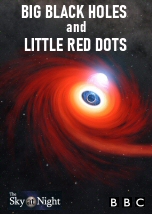
Professor Brian Cox joins Chris Lintott and the team to investigate one of the most intriguing new mysteries in modern astronomy. Observations from the James Webb Space Telescope have revealed hundreds of compact, extraordinarily bright objects known as “little red dots”, appearing less than a billion years after the Big Bang. Many may hide rapidly growing supermassive black holes, raising a profound question: how could such enormous objects have formed so early in cosmic history? The journey begins with the strange physics of black holes themselves, from event horizons and singularities to the supermassive black hole at the centre of the Milky Way and the gigantic black hole in the galaxy M87. With cosmologist Emma Chapman and Professor Sadegh Khochfar, the programme explores radical explanations for these ancient monsters, including primordial black holes born soon after the Big Bang and massive black holes formed directly from collapsing clouds of gas, bypassing stars altogether. Cutting-edge computer simulations recreate the first billion years of the universe and reveal how the earliest galaxies and black holes may have emerged within the cosmic web. These discoveries are forcing astronomers to reconsider not only how supermassive black holes grow, but how galaxies and the early universe itself evolved.
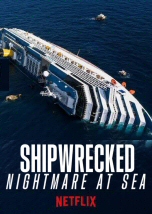
What begins as a dream Mediterranean holiday turns into an unimaginable fight for survival. On the night of January 13, 2012, passengers aboard the luxurious Costa Concordia are dining and putting children to bed when the ship sails dangerously close to the Italian island of Giglio and strikes underwater rocks. As the vessel loses power and begins to flood and tilt, confusion spreads through its glittering corridors. Passengers are initially told there is only an electrical problem, while precious minutes pass before an evacuation is ordered and lifeboats become increasingly difficult to launch. Through extraordinary footage recorded by those on board, black-box communications and deeply personal survivor testimony, the disaster unfolds almost minute by minute: Families desperately searching for a way off the ship, crew members risking their lives to help strangers, passengers trapped as corridors become walls, and rescuers entering the enormous wreck while it threatens to shift beneath them. Behind the terrifying struggle to survive emerges an equally disturbing question—how could a modern cruise ship carrying thousands of people end up on its side just metres from shore? The deaths of 32 people, the actions of Captain Francesco Schettino and the investigation that followed transform one catastrophic night at sea into a gripping story of human courage, fatal decisions and the consequences of failure when every second matters.





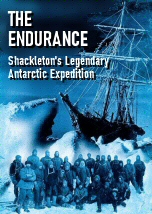


What follows is an extraordinary story of survival, leadership and endurance. Shackleton abandons the original goal and focuses entirely on bringing every man home alive, leading his crew across drifting ice, open ocean and some of the most dangerous seas on the planet. Using Frank Hurley’s remarkable original photographs and film footage, archived voices and letters from expedition members, interviews with their descendants and newly filmed images of the actual locations, the documentary brings this legendary 1914-1916 ordeal vividly back to life.