









Last Watched

"Mountain"  Sort by

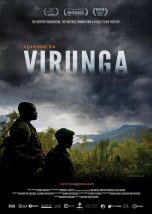
Virunga

   2014    Nature
A group of brave individuals risk their lives to save the last of the world's mountain gorillas; in the midst of renewed civil war and a scramble for Congo's natural resources." Virunga National Park in the Congo is a place of unique natural beauty. It is the home to a plethora of wonderful animals and vegetation but as is so often the way, it has several serious problems that threaten it. It's the location of human violence, corruption and exploitation. The disasters that specifically loom are two different groups, the M23 and SOCO International. The former are a violent rebel force who engages in an ongoing civil war with the Congolese government and the latter are a British energy company who specialise in oil exploration. Both M23 and SOCO invade the park in their own ways and neither seems very interested in the laws that have been set up to protect the flora and fauna that exist there, far less the people who live there. It seems hardly surprising in the case of M23, as they are a paramilitary organisation who can hardly be expected to be concerned with such things but it is the more legitimate big business SOCO who seem more worrying if anything. We discover in fact that they have been involved in a bribery campaign, utilising M23 as enforcers. It's a very murky situation where big money walks all over an impoverished nation and disregards a natural space that they can see no value in in their pursuit of financial profit.
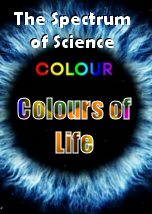
Colours of Life

   2015    Science
Earth is the most colourful place we know of. But the colours we see are far more complex and fascinating than they appear. In this series, Dr Helen Czerski uncovers what colour is, how it works, and how it has written the story of our planet - from the colours that transformed a dull ball of rock into a vivid jewel to the colours that life has used to survive and thrive". But the story doesn't end there - there are also the colours that we can't see, the ones that lie beyond the rainbow. Each one has a fascinating story to tell. Early Earth was a canvas for the vast new palette of the colours of life, with the diversity of human skin tones telling the story of how humanity spread and ultimately conquered the planet. Dr Helen Czerski explores the true masters of colour - which are often the smallest and most elusive - travelling to the mountains of Tennessee to witness the colourful mating display of fireflies, and revealing the marine creatures that can change the colour of their skin in order to hide from the world.
Series: Colour The Spectrum of Science

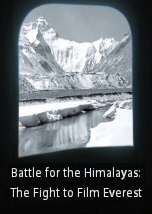
Battle for the Himalayas: The Fight to Film Everest

   2015    History
Between the 1920s and the 1960s the world's great powers sent vast military-style expeditions to conquer the peaks of the Himalayas, with Everest at their head. This was a great game played - camera in hand - by Imperial Britain, Nazi Germany and superpower America. As a result, Himalayan mountaineering's most iconic, epic and tragic moments didn't just go down in history, but were caught on film - from the deaths of Mallory and Irvine on Everest in 1924, to Everest's final conquest in 1953 by Hillary and Tensing. Using footage never before seen on British television, this is the story how of how film-makers turned the great peaks into great propaganda.

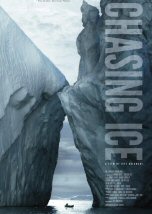
Chasing Ice

   2012    Nature
Acclaimed National Geographic photographer James Balog was once a skeptic about climate change. But through his Extreme Ice Survey, he discovers undeniable evidence of our changing planet. In Chasing Ice, Balog deploys revolutionary time-lapse cameras to capture a multi-year record of the world's changing glaciers". His hauntingly beautiful videos compress years into seconds and capture ancient mountains of ice in motion as they disappear at a breathtaking rate. Traveling with a team of young adventurers across the brutal Arctic, Balog risks his career and his well-being in pursuit of the biggest story facing humanity. As the debate polarizes America, and the intensity of natural disasters ramps up globally, Chasing Ice depicts a heroic photojournalist on a mission to deliver fragile hope to our carbon-powered planet. Directed by Jeff Orlowski

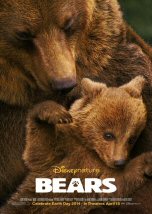
Bears

   2014    Nature
Enjoy this wonderful documentary from Disney Nature about a family of brown bears living in the coastal mountain ranges of Alaska." A brown bear mother named Sky gives birth to two cubs named Amber and Scout in her den on a mountain slope. When April comes the bears will be ready to leave the den. As the bears leave the oncoming summer brings with it a threat of avalanches. Fortunately the bears are able to avoid disaster. Upon reaching the lush valley below, the cubs meet the other bears, some of which pose a threat to the cubs; among these bears are Magnus, a big healthy male, and Chinook, an older male. The family works together to survive the spring, with Sky keeping the cubs safe from Tikaani, a pesky grey wolf...

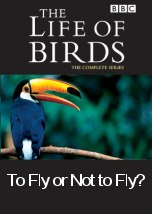
To Fly or Not to Fly

   1998    Nature
The first episode looks at how birds first took to the skies in the wake of the insects. It begins in Mexico, where Sir Attenborough observes bats being outmanoeuvred by a red-tailed hawk. Pterosaurs were the birds' forerunners, some 150 million years after dragonflies developed the means of flight, but eventually went extinct together with the dinosaurs. Birds had by then already evolved from early forms like archaeopteryx, the first creature to possess feathers. Its ancestry can be traced through reptiles, and some current species, such as the flying lizard, possibly show paths this evolution may have taken." One of the biggest birds to have ever existed was the terror bird, which proliferated after dinosaurs vanished and stood up to 2.5 metres tall. By comparison, the ostrich, while not closely related, is the largest and heaviest living bird. It was probably the evasion of predators that drove most birds into the air, so their flightless cousins evolved because they had few enemies. Accordingly, such species are more likely to be found on islands, and Sir Attenborough visits New Zealand to observe its great variety, most especially the kiwi. Also depicted is the moa, another huge creature that is now gone. The takahē is extremely rare, and high in the mountains of New Zealand, Sir Attenborough discovers one from a population of only 40 pairs. Finally, another example on the brink of extinction is the kakapo, which at one point numbered only 61 individuals. A male is heard calling — an immensely amplified deep note that can be heard at great distances from its nest.
Series: The Life of Birds