

Last Watched

"Opera"  Sort by

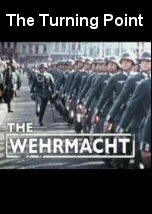
The Turning Point

   2007    History
The German army launched Operation Barbarossa, the invasion of the East, with supreme confidence in its own superiority. High Command was sure that victory would come as quickly and as easily as in France. At the onset, the troops advanced rapidly and the Panzer forces under General Guderian were unbeatable. There were, however, far more casualties and more wear-and-tear on equipment than anticipated. The invading force got bogged down short of Moscow and the withdrawal from there was a severe psychological blow to the men. When an extremely severe winter set in, morale sank further. The soldiers were not equipped for such low temperatures and their guns and machinery could not cope. Hitler ordered his troops to stand firm.
Series: The Wehrmacht
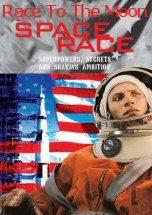
Race To The Moon

   2005    Technology
During 1964-1969 both sides now plan to put a man on the Moon - while the Soviets struggle, the Americans pull ahead in the space race with Project Gemini, but then suffer a disaster with the Apollo 1 fire. The Soviet space programme suffers its own blows: Sergei Korolev dies when his heart fails during an operation, Soyuz 1 crashes and kills cosmonaut Vladimir Komarov, and their planned moon rocket, the N-1 rocket, fails to successfully launch. In America, von Braun has difficulties with the Saturn V, but they are overcome, and the rocket successfully launches the first manned lunar mission, Apollo 8, and the first manned lunar landing, Apollo 11.
Series: Space Race

Evolution: The Evolutionary Arms Race

   2004    Science
Survival of the fittest: Raw competition? Intense cooperation? Both are essential. Interactions between and within species are among the most powerful evolutionary forces on Earth, and understanding them may be a key to our own survival.
Series: Evolution

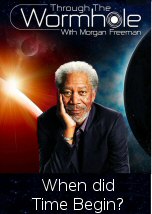
When Did Time Begin

   2014    Science
We float along the river of time. But does that river have a source? Where did time come from? Some believe time and space are one thing, and the Big Bang started the cosmic clock. Others believe the universe existed for almost half a million "years" before light could move and time began. Still others say time is older than our universe. But what if time itself is an illusion? Incredible new experiments may hold the answer. One groundbreaking experiment gives us the power to punch holes in time…and another may create a machine that operates outside time’s boundaries!
Series: Through the Wormhole Season 5

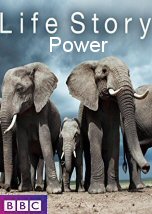
Power

   2014    Nature
An individual’s life journey interweaves with many others. Those who are successful know when to fight or back down, when to cooperate or to go it alone and how to manipulate and deceive. But power is the ultimate prize: animals will use any means to rise through the ranks and win the game of life.
Series: Life Story

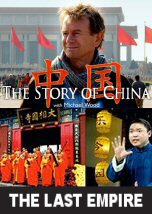
The Last Empire

   2016    History
China's last empire, the Qing, lasted from 1644 to 1912. It began in violence and war as the Manchus swept down from the north, but invaders became emperors, with three generations of one family ruling the country. Among them, Michael Wood argues, was China's greatest emperor - Kangxi. Under the Qing, China doubled in size to include Xinjiang in the far west, as well as Mongolia and Tibet, creating the essential shape of China today. The new dynasty tolerated a diversity of cultures and religions, including Islam. In Kaifeng, Michael visits a women's mosque with a female imam, a delightful scene that ends with laughter and selfies! The Qing also undertook huge cultural enterprises. At a traditional printing house where the wood blocks are hand-carved, we see how the Complete Tang Poems were reproduced - all 48,000 of them. We travel through the wintry countryside to a remote village where a hardy audience watch open-air opera in the snow and visit a painter's studio, and 'storytelling' houses in Yangzhou. In the 18th century, China was arguably the greatest economy in the world, and we get a fabulous sense of the rich culture that came with prosperity. But then came the clash with the British, in the first Opium War, when a British expedition destroyed the Qing navy and extracted territory and trading rights. We leave with a glimpse of the future. 'Every dynasty has risen and declined,' says Michael, 'and has needed new life to regenerate, and this time the catalyst was the British.' Among the ports China ceded was an almost uninhabited island, Hong Kong, one of today's greatest financial centres, and Shanghai, a small town then but now one of the greatest cities in world.
Series: The Story of China