Every summer in the seas off Alaska humpback whales, sea lions and killer whales depend on an explosion of plant life, the plankton bloom. It transforms these seas into the richest on Earth. But will these animals survive to enjoy the great feast? The summer sun sparks the growth of phytoplankton, microscopic floating plants which can bloom in such vast numbers that they eclipse even the Amazon rainforest in sheer abundance of plant life. Remarkably, it is these minute plants that are the basis of all life here. But both whales and sea lions have obstacles to overcome before they can enjoy the feast. Humpback whales migrate 3,000 miles from Hawaii, and during their 3 month voyage lose a third of their body weight. In a heart-rending scene a mother sea lion loses her pup in a violent summer storm, while another dramatic sequence shows a group of killer whales working together to kill a huge male sea lion. In late summer the plankton bloom is at its height. Vast shoals of herring gather to feed on it, diving birds round the fish up into a bait ball and then a humpback whale roars in to scoop up the entire ball of herring in one huge mouthful. When a dozen whales work together they employ the ultimate method of co-operative fishing - bubble net feeding. One whale blows a ring of bubbles to engulf the fish and then they charge in as one. Filmed from the surface, underwater and, for the first time, from the air, we reveal how these giant hunters can catch a tonne of fish every day.
American troops launch widespread 'search and destroy' operations; body count, not territory, becomes the measure of success in Vietnam. Charles Brown fights for survival on the bloody slopes of Hill 875 and at home, the American public begins to question U.S. military strategy.
Bob Clewell's helicopter crew comes under intense fire in one of the final operations of the war. Joe Galloway returns to Vietnam and in Washington, D.C., Barry Romo throws down his medals in protest. The last American troops return home and POW wife Anne Purcell awaits word of her husband's fate. The fall of Saigon brings the unification of Vietnam.
The Romanovs retreat into a bubble of luxury while the czar's forces brutally suppress protests by a starving populace. Rasputin's influence grows, never mind the rumors and scandals. Many people believe Prime minister Peter Stolypin is the last hope of the Romanov Dynasty as reformer-in-chief. He is horrified by the rise of Rasputin. The fight between Stolypin and Rasputin is a battle for influence over Nicholas II. But Stolypin is shot in the Kiev Opera in 1911.
In the last episode, despite disturbing revelations of wrongdoing at Three Mile Island before and after the accident, the utility fights to bring the plant back online. Its Unit 1 had its license temporarily suspended following the incident at Unit 2. Although the citizens of the three counties surrounding the site voted by an overwhelming margin to retire Unit 1 permanently in a non-binding resolution in 1982, it was permitted to resume operations in 1985 following a 4–1 vote by the Nuclear Regulatory Commission. In 2017, it was announced that operations would cease by 2019 due to financial pressure from cheap natural gas, unless lawmakers stepped in to keep it open. Unit 1 shut down on September 20, 2019. Billed as the worst nuclear incident in U.S. history, what’s particularly scary here is how close Three Mile Island incident came to becoming a national disaster. Without giving away the whole story, cost-cutting 'solutions' almost cause a catastrophic disaster.
Hector Berrellez identifies the mysterious Cuban who interrogated Kiki Camarena: a veteran CIA operative, Felix Rodriguez, a key figure in the Iran-Contra scandal. Although warned not to take his investigation further, Hector refuses and is eventually forced into retirement. The case languishes for years, and then a new source comes forward with a shocking allegation.













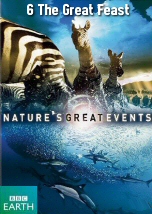






In late summer the plankton bloom is at its height. Vast shoals of herring gather to feed on it, diving birds round the fish up into a bait ball and then a humpback whale roars in to scoop up the entire ball of herring in one huge mouthful. When a dozen whales work together they employ the ultimate method of co-operative fishing - bubble net feeding. One whale blows a ring of bubbles to engulf the fish and then they charge in as one. Filmed from the surface, underwater and, for the first time, from the air, we reveal how these giant hunters can catch a tonne of fish every day.