In the final three episodes of the series, Chris Packham follows three extraordinary evolutionary journeys to discover how the relentless demands of survival transformed simple early animals into some of the most remarkable creatures alive today. In Borneo, the voracious appetite of the bat leads back more than half a billion years to the origins of the through-gut, the first anus, heads and jaws, revealing how the need to find and consume food helped reshape animal life and ultimately produced the bat’s extraordinary powers of hearing. In the Bahamas, the intelligence of dolphins opens an even deeper story: from ancient cells able to sense light to the evolution of eyes, complex brains, sophisticated senses and the remarkable minds of modern dolphins. The journey culminates with one of nature’s supreme athletes. Tracing the horse’s ancestry through hundreds of millions of years, Packham reveals how primitive muscle cells evolved into increasingly powerful systems for movement, how beating hearts supplied those muscles with oxygen, and how limbs became ever more effective tools for locomotion. Slithering, swimming, walking and running eventually converge in an animal built for extraordinary speed and endurance. Together, these final episodes reveal a breathtaking truth: hunger, perception and movement were not merely necessities of survival—they were powerful evolutionary forces that helped create the astonishing complexity of animal life.
This featured films offers a gripping dive into one of the most dramatic moments in space exploration history. In April 1970, what began as a routine mission to the moon turned into a life-threatening ordeal when an unexpected explosion crippled the Apollo 13 spacecraft. With limited oxygen, power, and no margin for error, three astronauts found themselves in a desperate fight for survival. This documentary unveils the heart-stopping events that unfolded over four days, capturing the tension, innovation, and teamwork that made their safe return possible. Featuring never-before-seen footage and firsthand accounts, it's an unforgettable story of human endurance and ingenuity.
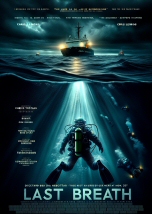
A deep sea diver is stranded on the seabed with 5 minutes of oxygen and no hope of rescue. With access to amazing archive this is the story of one man's impossible fight for survival. Chris Lemons were carrying out repairs 100m below the surface of the North Sea, supported by the vessel Bibby Topaz. The vessel's dynamic positioning system failed, causing it to snap the umbilical tether that provided Lemons oxygen, as well as hot water to heat his suit, power for his light, and a radio link to the surface. He was left with only the few minutes of breathable gas contained in the cylinders he wore on his back. For reasons that are unclear, Lemons survived for around 30 minutes while he was located by a remote underwater vehicle and then by Yuasa, who was able to pull him back onboard the diving bell. The documentary uses genuine footage and audio recorded at the time of the accident on the divers' radios and body cameras, supplemented with interviews of several of the individuals involved, as well as some reconstructed footage, to tell the story of the accident.
Of all the wonders of the human body, there's one more mysterious than any other. Blood: five precious litres that keep us alive. Yet how much do we really know about this sticky red substance and its mysterious, life-giving force? Michael Mosley gives up a fifth of his own blood to perform six bold experiments". From starving it of oxygen to injecting it with snake venom, Michael reveals the extraordinary abilities of blood to adapt and keep us alive. Using specialist photography, the programme reveals the beauty in a single drop. Michael even discovers how it tastes when, in a television first, he prepares a black pudding with his own blood. Down the ages, our understanding of blood has been as much myth as science, but Michael reveals there might be truth in the old vampire legends, as he meets one of the scientists behind the latest research that shows young blood might be able to reverse the ageing process - the holy grail of modern medicine.
The series highlights the major events which have shaped the Earth's history and allowed life to flourish. Follow Dr Stewart's personal journey to some of the most remote places on the planet. The atmosphere is Earth’s protective layer, cloaking us in a warm, oxygen-rich embrace and shielding us from the cold hostility of space. It acts as a natural greenhouse, keeping the Earth 51 degrees Fahrenheit warmer than it would otherwise be. Yet the atmosphere is also full of contradictions. It’s immensely powerful but at the same time highly sensitive. It’s destructive, yet it shelters us. It was created in part by the planet’s first organisms, and it continues to be essential for life.
The extraordinary story of Earth and why it is special and uniquely brimming with life among a largely unknown but harsh cosmic arena. It will be told by eight astronauts from their unique perspective of being away from Earth. In the first episode, Astronaut Chris Hadfield reveals the unlikely and unexpectedly interconnected systems that allow life on our planet to breathe.





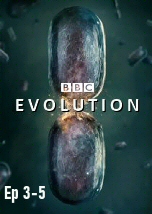

The journey culminates with one of nature’s supreme athletes. Tracing the horse’s ancestry through hundreds of millions of years, Packham reveals how primitive muscle cells evolved into increasingly powerful systems for movement, how beating hearts supplied those muscles with oxygen, and how limbs became ever more effective tools for locomotion. Slithering, swimming, walking and running eventually converge in an animal built for extraordinary speed and endurance. Together, these final episodes reveal a breathtaking truth: hunger, perception and movement were not merely necessities of survival—they were powerful evolutionary forces that helped create the astonishing complexity of animal life.