Mid-1942, as Hitler’s forces are pushing into southern Russia to take the oilfields, he spies a city prized by his enemy Stalin – Stalingrad. If Hitler can capture this city, he can expand his empire all the way to the Urals. But what Hitler hasn’t counted on is the enormous resilience of the Soviet people; men and women willing to defend their Motherland at all costs. What ensues at Stalingrad is one of the bloodiest battles in the history of warfare, with an estimated 2 million total casualties, and an event that turns the tide for the Germans.
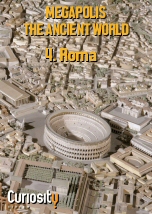
Thanks to stunning reconstitutions with computer-generated images, this documentary retraces the manufacturing secrets of the largest and most exceptional city of Antiquity: Rome, the capital of the Mediterranean world. Three of its most emblematic monuments come to life. The Pantheon and its majestic dome, the sumptuous palace of Nero which covered a quarter of the city, and finally the legendary Colosseum, the largest Roman amphitheater ever built.
The way that wars are fought is constantly evolving. In the warfare of today and the future, it's the push of a button rather than the pull of a trigger, bringing disorder without a single soldier setting foot on the ground. The real-world battlefield has morphed from the bloody trenches of the front line into an age of cyber warfare. From collapsing all the infrastructure of a country to changing minds for elections, any threat you can imagine can be done.
Plants that have developed to thrive in the desert, including cacti that grow in the shade of other trees and collect water in pleated trunks that expand and contract - but can also find themselves a host to other plants, like desert mistletoe. This programme also reveals how tobacco plants being eaten by caterpillars are able to summon the creatures' natural predators, and how tumbleweeds roll across the landscape, only unfurling and growing when they encounter rain.
In the second episode, panic strikes the community as a full-blown catastrophe looms. Locals mobilize to confront the authorities and protest the nuclear power industry. Twenty-eight hours after the accident began, the lieutenant governor appeared at a news briefing to say that the plant's owner had assured the state that 'everything is under control'. Later that day, Scranton changed his statement, saying that the situation was 'more complex than the company first led us to believe'. There were conflicting statements about radioactivity releases. Schools were closed and residents were urged to stay indoors. Farmers were told to keep their animals under cover and on stored feed.
Magic mushrooms, long considered sacred by the Indigenous Mazatec in Mexico, become the subject of scientific studies measuring the intense effects of its Psilocybin and its potential therapeutic use. In the second episode, we are introduced to Ben, who’s battled with crippling Obsessive-Compulsive Disorder (OCD) his entire life. When he had his firstborn, Ben’s life became full of panic attacks regarding his son’s safety, and he knew something had to change. Ben signed up for a psilocybin-assisted therapy clinical trial which was testing whether the psychedelic could help people with severe OCD. In the session under the influence of psilocybin, Ben felt decomposed and eventually grew into a tree. While living as a tree, he saw his human self, playing with his child. Though this sounds scary, from Ben’s perspective, it was beautiful. He was one with the universe, seeing himself in the ultimate third-person perspective. Finally, he saw how it could be different if he didn’t let his OCD control him. And several months out, all the symptoms disappeared. Ben’s story is one of many told in this series, which gives hope that help is right around the corner for the millions who suffer —often in silence— with debilitating mental disorders. But Michael Pollan’s work is showcasing the success stories. Often, even in the most successful trials, psychedelic-assisted therapy only helps up to a third of people enter remission. More frequently, patients are helped —sometimes substantially— but they still suffer with their illnesses and some people aren’t helped at all.






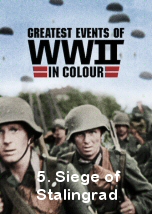



What ensues at Stalingrad is one of the bloodiest battles in the history of warfare, with an estimated 2 million total casualties, and an event that turns the tide for the Germans.