As artificial intelligence accelerates at a breathtaking pace, filmmaker Daniel Roher sets out to understand whether humanity is approaching an extraordinary new era or a catastrophe of its own making. What begins as a personal investigation becomes far more urgent when he and his wife learn they are expecting a child. Faced with predictions ranging from revolutionary medical breakthroughs and powerful new tools for creativity to mass unemployment, deepfakes, autonomous systems and even existential risk, he asks some of the world’s leading AI thinkers a deceptively simple question: should we be excited about the future, or terrified of it? The film explores how generative AI works, why its capabilities are advancing so quickly and what could happen if increasingly powerful systems become difficult to control. Experts debate AI safety and alignment, the race between competing companies, the possibility of machines seeking greater power, and the social consequences of automation and concentrated wealth. At the same time, the documentary confronts the technology’s remarkable promise, from personalized education to scientific discovery and potential cancer treatments. Moving between anxiety and hope, Roher ultimately searches for a way to face an uncertain future not as a pessimist or a blind optimist, but as something in between: an “Apocaloptimist.”
In the final two episodes, the journey reaches the Pacific edge of North America and the remote wilderness of Patagonia, two spectacular regions shaped by powerful oceans, towering forests and extreme weather. Along the West Coast, wolves comb the shoreline for food, sea otters battle crashing surf, blue whales gather in a rare display of speed and movement, and giant Pacific octopuses devote everything to protecting the next generation. High in the redwood canopy, even tiny salamanders perform extraordinary leaps to survive, revealing how life has adapted to one of the continent’s most dramatic coastal environments. The series then travels to the far south of the Americas, where Patagonia delivers a fittingly wild finale. Pumas stalk guanacos through snowy mountains, rockhopper penguins fight their way through violent waves to reach their colonies, giant stag beetles climb immense trees to compete for mates, and elephant seals clash for dominance along the coast. In one of the most remarkable scenes, a family of orcas passes down a dangerous hunting technique from one generation to the next, showing how survival here depends not only on strength, but also on experience, cooperation and learning.
In the final three episodes of the series, Chris Packham follows three extraordinary evolutionary journeys to discover how the relentless demands of survival transformed simple early animals into some of the most remarkable creatures alive today. In Borneo, the voracious appetite of the bat leads back more than half a billion years to the origins of the through-gut, the first anus, heads and jaws, revealing how the need to find and consume food helped reshape animal life and ultimately produced the bat’s extraordinary powers of hearing. In the Bahamas, the intelligence of dolphins opens an even deeper story: from ancient cells able to sense light to the evolution of eyes, complex brains, sophisticated senses and the remarkable minds of modern dolphins. The journey culminates with one of nature’s supreme athletes. Tracing the horse’s ancestry through hundreds of millions of years, Packham reveals how primitive muscle cells evolved into increasingly powerful systems for movement, how beating hearts supplied those muscles with oxygen, and how limbs became ever more effective tools for locomotion. Slithering, swimming, walking and running eventually converge in an animal built for extraordinary speed and endurance. Together, these final episodes reveal a breathtaking truth: hunger, perception and movement were not merely necessities of survival—they were powerful evolutionary forces that helped create the astonishing complexity of animal life.
As a handful of tech billionaires accumulate unprecedented wealth, they are no longer just disrupting industries—they are challenging the very foundations of democracy, finance, and national sovereignty. With remarkable access to their world, this eye-opening investigation encounters figures such as cryptocurrency mogul Justin Sun, venture capitalist Tim Draper, and influential technology investor Peter Thiel, uncovering ambitious plans to create private cities, experimental micronations, and new technology-driven forms of government. From blockchain empires such as Tron to radical schemes designed to bypass traditional institutions, their ultimate goal may be nothing less than reshaping the global financial and political order. Travelling from Silicon Valley to controversial territories where these ideas are being tested, the film reveals the extraordinary ambitions of a new technological elite. As private fortunes gain influence once reserved for governments, one unsettling question emerges: are these visionaries building a freer future—or quietly creating a world governed by rules written by the ultra-rich?
In the final three episodes of the series, the image of elite discipline surrounding the SS is stripped away to reveal a far darker and more disturbing reality. Behind the façade of military excellence lay poorly trained recruits driven not by honor, but by blind ideology and a complete absence of remorse. As their role expands from the battlefield to the brutal control of concentration camps, the narrative exposes how ordinary men became perpetrators of systematic violence, carrying out atrocities with chilling efficiency while maintaining the appearance of normal lives beyond their crimes. These episodes push further into the unsettling contrast between barbarity and everyday existence, showing how members of the SS could participate in unimaginable acts and then return to social settings as if nothing had happened. The story then draws a direct line to the present, confronting the uncomfortable truth that, despite overwhelming historical evidence, remnants of admiration and myth still persist in certain circles. It’s a gripping and unsettling conclusion that forces viewers to question how such distortion of memory can endure—and why it still matters today.
The film takes you on a journey through the four Papal Basilicas in Rome and their treasures: St. Peter’s (one of the 25 destinations most visited by travelers from all over the world), St. John in the Lateran, St. Mary Major and St. Paul Outside the Walls. Four majestic buildings – each with a precious papal altar, each a treasure trove of timeless works of art and a destination for millions of travelers and pilgrims over the centuries – play the leading role in a new film tour that has been recognized as a work of cultural interest by the film board of the Ministry of Culture, Heritage and Tourism.














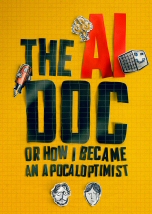









The film explores how generative AI works, why its capabilities are advancing so quickly and what could happen if increasingly powerful systems become difficult to control. Experts debate AI safety and alignment, the race between competing companies, the possibility of machines seeking greater power, and the social consequences of automation and concentrated wealth. At the same time, the documentary confronts the technology’s remarkable promise, from personalized education to scientific discovery and potential cancer treatments. Moving between anxiety and hope, Roher ultimately searches for a way to face an uncertain future not as a pessimist or a blind optimist, but as something in between: an “Apocaloptimist.”