Global warming, and how to combat it, has provoked intense debate, changed the way we see the planet and created headlines around the world. But when and how did scientists first discover global warming, why has it led to such furious debate? In this three-part series geologist Dr Iain Stewart presents a definitive guide to the history of climate change. Battle Begins uncovers some of the great unsung heroes of climate change science, and introduces us to a secret organisation of American government scientists, known as Jason, who wrote the first official report on global warming as far back as 1979. By the late 1980s global warming had already become a serious political issue. It looked as if the world was uniting to take action. But it turned out to be a false dawn.
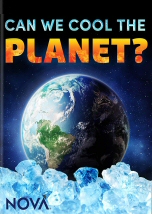
Are rising temperatures driving Earth's ecosystems past a point of no return? We have promising technologies that put solutions within our grasp. Scientists are exploring solutions: from geoengineering to sucking carbon out of the air to cloud brightening, as means to cool the planet. Cutting-edge solutions and high-risk measures. But would they work? And what are the risks of engineering Earth's climate?
The series, depicted by state of the art CGI techniques, and applying the laws of life on Earth to the rest of the galaxy, blends fact with science fiction and conceptualizes what alien life might be like on other planets. In the prologue, astronomer Didier Queloz makes an appearance to discuss the discoveries of exoplanets and how they are analyzed in the real world. In Episode 1, the fictional world imagined is Atlas, a world with higher gravity than Earth and a thicker atmosphere leading to airborne creatures. In explaining the aliens of Atlas, the episode also explores the handicap principle in insects, and shows a rehabilitative form of falconry as captive falcons are trained to live in the wild.
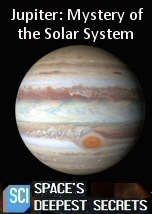
Jupiter is a turbulent world of monster magnetic fields and endless mega storms. Generations of astronomers have attempted to solve the mysteries of Jupiter, the most fierce and extreme planet in the Solar System. And now, NASA's Juno probe is revealing new evidence that could unlock the secrets of why this planet is so strange. With Juno, we're able to see Jupiter from the inside out and reach deep into its core to reveal how it grew.
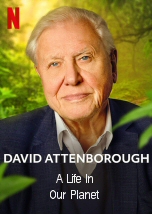
One man has seen more of the natural world than any other. This unique feature documentary is his witness statement. In his 93 years, David Attenborough has visited every continent on the globe, exploring the wild places of our planet and documenting the living world in all its variety and wonder. Now, for the first time he reflects upon both the defining moments of his lifetime as a naturalist and the devastating changes he has seen. Honest, revealing and urgent, this film is a powerful first-hand account of humanity's impact on nature and a message of hope for future generations.
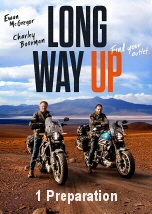
Ewan McGregor and Charley Boorman, after more than a decade since their last motorbike adventure around the world, will cover 13,000 miles over 100 days through 13 countries. Starting from the city of Ushuaia at the tip of South America, Ewan and Charley travel through the glorious and underexposed landscapes of South and Central America to Los Angeles in the United States in their most challenging expedition to date. In their journey they will use cutting-edge technology on the backs of their prototype electric Harley-Davidsons in order to contribute to the sustainability of the planet. In the first episode, Ewan McGregor reunites with his best friend Charley Boorman to evaluate what's important in their lives, following a life-threatening accident of Charley.









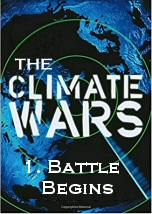


Battle Begins uncovers some of the great unsung heroes of climate change science, and introduces us to a secret organisation of American government scientists, known as Jason, who wrote the first official report on global warming as far back as 1979. By the late 1980s global warming had already become a serious political issue. It looked as if the world was uniting to take action. But it turned out to be a false dawn.