Millions know their voices, but no one knows their names. In his compelling film, award-winning director Morgan Neville shines a spotlight on the untold true story of the backup singers behind some of the greatest musical legends of the 21st century. Triumphant and heartbreaking in equal measure, the documentary is both a tribute to the unsung voices who brought shape and style to popular music and a reflection on the conflicts, sacrifices and rewards of a career spent harmonizing with others. These gifted artists span a range of styles, genres and eras of popular music, but each has a uniquely fascinating and personal story to share of life spent in the shadows of superstardom. Along with rare archival footage and a peerless soundtrack, 20 Feet from Stardom boasts intimate interviews with Bruce Springsteen, Stevie Wonder, Mick Jagger and Sting to name just a few. However, these world-famous figures take a backseat to the diverse array of backup singers whose lives and stories take center stage in the film.
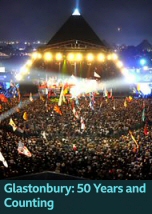
Three years in the making, Francis Whately’s film is a social and musical history of (probably) the world’s greatest music festival, as told by its principal curators, Michael and Emily Eavis, and many of the key artists who’ve appeared there between 1970 and 2019 – Billie Eilish, Thom Yorke, Florence Welch, Dua Lipa, The Levellers, Aswad, Orbital, Fatboy Slim, Linda Lewis, Noel Gallagher, Ed O’Brien, Chris Martin, Stormzy and more. Balancing the driving forces of social conscience and hedonism, Glastonbury has always been both a world apart and a barometer of the state of the nation. Looking at the hippie days, CND, the contribution of the travellers, dance music, Britpop, The Wall, the impact of television and the first black British solo headliner, this film takes viewers backstage and deep into the archive to reveal the forces that have driven this alternative nation between utopia and dystopia, the greatest night of your life and a muddy field in the middle of nowhere. This is not a chronological plod through the festival’s evolution so much as a thematic and story-driven exploration of the peaks and troughs, and the agonies and ecstasies, that have shaped Glastonbury’s 50 years and counting.
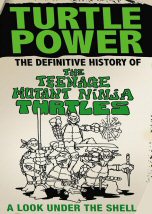
In the spring of 1984, a strange new comic book sat beside cash registers in select shops, too big to fit in the racks, and too weird to ignore. Eastman and Laird's Teenage Mutant Ninja Turtles presented a completely original breed of super hero. It was too bizarre, too crazy. It broke all the rules and should never have worked. Until it sold out. Again and again and again. For 30 years. Now, peek under the shell and see how this so-called 'happy accident' defied every naysayer to become one of the most popular and beloved franchises in the world.
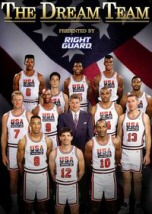
Many consider it the greatest team ever assembled, in any sport. Yet even that description fails to give it proper credit for its impact. The original the Dream Team, the first U.S. Olympic team to include NBA stars was a phenomenon on and off the court. It mattered not that it dominated the Olympic competition. It won the gold medal at the 1992 Olympics in Barcelona, beating its eight opponents by an average of 44 points. What was important was that the Dream Team, gave fans a glimpse of basketball at its finest, and an entire world responded. The film is the definitive documentary of the historic 1992 USA Basketball team, featuring recent interviews with all 12 members, including Michael Jordan, Magic Johnson, Larry Bird, and Charles Barkley. Includes rare footage from USA Basketball's film library, and the untold story behind what has become part of basketball legend. Since 1992, basketball has exploded in popularity around the globe, rising to a place where it truly challenges soccer's status as the world's most popular sport. Much of that is due to the impact of the Dream Team, which attracted fans and followers wherever it went. "It was," said Coach Chuck Daly, "like Elvis and the Beatles put together. Traveling with the Dream Team was like traveling with 12 rock stars. That's all I can compare it to." And what a band it was. Start with three of the game's all-time greats: Michael Jordan, Magic Johnson and Larry Bird. Add the irrepressible Charles Barkley for a little spice, as well as seven more NBA All-Stars: centers David Robinson and Patrick Ewing, power forward Karl Malone, swingmen Scottie Pippen, Chris Mullin and Clyde Drexler and point guard John Stockton. Complete the roster with Christian Laettner, the best college player of 1991-92 and a future NBA All-Star. Opponents didn't have a chance, but they didn't care.
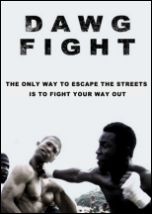
West Perrine, Florida is a suburban ghetto in Southwest Miami. Over 63% of its residents are African-American and the unemployment rate is three times higher than the national rate. Violent crimes occur on a daily basis in this neighborhood of less than two square miles, where much of its adult male population winds up dead or in prison before their 30th birthday. But there is hope in the hood... Dhafir 'Dada 5000' Harris has built a ring in his momma's backyard and transforms himself into the Don King of illegal backyard fights in Perrine". Dada 5000 (6'3", 270lbs., bench presses 670lbs) grew up blocks away from Perrine's MMA sensation, Kimbo Slice, and spent a year traveling the world as Kimbo's bodyguard. When Kimbo's manager buried video of Dada's spectacular backyard fight debut, for fear of Dada overshadowing his rising superstar, Dada leaves Kimbo's crew and makes a life-changing decisión. In his ring there is no doctors, no ambulance. Just two men in a 12'x12' ring battling in a savage bare-knuckle fight to the finish. Dada's gladiators give everything in the the backyard to feed their families and to try to fight their way out of hood. Meanwhile Dada returns to the ring, is discovered by professional scouts and gets his shot at turning pro in the octagon at the Hard Rock Hotel and Casino.
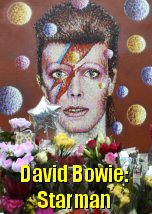
A celebration of the career of the musician, whose death from cancer was announced 11th Jan 2016. Bowie's work was the soundtrack to a generation and influenced countless musicians and this features memorable music videos and performances, as well as tributes from friends and fans around the world". Singer, songwriter, multi-instrumentalist, record producer, painter, and actor. He was a figure in popular music for over five decades, and was considered by critics and other musicians as an innovator, particularly for his work in the 1970s. Bowie's impact was enormous; he changed the nature of rock music, and changed his own approach repeatedly. During his career, he sold an estimated 140 million records worldwide. In the UK, he was awarded nine platinum album certifications, eleven gold and eight silver, and in the US received five platinum and seven gold certifications. He was inducted into the Rock and Roll Hall of Fame in 1996. Bowie stopped concert touring after 2004, and last performed live at a charity event in 2006. In 2013, he returned from a decade-long recording hiatus, remaining musically active until his death from liver cancer three years later.







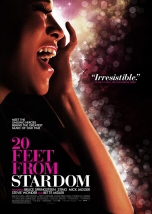

Triumphant and heartbreaking in equal measure, the documentary is both a tribute to the unsung voices who brought shape and style to popular music and a reflection on the conflicts, sacrifices and rewards of a career spent harmonizing with others. These gifted artists span a range of styles, genres and eras of popular music, but each has a uniquely fascinating and personal story to share of life spent in the shadows of superstardom.
Along with rare archival footage and a peerless soundtrack, 20 Feet from Stardom boasts intimate interviews with Bruce Springsteen, Stevie Wonder, Mick Jagger and Sting to name just a few. However, these world-famous figures take a backseat to the diverse array of backup singers whose lives and stories take center stage in the film.