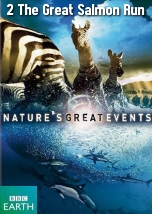
Every year grizzly bear families in North America depend for their survival on a spectacular natural event: the return of hundreds of millions of salmon from the Pacific Ocean to the mountain streams where they were born. The salmon travel thousands of miles to spawn and then die. The great run not only provides food for bears, but for killer whales, wolves, bald eagles, and even the forest itself. The question is: will the salmon return in time to keep hungry bears alive? A mother grizzly and her cubs emerge from their den high in snowy Alaskan mountains. Filming from the air the team capture a TV first, following the bears as they negotiate a near vertical slope on their journey to the coast where they await the return of the salmon. Meanwhile, the salmon are making their way to the to river mouths where they must swim upstream and against the current. The programme reveals how they tackle the torrents and leap over waterfalls, a feat equivalent to a human jumping over a house. Dozens of hungry bears eagerly await the salmon that make it up river. In another TV first, underwater cameras record the ingenuity and fancy footwork they use to collect dead salmon from the bottom of deep pools.
Privately, he was humble, almost shy, and fiercely patriotic, donating millions to his native Brazil and contemplating a life beyond motor-racing. Yet he is struck down in his prime on the blackest weekend in the history of the sport, watched live on television by 300 million people. Years on he is revered in Formula One as the greatest motor racing driver of all time - and in Brazil as a Saint.
Zachary Quinto sets out to research the strangest creatures dug up from the depths of the ocean and to see how much they lend to the monsters that are depicted in myth and legend. Starting in Australia, he meets with a teenager who was savagely attacked by a swarm of mysterious flesh-eating monsters, only to jump into the water himself the next day amongst highly venomous sea creatures. From the carnivorous fish of American rivers to the eyeless monsters of the Atlantic Ocean, Zachary finds some merit in these old monster stories and is starting to understand just what we mean when we say that we know less than 1% of what waits in the depths below.
More than 90% of all crashes have a human driver as the cause. So if you want to solve traffic fatalities, the best solution is driverless vehicles. It's an ambitious goal, but only possible because of the recent breakthroughs in deep learning. Artificial intelligence is one of those key pieces that has made it possible now to do driverless cars where it wasn't possible ten years ago. For computers, until very, very recently, to do even the most basic visual tasks, like seeing a picture of a person and knowing that it's a person was remarkably hard. That's obviously fundamental to being able to understand the world around you with the sensors that you have. And we've made also gigantic strides in being able to perform complex tasks.
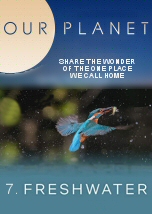
Everything that lives on land, animal or plant, depends on fresh water. Yet only part of it is within reach: Much of the planet's fresh water, is locked away, almost two-thirds of it lies frozen around the poles. Even away from the poles, much of the land's fresh water freezes each winter. The need for fresh water is as strong as ever. However, the supply is becoming increasingly unpredictable and uncertain for all manner of species. We are not alone in our need for water, but we have the ability to ensure the fresh waters of the world do flow, and we alone can determine how they are shared.
The last episode of the series talks about the most important city in the States. Stories that go from the early 40s until today. Interviews with Rick Rubin, Emmylou, Chris Martin, LL Cool J and Barack Obama. And a real statement about what is happening with the studios business nowadays. The song 'I Am A River' is recorded during this episode.





















A mother grizzly and her cubs emerge from their den high in snowy Alaskan mountains. Filming from the air the team capture a TV first, following the bears as they negotiate a near vertical slope on their journey to the coast where they await the return of the salmon. Meanwhile, the salmon are making their way to the to river mouths where they must swim upstream and against the current. The programme reveals how they tackle the torrents and leap over waterfalls, a feat equivalent to a human jumping over a house. Dozens of hungry bears eagerly await the salmon that make it up river. In another TV first, underwater cameras record the ingenuity and fancy footwork they use to collect dead salmon from the bottom of deep pools.