




We move around in space, but we are stuck in a prison of time moving ever forwards. Einstein said, 'The distinction between past, present and future is only a stubbornly persistent illusion.' Is our experience of the ticking clock merely a trick of the mind? Could science ever make the clock move backwards? Experiments in quantum physics are showing that the future influences the present: what happens later limits the choices we think we have now. The laws of physics say visiting or talking to ourselves in the past is possible – but changing history once we get there is not.
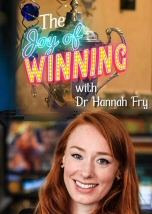
If you had less than one second to make a life-or-death decision to shoot a man who might be armed with a lethal weapon, what would you do? Would the ethnicity of the man affect your decision? Are you sure? The outcome – whatever your race – will surprise you. Brain imaging studies are showing that negative cultural stereotypes hijack everyone’s subconscious decision-making. But some science says we can overcome bigotry through exposure, self-awareness and flexible social networks… and, most controversially of all, ultra-violent video games!
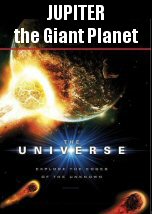
There is a hellish planet in our solar system; covered in thick dense clouds and roasted by colossal temperatures. It will be inevitable
that the Earth will someday not only be like Venus, but actually put it to shame. A billion years from now, Earth's oceans will boil off, triggering a runaway greenhouse effect, and the temperature will be so high, its all surface will melt. In the distance future, Earth could be the evil twin of Venus. To understand how our world will be destroyed we need to look at what happened to Venus.
On a spectacular journey through Renaissance Italy, Andrew Graham-Dixon searches for the shadowy figure who wrote one of the most important books on art and looks at some dazzling works, including masterpieces of the early Renaissance by Giotto, Masaccio and Donatello. Giorgio Vasari was the grandaddy of all art critics, travelling Italy in the 16th century for his definitive Lives of the Artists. It was a time of miracles that he named 'the Renaissance'.
Andrew Graham-Dixon retraces Vasari's footsteps for this captivating two-part film in a short Art of Italy season. He's an enthusiastic guide, lapsing easily into Italian conversation with the custodians of galleries and chapels who allow him a private view. From Brunelleschi's Duomo in Florence to less familiar marvels - a Donatello sculpture; Masaccio frescoes - he illustrates how rapidly ideas developed. A final treat for him - and us - is a tour of the Vasari Corridor, a rarely accessed gallery that zigzags across the Florentine rooftops.