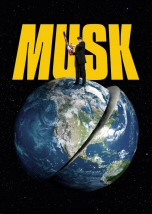
Filmmaker Alex Gibney examines how Elon Musk rose from the Silicon Valley start-up world to become one of the most powerful and influential figures of the 21st century. Through archival footage, interviews with former colleagues, partners and people who knew him closely, the documentary follows the creation of Zip2, PayPal, Tesla and SpaceX, exploring the ambition, risk-taking and carefully constructed image of the visionary entrepreneur who promised to transform life on Earth and beyond. But the film increasingly asks a more unsettling question: how did one businessman accumulate so much economic, technological and political power? Musk declined to be interviewed, so Gibney builds a simulated conversation from his own public statements while examining his takeover of Twitter/X, Starlink, artificial intelligence, his relationship with Donald Trump and his involvement with DOGE (Department of Government Efficiency). The result is a provocative portrait of innovation, wealth, influence and personal mythology, questioning where technological ambition ends and unchecked power begins.
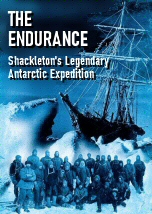
In 1914, Ernest Shackleton set out with 27 men aboard the Endurance on one of the boldest expeditions of the Heroic Age of Antarctic exploration: an attempt to cross the frozen continent from the Weddell Sea to the Ross Sea. But before they could even reach land, the ship became trapped in pack ice. Months later, crushed by the pressure, the Endurance was lost, leaving the crew stranded in one of the most hostile environments on Earth with no contact with the outside world. What follows is an extraordinary story of survival, leadership and endurance. Shackleton abandons the original goal and focuses entirely on bringing every man home alive, leading his crew across drifting ice, open ocean and some of the most dangerous seas on the planet. Using Frank Hurley’s remarkable original photographs and film footage, archived voices and letters from expedition members, interviews with their descendants and newly filmed images of the actual locations, the documentary brings this legendary 1914-1916 ordeal vividly back to life.
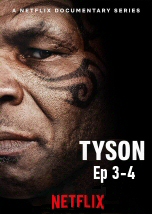
In the final two episodes of the series, Mike Tyson’s life moves from shocking defeat to an even darker collapse. After losing his heavyweight crown to Buster Douglas, he fights to reclaim his place at the top, but a criminal conviction and prison sentence derail his comeback and transform both his career and public image. When he returns to boxing, the pressure to become champion again culminates in his brutal rivalry with Evander Holyfield and the infamous “Bite Fight,” one of the most controversial moments in sports history. Beyond the ring, Tyson is forced to confront addiction, depression, damaged relationships and the consequences of a life driven by fame, anger and excess. Retirement begins a difficult process of reinvention and recovery as he tries to understand the man behind the intimidating public persona. These final chapters turn his story from one of sporting dominance into a much more personal struggle for survival, identity and redemption.
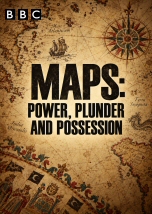
Professor Jerry Brotton reveals that maps are far more than neutral guides to places: they are expressions of the societies that create them and powerful instruments for shaping territory, belief and authority. Beginning with some of the earliest known maps, he traces how cartography evolved from marking land and ownership to serving kings, empires, scientists and governments. From Henry VIII’s coastal surveys and the Cassini family’s scientific breakthroughs to the drawing of modern national borders, the series shows how maps can define who controls land, who belongs where and even how entire peoples understand the world around them. Across the three episodes, presented here together in a single uninterrupted video, the journey moves from ancient and medieval worldviews to imperial expansion and the digital age. Brotton explores religious maps, Aztec symbolism, Victorian attempts to classify societies, the politics behind projections of the globe, and the rise of Google Earth and data-driven mapping. He then follows the mapmakers and explorers who turned distant lands into targets for conquest and profit, from Ptolemy and Columbus to Walter Raleigh and the trading empires that followed. The story ends in the Arctic, where new maps are once again being used to stake claims over oil, gas and minerals, proving that even in the twenty-first century, cartography remains inseparable from power, plunder and possession.
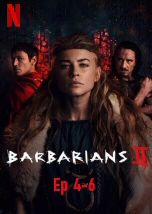
In the final three episodes of Season 2, the struggle for Germania reaches a breaking point as loyalty, vengeance and political ambition collide. Tiberius demands proof that Marbod truly stands with Rome, while Flavus makes a dangerous proposal to Germanicus. At the same time, the Germanic tribal leaders gather to proclaim Marbod king, hoping unity might finally give them the strength to resist Rome. But the fragile alliance is shattered by tragedy, and Marbod is forced to confront Tiberius directly as trust on both sides collapses. The conflict then accelerates toward open war. Thusnelda and Folkwin undertake a perilous mission, Gaius makes a shocking discovery in the forest, and Segestes offers Tiberius a treacherous bargain. With Roman reinforcements approaching by ship, Arminius and the tribes realize they may have only one chance left: strike the Roman camp before a new legion arrives. The season closes with betrayal, sacrifice and a desperate battle for freedom, as every decision threatens to determine whether the Germanic tribes remain divided or finally stand together against Rome.
The Housemartins return to Hull during their breakthrough year of 1986 and revisit the places where the band began. Paul Heaton, Stan Cullimore, Norman Cook and Hugh Whitaker talk about forming the group, their sudden success and their determination to remain rooted in ordinary life despite growing fame. The film follows them through Hull, mixes informal conversations with rehearsals and performances, and includes songs such as Happy Hour, Sheep, Think for a Minute and Caravan of Love. The members also speak openly about their socialist views, religion, money and their distrust of the music industry, revealing the ideas behind their deliberately unglamorous image and sharply observant lyrics. Ending with a concert for their home audience, this documentary captures The Housemartins at the moment they were becoming nationally famous while still maintaining the humour, friendship and political convictions that defined the band.














But the film increasingly asks a more unsettling question: how did one businessman accumulate so much economic, technological and political power? Musk declined to be interviewed, so Gibney builds a simulated conversation from his own public statements while examining his takeover of Twitter/X, Starlink, artificial intelligence, his relationship with Donald Trump and his involvement with DOGE (Department of Government Efficiency). The result is a provocative portrait of innovation, wealth, influence and personal mythology, questioning where technological ambition ends and unchecked power begins.