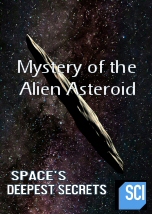


















When a mysterious cigar-shaped object is spotted tumbling through our solar system, experts race to uncover it's true nature. The object, nicknamed Oumuamua, meaning 'a messenger that reaches out from the distant past' in Hawaiian, was discovered by the Pan-STARRS 1 telescope in Hawaii. Since its discovery, scientists have been at odds to explain its unusual features and precise origins, with researchers first calling it a comet and then an asteroid before finally deeming it the first of its kind: a new class of 'interstellar objects.' A recent paper by researchers at the Harvard Smithsonian Center for Astrophysics raises the possibility that the elongated dark-red object, which is 10 times as long as it is wide and travelling at speeds of 196,000 mph, might have an 'artificial origin.' The theory is based on the object's 'excess acceleration,' or its unexpected boost in speed as it travelled through and ultimately out of our solar system.
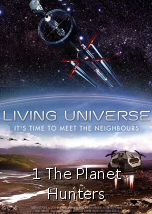
We are living in a new golden age of exploration. Planet hunters are searching far beyond our solar system and they are actually finding new worlds orbiting other suns. Thousands of these alien worlds have already been found, but this is the story of perhaps the greatest discovery yet, a star 40 light-years away with seven Earth-sized planets: Trappist-1. This new discovery of seven alien Earth-like planets in a faraway solar system is a major milestone in our hunt for extraterrestrial life, and experts investigate the secrets of Trappist -1's mysterious worlds to reveal if we're truly alone in the universe.
For all of human history, the Sun, our home star, has measured our days and our seasons while fueling all life on Earth. Yet it remains an enigma. NASA's Parker Probe Plus is on a mission to change that, flying through dangerous radiation to become the closest spaceship to orbit our Sun. It's a journey to the center of our solar system, a mission to gather information about the most critical celestial body in the sky, our star.
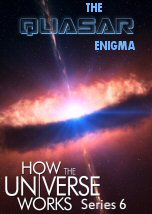
Across the universe, galaxies are going dark, and scientists don't know why the stars are losing their shine. Something is slowly drawing the curtains closed on the universe. Our milky way is under threat. Astronomers race against time to uncover the truth behind how galaxies are born and how they die before all of the lights go out.
Professor Brian Cox journeys across the vastness of time and space revealing epic moments of sheer drama that changed the universe forever. The series begins this epic exploration of the cosmos with a hymn to the great luminous bodies that bring light and warmth to the universe: the stars. It is estimated that there are two hundred trillion stars in the universe, each playing their part in an epic story of creation- a great saga that stretches from the dawn of time, with the arrival of the first star, through diverse generations until the arrival of our own star, the sun, and a civilization that has grown up in its light.
The James Webb Space Telescope, a flagship observatory developed by NASA, the European Space Agency, and the Canadian Space Agency, is the largest space telescope ever built, with a deployable mirror measuring 21.3 feet (6.5 meters) in diameter and four scientific instruments to observe the universe in infrared wavelengths. The mission will study the formation of galaxies, stars, and planets. JWST was launched December 25, 2021 on an Ariane 5 ECA rocket. This is the story of the James Webb Space Telescope, told by the people who have devoted their lives to it. It is the world’s most advanced and most expensive telescope, and building it has been fraught with challenges. But it will all be worth it if the mission is successful.
A recent paper by researchers at the Harvard Smithsonian Center for Astrophysics raises the possibility that the elongated dark-red object, which is 10 times as long as it is wide and travelling at speeds of 196,000 mph, might have an 'artificial origin.' The theory is based on the object's 'excess acceleration,' or its unexpected boost in speed as it travelled through and ultimately out of our solar system.