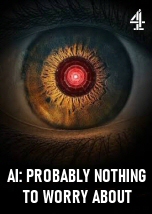
Artificial intelligence has moved from a fringe scientific dream to a technology capable of reshaping work, politics, creativity and even human survival. Through rare interviews and archival footage, pioneers such as Geoffrey Hinton and Demis Hassabis trace the breakthroughs that made modern AI possible, while former OpenAI staff and other researchers reveal the fierce rivalry, ambition and commercial pressure driving the race toward ever more powerful systems. But the deeper the film goes, the more unsettling the questions become. Hinton explains why he left Google to warn about the technology he helped create, while examples of deceptive behaviour, threatening chatbots and real-world harm expose how little even experts fully understand or control these systems. Moving with the tension of a thriller, the documentary asks whether humanity is building its greatest tool or creating something it may one day be unable to contain.
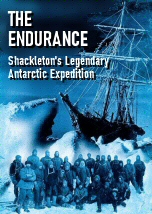
In 1914, Ernest Shackleton set out with 27 men aboard the Endurance on one of the boldest expeditions of the Heroic Age of Antarctic exploration: an attempt to cross the frozen continent from the Weddell Sea to the Ross Sea. But before they could even reach land, the ship became trapped in pack ice. Months later, crushed by the pressure, the Endurance was lost, leaving the crew stranded in one of the most hostile environments on Earth with no contact with the outside world. What follows is an extraordinary story of survival, leadership and endurance. Shackleton abandons the original goal and focuses entirely on bringing every man home alive, leading his crew across drifting ice, open ocean and some of the most dangerous seas on the planet. Using Frank Hurley’s remarkable original photographs and film footage, archived voices and letters from expedition members, interviews with their descendants and newly filmed images of the actual locations, the documentary brings this legendary 1914-1916 ordeal vividly back to life.
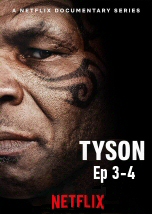
In the final two episodes of the series, Mike Tyson’s life moves from shocking defeat to an even darker collapse. After losing his heavyweight crown to Buster Douglas, he fights to reclaim his place at the top, but a criminal conviction and prison sentence derail his comeback and transform both his career and public image. When he returns to boxing, the pressure to become champion again culminates in his brutal rivalry with Evander Holyfield and the infamous “Bite Fight,” one of the most controversial moments in sports history. Beyond the ring, Tyson is forced to confront addiction, depression, damaged relationships and the consequences of a life driven by fame, anger and excess. Retirement begins a difficult process of reinvention and recovery as he tries to understand the man behind the intimidating public persona. These final chapters turn his story from one of sporting dominance into a much more personal struggle for survival, identity and redemption.
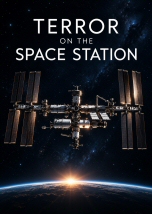
Orbiting Earth at around 27.000 km/h, the International Space Station is one of humanity’s greatest engineering achievements, but also one of the most unforgiving places ever built. Astronauts and mission controllers recount moments when routine work suddenly became a fight for survival: a spacesuit filling with water, toxic ammonia spraying across a spacewalker, dangerous temperature extremes, radiation, fire, contamination and the constant threat of collision. The series reveals how every mission depends on training, improvisation and split-second decisions in an environment where even a small failure can become fatal. Across the two episodes, presented here together in a single uninterrupted video, the danger escalates from the hazardous construction and maintenance of the station to the growing risks of life aboard it. Astronauts face micrometeoroids and space debris travelling at lethal speeds, docking emergencies and system failures, culminating in the extraordinary 2021 incident when the newly arrived Nauka module unexpectedly fired its thrusters and sent the entire ISS rotating out of control. With communications at risk and the structure under immense strain, crews in orbit and controllers on Earth must work together to regain control. The result is a gripping story of courage, science and survival inside a machine that has kept humans continuously living in space for more than two decades.
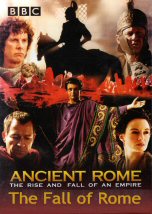
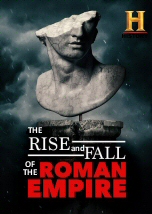
From a small and aggressive republic fighting for survival in the ancient Mediterranean to an empire that dominated much of the known world, Rome’s story is one of extraordinary ambition, conquest and transformation. The documentary follows the decisive struggles that shaped its rise, from the wars with Carthage and Hannibal to the upheavals of Spartacus, Julius Caesar and the collapse of the Republic, before Augustus establishes a new imperial order. Military power, political rivalry, engineering, law, spectacle and ruthless violence combine to reveal how Rome created a civilization of unprecedented scale, but also planted the seeds of its own destruction. At its height, the empire reaches astonishing levels of wealth and power under rulers such as Trajan and Marcus Aurelius, yet the system becomes increasingly difficult to control. Plague, civil conflict, destructive emperors such as Commodus, religious transformation and mounting pressure from Germanic peoples, Goths, Vandals and other invaders gradually weaken the foundations of Roman authority. From the Colosseum and the grandeur of imperial Rome to Attila and the invasions that accelerate its collapse, the two-part series shows how one of history’s greatest superpowers ultimately became a warning about the dangers of unchecked power and overextension. Presented here with both episodes combined into a single video, viewers can follow the complete rise and fall of Rome without interruption.
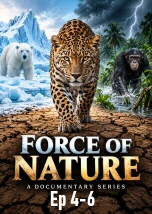
In the final three episodes, the series follows animals being pushed to the edge as melting ice, extreme heat and prolonged drought reshape the environments they depend on. In the Himalayas, a snow leopard is forced from familiar territory, while an Arctic ground squirrel in Alaska undertakes an extraordinary migration and a young Arctic fox in Svalbard faces her first winter alone. These cold-adapted animals must rapidly change behaviours that once worked for generations as their frozen worlds become increasingly unstable. The struggle then shifts to the opposite extreme, where wombats, leopards and kangaroo rats are tested by record heat and worsening drought, pushing their remarkable physical and behavioural adaptations to their limits. In the final episode, attention turns to the people working directly to help wildlife survive these new extremes, revealing rescue efforts, scientific interventions and conservation strategies in some of the planet’s harshest environments. Together, these final chapters show that survival now depends not only on the animals’ ability to adapt, but increasingly on how far humans are willing to go to protect them.











But the deeper the film goes, the more unsettling the questions become. Hinton explains why he left Google to warn about the technology he helped create, while examples of deceptive behaviour, threatening chatbots and real-world harm expose how little even experts fully understand or control these systems. Moving with the tension of a thriller, the documentary asks whether humanity is building its greatest tool or creating something it may one day be unable to contain.