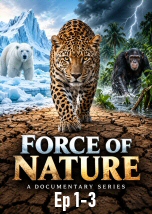
In the final three episodes, the series follows animals being pushed to the edge as melting ice, extreme heat and prolonged drought reshape the environments they depend on. In the Himalayas, a snow leopard is forced from familiar territory, while an Arctic ground squirrel in Alaska undertakes an extraordinary migration and a young Arctic fox in Svalbard faces her first winter alone. These cold-adapted animals must rapidly change behaviours that once worked for generations as their frozen worlds become increasingly unstable. The struggle then shifts to the opposite extreme, where wombats, leopards and kangaroo rats are tested by record heat and worsening drought, pushing their remarkable physical and behavioural adaptations to their limits. In the final episode, attention turns to the people working directly to help wildlife survive these new extremes, revealing rescue efforts, scientific interventions and conservation strategies in some of the planet’s harshest environments. Together, these final chapters show that survival now depends not only on the animals’ ability to adapt, but increasingly on how far humans are willing to go to protect them.
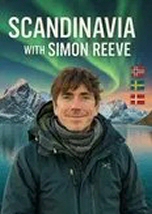
Journey through the awe-inspiring Nordic wilderness in a documentary that brings together all three episodes in a single feature-length video, unveiling the untamed beauty and surprising contrasts of northern Europe. From the icy remoteness of the Svalbard archipelago to the snowy vastness of Lapland and the tense frontier with Russia, the story unfolds across a dramatic landscape shaped by nature and history. Explore the fjords of Norway and the volcanic extremes of Iceland, before heading south to Sweden and Denmark, where behind the smiles and prosperity lie unexpected and shocking truths. This series offers not just breathtaking views, but deep insight into what makes these societies both fascinating and fragile.
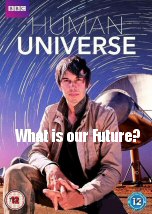
Professor Brian Cox concludes his exploration of our place in the universe by asking what next for the ape that went to space. Our future is far from certain. In Florida, Brian joins the latest efforts to protect Earth from potential catastrophic events. He joins a team of Nasa astronauts who are training for a future mission to an asteroid - should we ever discover one coming our way - under 30 feet of water in a submerged laboratory that simulates space. It is just one example of how, for our long-term survival, space exploration may well be vital. It is a view shared by Apollo 16 astronaut Charlie Duke, who tells Brian what it was like to escape the confines of the planet. It is a dream that both Nasa and now commercial companies share as they race to get humans back into deep space. But space travel, like every leap our civilisation has ever made, requires energy. Here too, scientists are hard at work attempting to safeguard our future. At the National Ignition Facility in California, Brian witnesses the world's most successful fusion experiment in action. He believes that if their mission succeeds, our civilisation will have unlocked a way to the stars that will not destroy the planet in the process. Brian concludes by returning to the top of the world in Svalbard, where he gains access to our civilisation's greatest treasure, locked away in a vault buried deep in the permafrost.
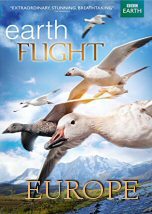
Earthflight departs on its grand European tour, using a host of techniques including taking extraordinary footage from microlites as they fly alongside imprinted birds. Among other wonders, cameras soar with cranes and geese over Venice, the white cliffs of Dover and Edinburgh. White storks leave Africa and struggle to reach Istanbul, the gateway to Europe, while cranes take an easier route over the monkey-guarded Rock of Gibraltar. In France, the white horses of the Camargue make a splash around the new arrivals. In Rome, the heat of the city lures 20 million starlings that perform nature's greatest aerial display to outwit peregrines. In Hungary, sand martins grab mayflies from the air; and at Bass Rock, gannets create Britain's greatest natural spectacle as they dive in exquisite slow-motion. The story takes an emotional turn as storks and swallows wait for their partners to return and indulge in a spot of DIY to impress. Finally, geese touch down in Svalbard to raise a family. To protect their young, a squadron of birds assemble to see off polar bears. With views of birds flying over the Loire Valley, London docklands and the bulb fieds of Holland, this is Europe as never before.
In Episodes 4–6, the journey takes an awe-inspiring turn through Norway’s dramatic fjords and along roads carved through towering cliffs. Ewan and Charley are captivated by centuries-old Viking churches and mysterious stone formations that whisper tales of the past. Their adventure shifts gears with a breathtaking detour to the Arctic archipelago of Svalbard, where melting glaciers and ghostly landscapes reveal the stark reality of a warming planet. As they venture deep into Lapland, isolation, snow-covered silence, and moments of wonder test their resolve and deepen their bond in unexpected ways.
As climate chaos intensifies, animals across the planet are being pushed into conditions their bodies and instincts were never designed to face. Floods arrive where drought once ruled, storms grow stronger, seas warm and familiar habitats disappear. Narrated by Andrew Lincoln, this six-part natural history series follows wildlife confronting these extremes at close range, revealing not only the destructive power of a changing climate but also the extraordinary ingenuity, resilience and adaptability animals use to survive. In the first three episodes, the struggle begins on an increasingly extreme Earth. Burrowing owls on the North American Great Plains race to protect their chicks from tornadoes, cheetahs in Kenya battle record floods, polar bears search for vanishing sea ice and chimpanzees survive severe drought by digging their own filtered water holes. Rising waters then transform entire ecosystems: pygmy elephants face monsoon floods in Borneo, a platypus is swept into a violent flash flood in Australia, and a lone lioness in the Kalahari turns an unexpected flood into a rare hunting opportunity. Finally, along the world’s coasts, Caribbean flamingos confront a category-five hurricane, anole lizards cling on through violent winds, California sea otters struggle through huge storms and collapsing kelp forests, while clownfish on the Great Barrier Reef face a marine heatwave that threatens the very anemones on which their families depend.













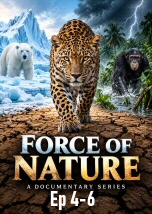







The struggle then shifts to the opposite extreme, where wombats, leopards and kangaroo rats are tested by record heat and worsening drought, pushing their remarkable physical and behavioural adaptations to their limits. In the final episode, attention turns to the people working directly to help wildlife survive these new extremes, revealing rescue efforts, scientific interventions and conservation strategies in some of the planet’s harshest environments. Together, these final chapters show that survival now depends not only on the animals’ ability to adapt, but increasingly on how far humans are willing to go to protect them.