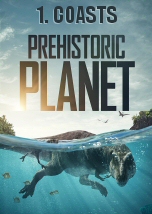
In the final two episodes, the journey reaches the Pacific edge of North America and the remote wilderness of Patagonia, two spectacular regions shaped by powerful oceans, towering forests and extreme weather. Along the West Coast, wolves comb the shoreline for food, sea otters battle crashing surf, blue whales gather in a rare display of speed and movement, and giant Pacific octopuses devote everything to protecting the next generation. High in the redwood canopy, even tiny salamanders perform extraordinary leaps to survive, revealing how life has adapted to one of the continent’s most dramatic coastal environments. The series then travels to the far south of the Americas, where Patagonia delivers a fittingly wild finale. Pumas stalk guanacos through snowy mountains, rockhopper penguins fight their way through violent waves to reach their colonies, giant stag beetles climb immense trees to compete for mates, and elephant seals clash for dominance along the coast. In one of the most remarkable scenes, a family of orcas passes down a dangerous hunting technique from one generation to the next, showing how survival here depends not only on strength, but also on experience, cooperation and learning.
In the final two episodes of this series, the war enters its most devastating and transformative phase. As American forces endure the horrors of Okinawa and Japan refuses to surrender, President Harry Truman faces an almost unimaginable decision: whether to unleash the most terrible weapon ever created. The atomic bombings of Hiroshima and Nagasaki bring the conflict to a shocking end, but victory comes at a cost that will haunt humanity forever. With the Axis defeated, the world attempts to rebuild from unprecedented destruction. Yet the alliance between the United States and the Soviet Union rapidly collapses into suspicion and confrontation. From the division of Germany and the Berlin Blockade to the creation of NATO and the Soviet Union’s first atomic test, former allies become nuclear adversaries. The Second World War is over—but a new and even more dangerous struggle has begun, placing the entire world beneath the shadow of annihilation.
This documentary celebrates the life of John Candy, a comedy legend whose warmth and humor defined a generation and who died of a heart attack in 1994 at the age of 43. Through rare footage and honest interviews with family, friends, and fellow stars, it reveals the man behind the laughter — talented, humble, and deeply human. From his early days in television to his rise as one of Hollywood’s most beloved comedic actors, his story shows how joy and vulnerability shaped a career that continues to inspire. With reflections from Bill Murray, Eugene Levy, Catherine O’Hara, and Dan Aykroyd, the film captures Candy’s lasting legacy as both a comic genius and a kind soul whose influence still endures decades after his passing.
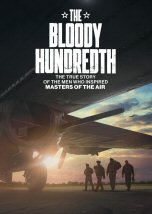
The film recounts the story of the 100th Bomb Group during World War II and follows bomber crews on dangerous missions to destroy targets inside German-occupied Europe. The Documentary honors the heroes of the Group and portrays the intensity of war, the dangers that the airmen face, and the friendships and relationships that develop. This unit from the Eighth Air Force B-17 Flying Fortress suffered tremendous losses in combat, with 177 aircraft missing in action, flying its last mission on 20 April 1945. Meet the airmen who inspired the tv series 'Masters of the Air' as they share the harrowing and transformative events of the 100th Bomb Group. The interviews with the real-life heroes are revealing, and the wealth of newsreel footage compiled in the documentary is utilized with a sharp eye for detail.
Exploring the moon was humankind’s most incredible journey. Now through the magic of 3D, you can take that giant leap for yourself. Presented and narrated by Tom Hanks, Magnificent Desolation: Walking on the Moon will transport you to the lunar surface to walk alongside the 12 extraordinary astronauts who have been there to experience what they saw, heard, felt, thought and did. A romantic, inspirational depiction of the Apollo astronauts travels on the moon peppered by their quotations of their impressions.
From the first shots fired in Poland to the dawn of the atomic age, this gripping documentary revisits the most devastating conflict in modern history with the scale, urgency, and human focus it demands. Through decisive battles, world-changing leaders such as Winston Churchill, Franklin D. Roosevelt and Josef Stalin rare wartime perspectives, and the immense suffering of soldiers and civilians, it shows how total war reshaped nations, destroyed millions of lives, and forced humanity into a new and terrifying era. The first three episodes plunge directly into the war’s explosive beginnings. In September 1939, Germany invades Poland after a secret pact between Adolf Hitler and Josef Stalin clears the path for aggression, setting Europe on fire once again. As Nazi forces crush the Netherlands and Belgium and drive west, Churchill prepares Britain for an air assault while Roosevelt races to turn American industry into a weapon of survival. The story then moves to Operation Barbarossa, Hitler’s colossal surprise invasion of the Soviet Union in 1941, the largest and most costly land offensive ever launched, where ambition, brutality, and resistance collide on an unimaginable scale.



























The series then travels to the far south of the Americas, where Patagonia delivers a fittingly wild finale. Pumas stalk guanacos through snowy mountains, rockhopper penguins fight their way through violent waves to reach their colonies, giant stag beetles climb immense trees to compete for mates, and elephant seals clash for dominance along the coast. In one of the most remarkable scenes, a family of orcas passes down a dangerous hunting technique from one generation to the next, showing how survival here depends not only on strength, but also on experience, cooperation and learning.