









Last Watched

"Trade"  Sort by

Inside the Brain of a Trader

   2017    Science
After several rogue traders stories made the headlines these last years, revealing the human factor behind the global economy, neuroscientists have started to scrutinize traders' brain and stress management. What stimulates and motivates them? How can their brain cope with such a high level of stress and competition? This film investigates further into Neuroeconomics, showing how traders are being governed by unconscious psychological and biological processes which can trigger borderline behaviours and have disastrous financial consequences on the financial markets.

Bitcoin: The End of Money As We Know It

   2015    Technology
The concept of a digital, decentralized currency is questioning things and the answers being spilled out are deep-seated, long-standing propositions that place a magnifying glass onto the seemingly untouchable financial institutions at the base of modern commerce. What may be uncovered in the philosophical, political, and economic questions could have radical implications for the rest of the 21st century". The documenteray ushers us in, not to explore simply Bitcoin, but to hint at the basis of trade, commerce, and civil society. Director Torsten's story of money is one filled with promise like a sunrise over a landscape of human spirit.

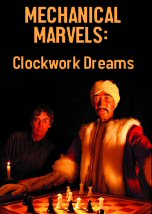
Mechanical Marvels: Clockwork Dreams

   2013    Technology
Professor Simon Schaffer presents the amazing and untold story of automata - extraordinary clockwork machines designed hundreds of years ago to mimic and recreate life. The film brings the past to life in vivid detail as we see how and why these masterpieces were built. Travelling around Europe, Simon uncovers the history of these machines and shows us some of the most spectacular examples, from an entire working automaton city to a small boy who can be programmed to write and even a device that can play chess". All the machines Simon visits show a level of technical sophistication and ambition that still amazes today. As well as the automata, Simon explains in great detail the world in which they were made - the hardship of the workers who built them, their role in global trade and the industrial revolution and the eccentric designers who dreamt them up. Finally, Simon reveals that to us that these long-forgotten marriages of art and engineering are actually the ancestors of many of our most loved modern technologies, from recorded music to the cinema and much of the digital world.

Petra: Lost City of Stone

   2015    History
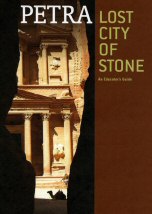
More than 2,000 years ago, the thriving city of Petra rose up in the bone-dry desert of what is now Jordan. An oasis of culture and abundance, the city was built by wealthy merchants whose camel caravans transported incense and spices from the Arabian Gulf. They carved spectacular temple-tombs into its soaring cliffs, raised a monumental Great Temple at its heart, and devised an ingenious system that channeled water to vineyards, bathhouses, fountains, and pools. But following a catastrophic earthquake and a slump in its desert trade routes, Petra's unique culture faded and was lost to most of the world for nearly a thousand years. Now, in a daring experiment, an archaeologist and sculptors team up to carve an iconic temple-tomb to find out how the ancient people of Petra built their city of stone. Meanwhile, scientists using remote sensors and hydraulic flumes uncover the vast city and its sophisticated water system. The race is on to discover how these nomads created this oasis of culture in one of the harshest climates on Earth.

The Lost Pyramids of Caral

   2002    History
The magnificent ancient city of pyramids at Caral in Peru is a thousand years older than the earliest known civilisation in the Americas and, at 2,627 BC, is as old as the pyramids of Egypt. Many now believe it is the fabled missing link of archaeology - a 'mother city'. If so, then these extraordinary findings could finally answer one of the great questions of archaeology: why did humans become civilised?" For over a century, archaeologists have been searching for what they call a mother city. Civilisation began in only six areas of the world: Egypt, Mesopotamia, India, China, Peru and Central America. In each of these regions people moved from small family units to build cities of thousands of people. They crossed the historic divide, one of the great moments in human history. Why? To find the answer archaeologists needed to find a mother city - the first stage of city-building. Caral, is so much older than anything else in South America that it is a clear candidate to be the mother city. It also is in pristine condition. Nothing has been built on it at all. Instead laid out before the world is an elaborate complex of pyramids, temples, an amphitheatre and ordinary houses. Scientists developed a number of theories. Some said it was because of the development of trade, others that it was irrigation. Some even today believe it was all because of aliens. Gradually an uneasy consensus emerged. The key force common to all civilisations was warfare. Crucially, there is not the faintest trace of warfare at Caral; no battlements, no weapons, no mutilated bodies. Instead, Ruth's findings suggest it was a gentle society, built on commerce and pleasure. In one of the pyramids they uncovered beautiful flutes made from condor and pelican bones. They have also found evidence of a culture that took drugs and perhaps aphrodisiacs. Most stunning of all, they have found the remains of a baby, lovingly wrapped and buried with a precious necklace made of stone beads.

Lost Kingdoms of South America: People of the Clouds

   2013    History
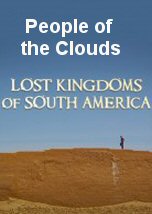
Dr Jago Cooper reveals the history of some of South America's ancient civilisations. He begins with an epic journey into the remote Peruvian Andes in search of the mysterious Chachapoya people. Once numbering half a million, they were known as the 'People of the Clouds'. Dr Cooper reveals how they developed sophisticated methods of recording stories, traded in exotic goods found hundreds of miles from their territory, and had funeral traditions that challenge assumptions about ancient human behaviour. His search for evidence takes him to astonishing cliff tombs untouched for 500 years and one of the most spectacular fortresses in South America, where the fate of the Chachapoya is revealed.
Series: Lost Kingdoms of South America
Chimp Empire

Chimp Empire

2023  Nature
The Beauty of Maps

The Beauty of Maps

2010  History
Natural World

Natural World

2009  Nature
Rafa

Rafa

2026  History
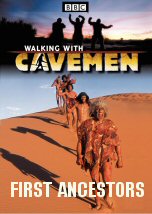
Walking with Cavemen

Walking with Cavemen

2003  History
Leaving Neverland

Leaving Neverland

2019  Culture