With a humorous and surprisingly revealing look at modern farming, this documentary series follows Jeremy Clarkson as he trades fast cars and city life for the unpredictable challenges of running a working farm in the English countryside. What begins as an ambitious new venture soon becomes a constant battle against weather, bureaucracy, livestock, machinery, and the harsh realities faced by farmers every day. Combining stunning rural landscapes with Clarkson's trademark humor, the series offers an entertaining and eye-opening glimpse into life on the land. In the first three episodes, Jeremy finds himself largely on his own as key members of the team are away, forcing him to take greater responsibility for the farm's daily operations. Persistent rain threatens crucial planting schedules, while new equipment, a new farmhand, and even a potential new business opportunity provide fresh challenges and unexpected lessons. As he searches for a local pub to expand his ambitions, Jeremy also faces competition, difficult decisions, and the constant pressure of keeping the farm running in an environment where success often depends on factors completely beyond his control.
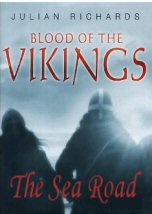
Julian Richards investigates the impact of the Vikings in Britain. This edition focuses on the archaeological trail left by the Vikings as they travelled from Norway along the sea road to Dublin. Settlements, a boat burial and evidence of trading have been discovered on the Scottish isles, and silver hoards found in Ireland suggest that Dublin was not only wealthy and important, but also a centre for trade in slaves.
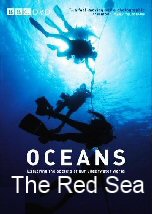
The Red Sea is one of the youngest oceans in the world and one of the warmest. The northern region, with its diverse array of marine life, is one of the most visited dive locations on earth while the southern end remains virtually unexplored. It's a global hotspot for marine biology and an important trade route throughout human history, linking the trade goods of India and the Far East with the markets of Egypt and Europe.
In the third programme of the series, Aleks gives the lowdown on how, for better and for worse, commerce has colonized the web - and reveals how web users are paying for what appear to be 'free' sites and services in hidden ways. Joined by some of the most influential business leaders of today's web, including Eric Schmidt (CEO of Google), Chad Hurley (CEO of YouTube), Bill Gates, Martha Lane Fox and Reed Hastings (CEO of Netflix), Aleks traces how business, with varying degrees of success, has attempted to make money on the web. She tells the inside story of the gold rush years of the dotcom bubble and reveals how retailers such as Amazon learned the lessons. She also charts how, out of the ashes, Google forged the business model that has come to dominate today's web, offering a plethora of highly attractive, overtly free web services, including search, maps and video, that are in fact funded through a sophisticated and highly lucrative advertising system which trades on what we users look for. Aleks explores how web advertising is evolving further to become more targeted and relevant to individual consumers. Recommendation engines, pioneered by retailers such as Amazon, are also breaking down the barriers between commerce and consumer by marketing future purchases to us based on our previous choices. On the surface, the web appears to have brought about a revolution in convenience. But, as companies start to build up databases on our online habits and preferences, Aleks questions what this may mean for our notions of privacy and personal space in the 21st century
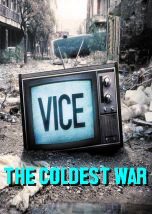
'The Coldest War': With the polar ice caps shrinking due to global warming, new trade routes are being exposed, along with billions of dollars' worth of natural-resource reserves. The five nations bordering the Arctic are readying themselves to fight for it. The problem is that there's one non-NATO country that already considers itself rightful owner of the region: Russia. With Vladimir Putin's recent military annexation of Crimea, there's a definite possibility its aggressions will boil over, returning the international community to precarious Cold War footing. We will head north to witness NATO forces participating in the largest polar military exercise in history. 'Heroin Warfare': Since the U.S. occupation of Afghanistan, heroin production in the region has skyrocketed, making the country the number-one producer by a large margin. Though Iran, Afghanistan's neighbor, is an ultraconservative country, Afghan heroin flowing across the border has actually caused Iran to have the worst heroin use problem in the world. Suroosh Alvi gets a rare look inside Iran to meet the suffering heroin addicts, and see how the country is coping with the illegal drug trade.
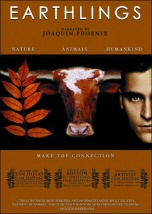
A feature length documentary about humanity's absolute dependence on animals (for pets, food, clothing, entertainment, and scientific research) but also illustrates our complete disrespect for these so-called 'non-human providers'. With an in-depth study into pet stores, puppy mills and animals shelters, as well as factory farms, the leather and fur trades, sports and entertainment industries, and finally the medical and scientific profession, the film uses hidden cameras and never before seen footage to chronicle the day-to-day practices of some of the largest industries in the world, all of which rely entirely on animals for profit. Powerful, informative and thought-provoking, EARTHLINGS is by far the most comprehensive documentary ever produced on the correlation between nature, animals, and human economic interests. There are many worthy animal rights films available, but this one transcends the setting.





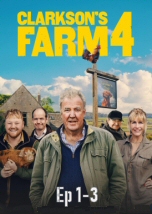



In the first three episodes, Jeremy finds himself largely on his own as key members of the team are away, forcing him to take greater responsibility for the farm's daily operations. Persistent rain threatens crucial planting schedules, while new equipment, a new farmhand, and even a potential new business opportunity provide fresh challenges and unexpected lessons. As he searches for a local pub to expand his ambitions, Jeremy also faces competition, difficult decisions, and the constant pressure of keeping the farm running in an environment where success often depends on factors completely beyond his control.