Orbiting Earth at around 27.000 km/h, the International Space Station is one of humanity’s greatest engineering achievements, but also one of the most unforgiving places ever built. Astronauts and mission controllers recount moments when routine work suddenly became a fight for survival: a spacesuit filling with water, toxic ammonia spraying across a spacewalker, dangerous temperature extremes, radiation, fire, contamination and the constant threat of collision. The series reveals how every mission depends on training, improvisation and split-second decisions in an environment where even a small failure can become fatal. Across the two episodes, presented here together in a single uninterrupted video, the danger escalates from the hazardous construction and maintenance of the station to the growing risks of life aboard it. Astronauts face micrometeoroids and space debris travelling at lethal speeds, docking emergencies and system failures, culminating in the extraordinary 2021 incident when the newly arrived Nauka module unexpectedly fired its thrusters and sent the entire ISS rotating out of control. With communications at risk and the structure under immense strain, crews in orbit and controllers on Earth must work together to regain control. The result is a gripping story of courage, science and survival inside a machine that has kept humans continuously living in space for more than two decades.
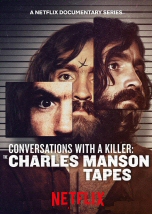
Previously unreleased prison calls, firsthand testimony and archival footage open a disturbing window into the world Charles Manson created around himself. Against the backdrop of the late-1960s counterculture, Manson draws vulnerable and disillusioned young people into a tightly controlled group built on promises of love, freedom and belonging. His manipulation gradually deepens into paranoia, domination and violence, culminating in the 1969 murders committed by members of the Manson Family, including the killings at the home of Sharon Tate, and in Manson’s delusional belief that the crimes could help ignite a racial apocalypse he called “Helter Skelter.” The story then follows the investigation, arrests and extraordinary 1971 trial, where Manson and his followers turn the courtroom into a spectacle and become symbols of a darker side of the era. Recordings of Manson himself are joined by voices from people who lived through the events, including material connected to followers such as Charles “Tex” Watson, Susan Atkins and Leslie Van Houten, revealing how charisma, coercion and group loyalty were transformed into lethal obedience. Presented here with all three episodes combined into a single video, viewers can follow the complete story without interruption, from the formation of the Family to the murders, the trial and the disturbing legacy Manson left behind.
In the final arc of the season, Nathan Fielder pushes the boundaries of simulated reality to a disturbing new level. What begins as a controlled exercise in human rehearsal quickly unravels, as the participants lose sight of where the performance ends and real life begins. Nathan’s interventions grow increasingly invasive, blurring the lines between creator and subject, until the emotional weight of the experiment turns on him. With each scene, the series peels back another layer of reality, revealing unsettling truths about identity, manipulation, and control. By the final episode, the line between authenticity and artifice collapses—leaving viewers questioning everything they’ve witnessed.
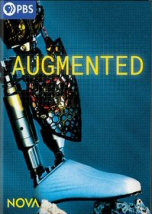
Follow the dramatic personal journey of Hugh Herr, a biophysicist working to create brain-controlled robotic limbs. At age 17, Herr’s legs were amputated after a climbing accident. Frustrated by the crude prosthetic limbs he was given, Herr set out to remedy their design, leading him to a career as an inventor of innovative prosthetic devices. Now, Herr is teaming up with an injured climber and a surgeon at a leading Boston hospital to test a new approach to surgical amputation that allows prosthetic limbs to move and feel like the real thing. Herr’s journey is a powerful tale of innovation and the inspiring story of a personal tragedy transformed into a life-long quest to help others.
Has the age of antibiotics come to an end? From a young girl thrust onto life support in Arizona to an uncontrollable outbreak at one of the nation’s most prestigious hospitals, The film investigates the alarming rise of a deadly type of bacteria that our modern antibiotics can’t stop.
A ground-breaking new trial at Imperial College London sees, for the first time ever under controlled conditions, a psychedelic drug tested head-to-head against a standard antidepressant as a treatment for depression. The film follows a pioneering team of scientists and psychotherapists as they compare the effects of psilocybin (the active ingredient of magic mushrooms) with an antidepressant on a small group of participants with clinical depression. This is scientific research at its most cutting edge. With over seven million people being prescribed antidepressants each year in England alone, this drug trial is an important milestone in understanding a completely different treatment for depression. How do psychedelic drugs measure up against the industry-standard antidepressants that have been popular since the 1990s? The empirical results of the trial are explored alongside the participants’ powerful lived experience.











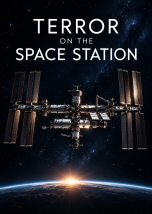




Across the two episodes, presented here together in a single uninterrupted video, the danger escalates from the hazardous construction and maintenance of the station to the growing risks of life aboard it. Astronauts face micrometeoroids and space debris travelling at lethal speeds, docking emergencies and system failures, culminating in the extraordinary 2021 incident when the newly arrived Nauka module unexpectedly fired its thrusters and sent the entire ISS rotating out of control. With communications at risk and the structure under immense strain, crews in orbit and controllers on Earth must work together to regain control. The result is a gripping story of courage, science and survival inside a machine that has kept humans continuously living in space for more than two decades.