










Last Watched

"USA"  Sort by

Secrets of the Seven Earths

   2018    Science    HD
We are living in a new golden age of exploration. Planet hunters are searching far beyond our solar system and they are actually finding new worlds orbiting other suns. Thousands of these alien worlds have already been found, but this is the story of perhaps the greatest discovery yet, a star 40 light-years away with seven Earth-sized planets: Trappist-1.
This new discovery of seven alien Earth-like planets in a faraway solar system is a major milestone in our hunt for extraterrestrial life, and experts investigate the secrets of Trappist -1's mysterious worlds to reveal if we're truly alone in the universe.
Series: Space Deepest Secrets

Changing Planet

   2019    Nature    HD
At a time when the Earth’s surface is changing faster than ever in human history, watch cities grow, forest disappear and glaciers melt.
In the ever-growing grey of cities one man is feeding thousands of parakeets; in Sumatra a female orang-utan and her daughter face life in a forest under threat; while in Tanzania local people use satellites to replant a forest, securing the future for a family of chimpanzees. This is our home as we’ve never seen it before.
Series: Earth from Space

Conquistadors: The Search for El Dorado

   2002    History
Francisco de Orellana failed to find El Dorado, but discovered the Amazon. Early in 1541, a rumor swept Quito that beyond the mountains, there lay a land richer than Mexico, or even Peru - a land of gold. The ruler of this land was so rich that he covered himself with gold dust every day and washed it off every evening. He was "the golden man", El Dorado. They had tree goals: to find La Canela, the land of cinnamon: to assess new lands for colonization; and to find El Dorado. On march 1541, They marched eastwards with more that 200 Spanish troops and thousands of native servants.
Series: Conquistadors

Mysteries of the Moon

   2007    Science
For thousands of years, mankind has found comfort in its presence. It's been a lantern for nighttime travellers, a timekeeper for farmers and a location finder for sailors at sea. For some cultures, it's even been a god. It's the only cosmic body ever visited by human beings. From afar, the Moon's luminance has captivated us since the beginning of time. And a closer look at the beacon in the dark sky reveals an ever-present source of myth, intrigue, controversy and unsolved mysteries. The field of science may cast an empirical light on some things about the Universe, but lunar experts are the first to admit they don't have all the answers when it comes to our Moon. This episode explores the theories behind Lunar Transient Phenomena that have left scientists stumped for centuries; takes to the Canadian waters to see how the Moon effects our planet through tides; and dusts off some age-old myths and weighs arguments that without our Moon, humanity may not even exist.
Series: The Universe

Edge of Space

   2009    Technology
Low Earth Orbit, 120 miles above sea level, is where the majority of space exploration has occurred. This 1,100 mile band around Earth is where--for a cool $20 million--any private citizen can take the vacation of his or her life on the International Space Station. Commercial prospects for LEO are huge; but dangers lurk for any individual willing to travel here--radiation, cosmic rays, and space debris numbering in the thousands threaten any spacecraft travelling in orbit. It's the new frontier, or the final frontier...and the possibilities are endless if you are willing to travel to the edge of space exploration.
Series: The Universe

Land of the Cave-Bear

       Science
In the Land of the Cave Bear, Alice ventures to the parts of the northern hemisphere, hit hardest by the cold - Europe and Siberia. High in the mountains of Transylvania, a cave sealed for thousands of years reveals grisly evidence for a fight to the death between two staving giants, a cave bear and a cave lion. Yet Alice discovers that for woolly rhinos and woolly mammoths, the Ice Age created a bounty. The Mammoth Steppe, a vast tract of land which went half way round the world, provided food all year round, for those that liked the cold. It was these mammoths that Europe's most dangerous predators hunted for their survival.
Series: Ice Age Giants
Life on Our Planet

Life on Our Planet

2023  Science
The Jinx

The Jinx

2015  History
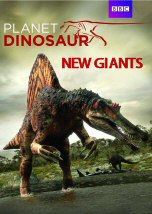
Planet Dinosaur

Planet Dinosaur

2011  Science
The Gene Code

The Gene Code

2011  Science
How to Grow a Planet

How to Grow a Planet

2012  Science