


Last Watched

"War "  Sort by

The Immortals

   2014    Science
This episode covers the nature of how life may have developed on Earth and the possibility of life on other planets. Tyson begins by explaining how the human development of writing systems enabled the transfer of information through generations, describing how Princess Enheduanna ca. 2280 BCE would be one of the first to sign her name to her works, and how Gilgamesh collected stories, including that of Utnapishtim documenting a great flood comparable to the story of Noah's Ark. Tyson explains how DNA similarly records information to propagate life, and postulates theories of how DNA originated on Earth, including evolution from a shallow tide pool, or from the ejecta of meteor collisions from other planets. In the latter case, Tyson explains how comparing the composition of the Nakhla meteorite in 1911 to results collected by the Viking program demonstrated that material from Mars could transit to Earth, and the ability of some microbes to survive the harsh conditions of space. With the motions of solar systems through the galaxy over billions of years, life could conceivably propagate from planet to planet in the same manner. Tyson then moves on to consider if life on other planets could exist. He explains how Project Diana performed in the 1960s showed that radio waves are able to travel in space, and that all of humanity's broadcast signals continue to radiate into space from our planet. Tyson notes that projects have since looked for similar signals potentially emanating from other solar systems. Tyson then explains that the development and lifespan of extraterrestrial civilizations must be considered for such detection to be realized. He notes that civilizations can be wiped out by cosmic events like supernovae, natural disasters such as the Toba disaster, or even self-destruct through war or other means, making probability estimates difficult. Tyson describes how elliptical galaxies, in which some of the oldest red dwarf stars exist, would offer the best chance of finding established civilizations. Tyson concludes that human intelligence properly applied should allow our species to avoid such disasters and enable us to migrate beyond the Earth before the Sun's eventual transformation into a red giant.
Series: Cosmos: A Spacetime Odyssey
Easy Listening

   2013    Art
Series concludes with the focus shifting to the United States in the post-war years of the 1950s and beyond. Beginning with arguably the most notorious work of 20th century classical music, John Cage's 'silent' composition 4'33", it looks at how a series of maverick Americans re-invented the sound of classical music into a more simple form, bringing back harmonies and rhythms that made it increasingly popular with audiences across the world. It also examines how this music found its way into a spiritual realm, with the strain of pared-down religious composition that came to be known as 'holy minimalism'. From the Maverick concert hall in Woodstock, New York to an Orthodox cathedral in Estonia to a car park in Peckham, south London, the story is told by a stellar line-up of contributors including Philip Glass, Steve Reich, John Adams, Arvo Pärt and John Tavener.
Series: The Sound and the Fury

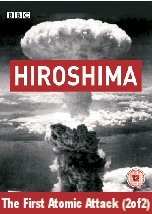
Hiroshima 2 of 2

   2005    Technology
It was the defining moment of the 20th Century - the scientific, technological, military, and political gamble of the world's first atomic attack. This drama-documentary attempts to do what no other film has done before - to show what it is like to live through a nuclear explosion, millisecond by millisecond. Set in the three weeks from the first test explosion in New Mexico to the eventual dropping of the bomb, the action takes viewers into the room where the crucial political decisions are made; on board the Enola Gay on her fateful voyage; inside the bomb as it explodes; and on the streets of Hiroshima when disaster strikes. Parallel storylines interweave, unfolding the action from both US and Japanese perspectives, and revealing the tensions and conflicts in the actions and minds of people who were making history. Special effects recreate the reality of the mission - even going inside the workings of the bomb - and archive film replays the horrific aftermath.
Series: Hiroshima

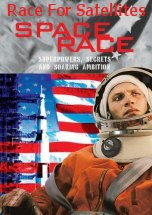
Race For Satellites

   2005    Technology
During 1953-1958, as the Cold War intensifies, Korolev is asked to build a rocket capable of carrying a five-ton warhead to America - he designs and constructs the R-7 Semyorka, and is later allowed to use it to launch the first satellite, Sputnik 1. Meanwhile, von Braun struggles to persuade the US government to allow him to launch his own satellite - after Sputnik's launch and the failure of the US Navy to launch a Vanguard satellite, he is finally allowed to launch the first American satellite, Explorer 1.
Series: Space Race

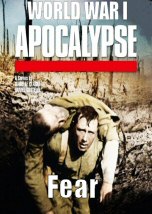
Fear

   2014    History
The French army stops the German advance at the battle of the Marne, while the Germans halt the Russians at Tannenberg on the eastern front. In France, the warring parties dig themselves in for 4 years in the trenches. Soldiers from the colonies come lend a hand to their colonizers and the war becomes global.
Series: Apocalypse: World War 1

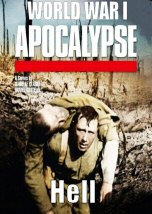
Hell

   2014    History
1916. The war is raging in Europe and stretches from the trenches in France to the Italian Alps and the Balkans, and beyond to the gates of the Eastern world. The conflict becomes industrial, and millions of shells rain down on the battlefields; Verdun and the Somme are the deadliest battles in this second year of the war. Who can stop this infernal machine?
Series: Apocalypse: World War 1
Vegan

Vegan

2020  Culture
Unknown

Unknown

2023  Science
Galapagos

Galapagos

2006  Nature
The Normans

The Normans

2010  History
Leaving Neverland

Leaving Neverland

2019  Culture
Magic Numbers

Magic Numbers

2018  Science
Worst Ex Ever

Worst Ex Ever

2024  Culture