The James Webb Space Telescope, a flagship observatory developed by NASA, the European Space Agency, and the Canadian Space Agency, is the largest space telescope ever built, with a deployable mirror measuring 21.3 feet (6.5 meters) in diameter and four scientific instruments to observe the universe in infrared wavelengths. The mission will study the formation of galaxies, stars, and planets. JWST was launched December 25, 2021 on an Ariane 5 ECA rocket. This is the story of the James Webb Space Telescope, told by the people who have devoted their lives to it. It is the world’s most advanced and most expensive telescope, and building it has been fraught with challenges. But it will all be worth it if the mission is successful.
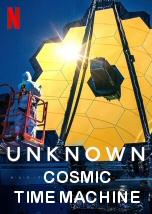
Space exploration as we’ve never seen it before, taking us behind the scenes of how NASA creates and sends the James Webb Space Telescope into space. Follows a team of engineers and scientists in an ambitious mission to launch the telescope and take the next giant leap in the understanding of the universe.
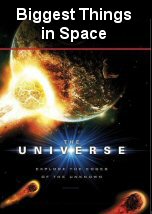
We can't compare anything on earth to the biggest things known in space. The Cosmic Web may connect objects in the universe with threads of Dark Matter. The Lyman-alpha blob is a bubble like structure containing countless galaxies--perhaps the biggest object in the entire universe. Regions of radio-emitting gas called "radio lobes" could be even bigger. Then there are super galaxy clusters which are hundreds of galaxies merged together due to cosmic collisions. Discover which is the largest planet, star, star cluster, constellation, black hole, volcano, galaxy, explosions, moon, storm, impact crater and "void" in space.
We all project images of ourselves online - a curated identity that defines how we want to be perceived. But what temptations exist to embellish and what are the dark implications? In this episode, enter the world of Cyberbanging, where inner city youth are using social media to brag, conspire and incite violence; two African-American women bloggers who have turned the table on the trolls who threaten them; and the creator of Abdullah X, an online character who's trying to keep Muslim kids from falling under the spell of Islamic extremists.
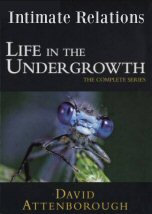
The world of invertebrates exists in a web of relationships with plants and other animals. Unique footage of the world's smallest insect (a fairy wasp only quarter of a millimetre long) shows it flying underwater to find the eggs of water beetles in which to lay its own brood. Some ants 'farm' the trees that give them shelter, creating areas known as 'Devil's gardens'. To make sure these grow without competition, they kill off other seedlings in the surrounding vegetation. The blister beetle's larvae huddle together on the end of a piece of grass and mimic a female bee. When a male bee tries to mate with the 'female', the larvae grab on to his belly. Confused, he flies away and searches for a real female. When he eventually finds her and mates with her, the beetle larvae hurriedly swap from his front on to her back, and hence get carried back to her nest where they eat her pollen supplies.
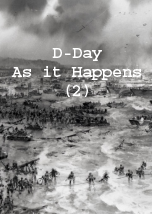
D-Day: As It Happens is a 24-hour history event to be broadcast across TV, web, mobile devices and social media, telling the story of this pivotal event in 20th-century history in a completely new way. Using newly-analysed archive footage, viewers can track the progress of seven people who were there on the day, each of them a real participant in the 1944 invasion. And they can do so moment by moment in real time, encountering the twists and turns of the fighting at the same time as the D-Day seven did, and learning their fate as the action unfolds in parallel with the present, Narrated by Peter Snow, with Channel 4 presenter and former marine Arthur Williams, and experts including former British Army officer Colonel Tim Collins and front-line journalist Lorna Ward. The second programme reveals what happened to the seven real people the event is following in real time, and also rounds up the events of D-Day.











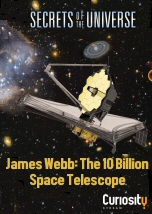


This is the story of the James Webb Space Telescope, told by the people who have devoted their lives to it. It is the world’s most advanced and most expensive telescope, and building it has been fraught with challenges. But it will all be worth it if the mission is successful.