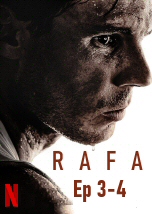
In the final two episodes, Novak Djokovic’s sudden rise changes everything, forcing Rafael Nadal into a new and even more demanding era: the age of the Big Three. What was once a rivalry defined by Roger Federer becomes a three-way battle for history, greatness and survival at the top of tennis. As Djokovic grows stronger and the pressure intensifies, Rafa is pushed to the limits of his body and mind, fighting through pain, doubt and exhaustion while trying to protect the place he has earned through years of sacrifice. But these episodes are not only about trophies, rankings or legendary matches. They reveal the deepest part of Nadal’s character: the refusal to surrender, even when injuries, age and time begin to close in. From the physical punishment of his greatest victories to the emotional weight of knowing that the end is coming, Rafa keeps searching for one more comeback, one more fight, one more reason to believe. Powerful, intimate and deeply moving, the final chapters become a portrait of a champion who built his legend not simply by winning, but by never giving up.
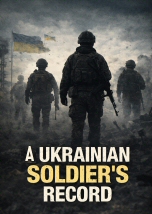
A young filmmaker leaves behind his civilian life to enter the front lines of Ukraine’s war, documenting not only the battlefield but the emotional weight of a conflict that reshapes everything it touches. Through his camera, moments of tension, fear and humanity unfold with an immediacy that places you inside a reality few ever witness firsthand. Beyond the combat, the film reveals the inner transformation of a man confronting duty, identity and survival, offering a raw and intimate perspective that turns a distant war into something deeply personal and impossible to ignore.
From an early age, a Hungarian prodigy named Judit Polgar was raised to believe that genius could be trained — and that she would prove it to the world. Guided by an ambitious father who rejected convention and educated his daughters at home through relentless chess training, she entered a battlefield long dominated by men. What followed was a 15-year journey of discipline, pressure, and defiance, as she refused to compete in women-only tournaments and instead took on the strongest grandmasters on earth. Facing the towering presence of world champion Garry Kasparov and the weight of global skepticism, she shattered barriers move by move, redefining what was thought possible for women in elite competition. This inspiring documentary reveals not only the brilliance of her mind, but the emotional cost of greatness — a story of talent, ambition, control, and liberation played out across the 64 squares of the chessboard.
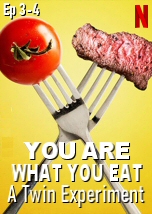
In the final two episodes, the experiment moves from theory to real life as the twins are forced to take full control of their food choices after moving out on their own. Cooking becomes a daily challenge, exposing how habits, convenience, and culture shape what we eat. At the same time, innovators pushing plant-based alternatives step into the spotlight, as growing concerns around animal products raise urgent questions about health and sustainability. As the study reaches its conclusion, the results are finally revealed. Detailed analyses of weight, gut health, and brain function confront the twins with clear, and sometimes surprising, consequences of their diets. What began as a personal test widens into a broader reflection on the future of food, as momentum builds around a changing food industry and the choices that may redefine how we eat.
This documentary takes viewers inside the emotional and creative engine behind the final chapter of Stranger Things, offering unprecedented access to how an iconic series comes to an end. Filmed over an entire year on set by filmaker Martina Radwan, it captures the intensity, scale, and pressure of crafting a farewell that must live up to global expectations. From massive set pieces to quiet moments between takes, the film reveals the human effort behind a cultural phenomenon. As production pushes toward its conclusion, the documentary follows cast and crew through long nights, creative breakthroughs, and the weight of saying goodbye. Personal reflections, behind-the-scenes challenges, and raw emotion turn the making of the final season into a story of its own—one about friendship, endurance, and the rare magic that happens when a world beloved by millions is built one last time.
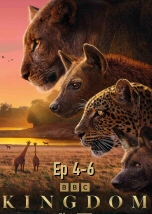
In the final three episodes, life in this Zambian stronghold reaches a decisive turning point as survival becomes more fragile than ever. An injured wild dog named Flint defies the odds by helping care for Storm’s largest litter of pups, while leopard Mutima continues her perilous search for a territory to call home. At the same time, the lions face pressures beyond their control, forcing shifts in dominance as age, injury, and the land itself begin to reshape the balance of power. The closing chapter deepens the drama and the emotion. Leopard Olimba struggles with the weight of old age, the wild dogs’ story takes an unexpected turn, and both lions and hyenas experience a baby boom that raises a final question: who truly rules this kingdom now? The series concludes by revealing the unseen human effort behind the scenes, introducing the filmmakers, conservationists, and anti-poaching teams whose extraordinary work protects South Luangwa and the fragile lives that depend on it.

















But these episodes are not only about trophies, rankings or legendary matches. They reveal the deepest part of Nadal’s character: the refusal to surrender, even when injuries, age and time begin to close in. From the physical punishment of his greatest victories to the emotional weight of knowing that the end is coming, Rafa keeps searching for one more comeback, one more fight, one more reason to believe. Powerful, intimate and deeply moving, the final chapters become a portrait of a champion who built his legend not simply by winning, but by never giving up.