










Last Watched

"Whales"  Sort by

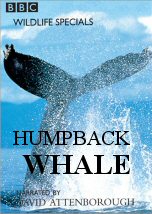
Humpback Whale

   2006    Nature
Few sounds are more beautiful or moving than the underwater songs of the humpback whale. Male whales compete with their songs, which often last for 10 minutes at a time, and can be repeated for hours on end. Whales separated by thousands of miles of sea will sing almost identical songs. Researchers have found that the songs change throughout the breeding months, following a mysterious pattern repeated across the waves. Whales also use sound to hunt. To catch herring, humpback whales release a stream of bubbles to form a shimmering, circular fishing net. Emitting a repetitive loud scream, they scare the fish into a tight ball, then lunge out of the water to swallow the shoal whole. Now it seems that the long-held image of the gentle giant must change to one of a ferocious and opportunistic hunter.
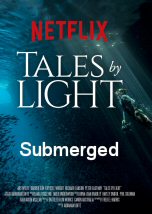
Tales by Light Submerged

   2015    Art
In this series, the pursuit of the perfect image takes five adventurous photographers on journeys to the ends of the Earth, where they push the limits of their craft. In the first episode, Australian marine photographer Darren Jew captures mating humpback whales in Tonga, a 70-year-old biplane wreck and an active New Guinea volcano.
Series: Tales by Light

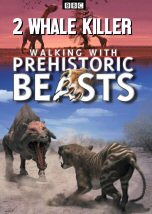
Whale Killer

       Science
Moving on to the Late Eocene period 36 million years ago and mammals have prospered and are now the largest creatures on land and sea. This is an era of animals like andrewsarchus, the biggest mammal carnivore ever to walk on land, and the brontotheres, small-brained herbivores. It is in the sea, however, that the most monstrous mammals of all can be found. We follow the fate of a female basilosaurus, a huge serpent-like early whale, but nothing like the gentle filter feeding whales of the 21st century. Four times the length of the great white shark, with jaws to match, she is every inch a killer.
Series: Walking with Prehistoric Beast

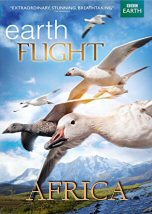
Earthflight Africa

   2012    Nature
Fly over Africa on the back of a vulture and see the most animal-packed continent with fresh eyes. Arrow-dive with cape gannets among sharks, dolphins and whales as they join the great sardine run. Soar with fish eagles as they discover an S-shaped living island comprised entirely of flamingos, and join them on a spectacular hunt. Fly with kelp gulls as they study the hunting behaviour of the greatest underwater predator of all: the great white shark. On the wings of eagles, fly through the mist-filled Victoria Falls and dive for fish in the mighty Zambezi. Circle with vultures high above the Serengeti as they watch the drama of the wildebeest migration below, and discover what happens when this canny scavenger suddenly becomes prey. Among toxic soda lakes, find out what it is like to be a flamingo, vulnerable to every predator on the continent, including baboons and hyenas. Join these flamingos as they take part in one of the most beautiful dances in the bird world. This is Africa as never seen before - from the wings of birds
Series: Earthflight

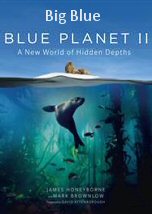
Big Blue

   2017    Nature
The big blue is the world's greatest wilderness, far from shore and many kilometres deep. It's a vast marine desert where there is little to eat and nowhere to hide. Yet it's home to some of the biggest and most spectacular creatures on earth. This episode reveals what it takes to survive in this savage and forbidding world. We witness feats of incredible endurance, moments of high drama and extraordinary acts of heart-wrenching self-sacrifice. Every animal in the big blue must find their own unique way to survive. Sperm whales have the largest brains in the world. They live for 80 years, and we are only now beginning to learn the extraordinary complexity of their language of clicks - thought to coordinate the whole family in everything from childcare to hunting. With special pressure-proof cameras, we witness record-breaking feats of endurance as they hunt for squid a kilometre down into the abyss. Only recently have we begun to solve the mystery of where baby turtles disappear to in their early years. They leave the crowded waters of the coast and head to the open ocean, where they use floating debris like logs as life rafts. Here they remain until adulthood, adrift on the high seas in relative safety away from coastal predators. Over half of all animals in the open ocean drift in currents. Jellyfish cross entire oceans feeding on whatever happens to tangle with their tentacles. The jelly-like Portuguese man-of-war can harness sail power to fish with its deadly tentacles. Sometimes there is a brief explosion of food in this marine desert, but ocean hunters must be fast to make the best of this bonanza. We witness super pods of up to 5,000 spinner dolphins racing to herd vast shoals of lanternfish, briefly caught at the surface where it is thought they spawn. New aerial footage reveals, for the first time, the truth to a centuries-old sailors' legend of the 'boiling seas' - the spectacular feeding frenzy of 90kg tuna and dolphins smashing through the lantern fish shoals turning the sea white with foam.
Series: Blue Planet II

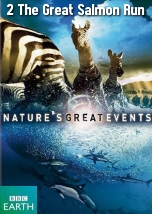
The Great Salmon Run

   2009    Nature
Every year grizzly bear families in North America depend for their survival on a spectacular natural event: the return of hundreds of millions of salmon from the Pacific Ocean to the mountain streams where they were born. The salmon travel thousands of miles to spawn and then die. The great run not only provides food for bears, but for killer whales, wolves, bald eagles, and even the forest itself. The question is: will the salmon return in time to keep hungry bears alive?
A mother grizzly and her cubs emerge from their den high in snowy Alaskan mountains. Filming from the air the team capture a TV first, following the bears as they negotiate a near vertical slope on their journey to the coast where they await the return of the salmon. Meanwhile, the salmon are making their way to the to river mouths where they must swim upstream and against the current. The programme reveals how they tackle the torrents and leap over waterfalls, a feat equivalent to a human jumping over a house. Dozens of hungry bears eagerly await the salmon that make it up river. In another TV first, underwater cameras record the ingenuity and fancy footwork they use to collect dead salmon from the bottom of deep pools.
Series: Nature Great Events
X-Ray Earth

X-Ray Earth

2021  Science
Asia

Asia

2024  Nature
Frozen Planet

Frozen Planet

2011  Nature
The Jinx

The Jinx

2015  History
Frozen Planet II

Frozen Planet II

2022  Nature
The Life of Birds

The Life of Birds

1998  Nature
Bible's Buried Secrets

Bible's Buried Secrets

2011  Culture