Can skyscrapers be made safer, more efficient, and livable in our rapidly growing cities? Skyscrapers are gleaming symbols of prestige, and an ingenious way to save space in dense urban areas. But as buildings rise ever higher, what are the risks of these architectural behemoths? Do we truly know how they will hold up in earthquakes, fires and wind? What have--or haven’t—we learned from past tragedies? But even as we devise ways to defend them against potential disasters, can we also make them more livable, interactive, and eco-friendly?
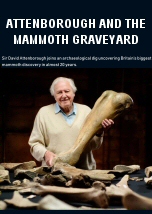
David Attenborough joins an archaeological dig uncovering Britain’s biggest mammoth discovery in almost 20 years. In 2017, in a gravel quarry near Swindon, two amateur fossil hunters found an extraordinary cache of Ice Age mammoth remains and a stone hand-axe made by a Neanderthal. Professor Ben Garrod joins the team at DigVentures during the excavation as they try to discover why the mammoths were here and how they died. Could the Neanderthals have killed these Ice Age giants?
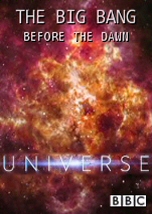
How did the universe come to be? Thanks to a series of discoveries, our most powerful space missions have unravelled 13.8 billion years of cosmic evolution and revealed the story of our universe from its birth all the way to the arrival of our nascent civilization. Our guide on this odyssey back to the dawn of time is light. Telescopes are time machines - by looking out into the distant universe, they open a window to the past. One telescope more than any other has helped us journey through the history of the universe: NASA’s Hubble Space Telescope. Remarkably, Hubble has even found one of the first galaxies ever to exist in the universe, which was born some 13.4 billion years ago. It's a discovery that hints at the beginnings of our own Milky Way. Vivid CGI brings this ancient galaxy to life, allowing us to witness for ourselves the first dawn. It was the beginning of a relationship between stars and planets that would, on a faraway world, lead to the origin of life - and ultimately to us. Hubble’s incredible discoveries have allowed scientists to piece together much of our cosmic story, but it cannot take us back to the most important moment in history: the Big Bang. For decades, the moment the universe began was the subject of pure speculation, but by combining astronomy and cosmology, scientists have finally found a way to put their theories to the test and study the momentous events that took place during the Big Bang. They can do this because the European Space Agency’s Planck space telescope has seen the afterglow of the Big Bang itself – something we call the Cosmic Microwave Background. The unparalleled detail Planck gave us has helped confirm something remarkable: the Big Bang may not be the beginning. There was a time before the dawn – a place beyond anything we can comprehend. Professor Brian Cox transports us back to the fraction of a second before the Big Bang, when the seeds of our universe were planted.
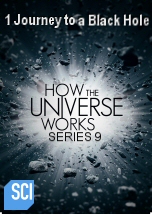
We as humans often question the creation of the universe. How was the universe created? How does it work? This series uses global experts from organizations like NASA and CERN to help us understand how this works, and uses CGI to demonstrate the phenomena. Episode 1 starts the new season as we dive deep into the black holes. The galaxy M87 is known for having at the core a super massive black hole. This black hole is the first ever photographed and we will witness the experts trying to find out the secrets of this famous black hole. In the meantime, they have overcome the scorching winds and death ray jets. And of all its hurdles, the event horizon will be the most difficult. This place is known for its uniqueness of time and space, where time stays still while the laws of physics fail.
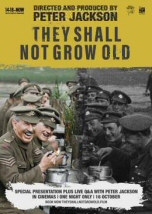
Peter Jackson's poignant WWI documentary 'They Shall Not Grow Old' to commemorate the centennial of the end of the first World War. The acclaimed documentary is an extraordinary look at the soldiers and events of the Great War, using film footage captured at the time, now presented as the world has never seen. By utilizing state-of-the-art restoration, colorization and 3D technologies, and pulling from 600 hours of BBC archival interviews, Jackson puts forth an intensely gripping, immersive and authentic experience through the eyes and voices of the British soldiers who lived it. Jackson recorded a special introduction to the film offering his perspective on why the film is important for audiences, who have never experienced WWI footage as anything but grainy black & white, and silent. Jackson opens a window to the past in a way that has never been seen or heard before, noting, 'Restoration is a humanizing process.'
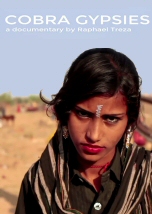
Cobra Gypsies offers a contemporary and colorful window to the amazing ancient culture of the nomadic Kalbeliya tribe, living in rural Rajasthan, Northern India. Their name means 'those who love snakes'. The film explores their culture of eternal dance, syncopated music, snake charming, colorful fashion and the nomadic way of life of these exotic looking castoffs, ancestors to the modern Roma Gypsies living in Europe today.






Do we truly know how they will hold up in earthquakes, fires and wind? What have--or haven’t—we learned from past tragedies? But even as we devise ways to defend them against potential disasters, can we also make them more livable, interactive, and eco-friendly?