'Speed' investigates mankind's insatiable necessity to move faster and further; for pleasure, for work, to explore, to survive. From ancient outriggers, to modern bullet trains, to the interplanetary travel of tomorrow; This series is a thrilling joyride through the Science and History of travel. 'Across Continents:' Never in the history of humanity have so many of us been mobile, never has our demand for fast, efficient and safe transportation been so high, and never have we relied so heavily on technology to deliver. New innovations propel us into the world of self-driving cars and ultra high-speed trains.
From fears about work and privacy to a rivalry between the U.S. and China, the series explores the promise and perils of AI. It traces a new industrial revolution that will reshape and disrupt our lives, our jobs and our world, and allow the emergence of the surveillance society. Today, China leads the world in e-commerce and is a society that bypassed credit cards. Now shops in stores are without cashiers, where the currency is facial recognition. No country has ever moved that fast. And in a short two-and-a-half years, China's A.I. implementation really went from minimal amount to probably about 17 or 18 unicorns, that is, billion-dollar companies. The progress was powered by a new generation of ambitious young techs pouring out of Chinese universities, competing with each other for new ideas, and financed by a new cadre of Chinese venture capitalists.
Ever wonder what's happening inside your head? From dreaming to anxiety disorders, discover how your brain works with this illuminating series. The first episode looks at how memory works and examines the way in which the brain stores, processes, and retrains memories. It also looks at the ways in which memory can fail and discusses how memories can warp over time. It talks to neuroscientists and a memory champion who explains her techniques.
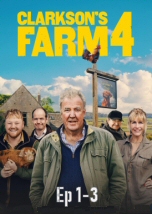
With a humorous and surprisingly revealing look at modern farming, this documentary series follows Jeremy Clarkson as he trades fast cars and city life for the unpredictable challenges of running a working farm in the English countryside. What begins as an ambitious new venture soon becomes a constant battle against weather, bureaucracy, livestock, machinery, and the harsh realities faced by farmers every day. Combining stunning rural landscapes with Clarkson's trademark humor, the series offers an entertaining and eye-opening glimpse into life on the land. In the first three episodes, Jeremy finds himself largely on his own as key members of the team are away, forcing him to take greater responsibility for the farm's daily operations. Persistent rain threatens crucial planting schedules, while new equipment, a new farmhand, and even a potential new business opportunity provide fresh challenges and unexpected lessons. As he searches for a local pub to expand his ambitions, Jeremy also faces competition, difficult decisions, and the constant pressure of keeping the farm running in an environment where success often depends on factors completely beyond his control.
Born in Naples, Bernini was an exceptional talent from an early age and went on to dominate the art world of 17th century Rome. His work epitomised the Baroque style and his sculpture, church interiors and exteriors and town planning could be seen everywhere. Bernini worked under successive Popes; Pope Gregory XV made him a knight and Pope Urban VIII made him as his best friend. He was revered in his time until a jealous rage caused him to have the face of his mistress slashed after discovering her romance with his brother. His reputation fell further after his bell towers for the Cathedral of St Peter's started cracking in 1641. He redeemed himself and kick started his career again with what is arguably his most famous work, The Ecstasy of St Theresa, in 1652.
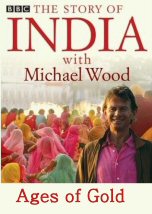
Presenter Michael Wood seeks out the achievements of the country’s golden age, discovering how India discovered zero, calculated the circumference of the Earth and wrote the world’s first sex guide, the Kama Sutra. In the south, he visits the giant temple of Tanjore and sees traditional bronze casters, working as their ancestors did 1,000 years ago.








'Across Continents:' Never in the history of humanity have so many of us been mobile, never has our demand for fast, efficient and safe transportation been so high, and never have we relied so heavily on technology to deliver. New innovations propel us into the world of self-driving cars and ultra high-speed trains.