From a childhood marked by poverty on the American frontier to the presidency of a nation on the verge of collapse, this three-part historical biography traces how Abraham Lincoln became one of the defining figures in American history. Blending dramatic reconstruction with commentary from historians and political figures, it explores the ambition, empathy, wit and moral conviction that shaped his rise, his belief in democracy and equality, and the immense personal and political pressures that would eventually place him at the center of the struggle over slavery, union and the future of the United States. In the first episode, Lincoln’s journey begins far from power. Growing up in hardship, enduring the death of his mother and receiving little formal education, he develops a fierce determination to rise beyond obscurity. Through hard physical labor, self-education, storytelling and an emerging talent for public speaking, he begins to build the character and political instincts that will define him. His early encounters with slavery, his move into law and politics, and the relationships that shape his ambitions reveal the making of a man who is still searching for his place in the world, but already driven by the conviction that his life must amount to something.
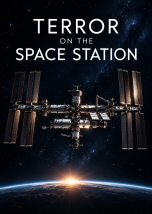
Orbiting Earth at around 27.000 km/h, the International Space Station is one of humanity’s greatest engineering achievements, but also one of the most unforgiving places ever built. Astronauts and mission controllers recount moments when routine work suddenly became a fight for survival: a spacesuit filling with water, toxic ammonia spraying across a spacewalker, dangerous temperature extremes, radiation, fire, contamination and the constant threat of collision. The series reveals how every mission depends on training, improvisation and split-second decisions in an environment where even a small failure can become fatal. Across the two episodes, presented here together in a single uninterrupted video, the danger escalates from the hazardous construction and maintenance of the station to the growing risks of life aboard it. Astronauts face micrometeoroids and space debris travelling at lethal speeds, docking emergencies and system failures, culminating in the extraordinary 2021 incident when the newly arrived Nauka module unexpectedly fired its thrusters and sent the entire ISS rotating out of control. With communications at risk and the structure under immense strain, crews in orbit and controllers on Earth must work together to regain control. The result is a gripping story of courage, science and survival inside a machine that has kept humans continuously living in space for more than two decades.
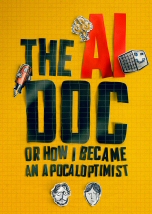
As artificial intelligence accelerates at a breathtaking pace, filmmaker Daniel Roher sets out to understand whether humanity is approaching an extraordinary new era or a catastrophe of its own making. What begins as a personal investigation becomes far more urgent when he and his wife learn they are expecting a child. Faced with predictions ranging from revolutionary medical breakthroughs and powerful new tools for creativity to mass unemployment, deepfakes, autonomous systems and even existential risk, he asks some of the world’s leading AI thinkers a deceptively simple question: should we be excited about the future, or terrified of it? The film explores how generative AI works, why its capabilities are advancing so quickly and what could happen if increasingly powerful systems become difficult to control. Experts debate AI safety and alignment, the race between competing companies, the possibility of machines seeking greater power, and the social consequences of automation and concentrated wealth. At the same time, the documentary confronts the technology’s remarkable promise, from personalized education to scientific discovery and potential cancer treatments. Moving between anxiety and hope, Roher ultimately searches for a way to face an uncertain future not as a pessimist or a blind optimist, but as something in between: an “Apocaloptimist.”
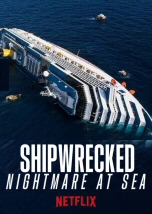
What begins as a dream Mediterranean holiday turns into an unimaginable fight for survival. On the night of January 13, 2012, passengers aboard the luxurious Costa Concordia are dining and putting children to bed when the ship sails dangerously close to the Italian island of Giglio and strikes underwater rocks. As the vessel loses power and begins to flood and tilt, confusion spreads through its glittering corridors. Passengers are initially told there is only an electrical problem, while precious minutes pass before an evacuation is ordered and lifeboats become increasingly difficult to launch. Through extraordinary footage recorded by those on board, black-box communications and deeply personal survivor testimony, the disaster unfolds almost minute by minute: Families desperately searching for a way off the ship, crew members risking their lives to help strangers, passengers trapped as corridors become walls, and rescuers entering the enormous wreck while it threatens to shift beneath them. Behind the terrifying struggle to survive emerges an equally disturbing question—how could a modern cruise ship carrying thousands of people end up on its side just metres from shore? The deaths of 32 people, the actions of Captain Francesco Schettino and the investigation that followed transform one catastrophic night at sea into a gripping story of human courage, fatal decisions and the consequences of failure when every second matters.
In the final three episodes of the series, Chris Packham follows three extraordinary evolutionary journeys to discover how the relentless demands of survival transformed simple early animals into some of the most remarkable creatures alive today. In Borneo, the voracious appetite of the bat leads back more than half a billion years to the origins of the through-gut, the first anus, heads and jaws, revealing how the need to find and consume food helped reshape animal life and ultimately produced the bat’s extraordinary powers of hearing. In the Bahamas, the intelligence of dolphins opens an even deeper story: from ancient cells able to sense light to the evolution of eyes, complex brains, sophisticated senses and the remarkable minds of modern dolphins. The journey culminates with one of nature’s supreme athletes. Tracing the horse’s ancestry through hundreds of millions of years, Packham reveals how primitive muscle cells evolved into increasingly powerful systems for movement, how beating hearts supplied those muscles with oxygen, and how limbs became ever more effective tools for locomotion. Slithering, swimming, walking and running eventually converge in an animal built for extraordinary speed and endurance. Together, these final episodes reveal a breathtaking truth: hunger, perception and movement were not merely necessities of survival—they were powerful evolutionary forces that helped create the astonishing complexity of animal life.
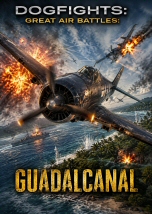
The strategic battle for Guadalcanal became one of the fiercest air campaigns of the Second World War, where exhausted American pilots flying rugged F4F Wildcat fighters and later the more powerful F4U Corsairs faced relentless Japanese Zero fighters in deadly combat above the Pacific. The documentary recreates intense dogfights between carrier-based aircraft, dive bombers, and torpedo planes as both sides fought desperately for control of the skies and the survival of the island campaign. Through gripping firsthand accounts from the men who survived these missions, the episode captures chaotic aerial battles, emergency landings, and the split-second decisions that transformed young pilots into legendary aces in a single day. Every encounter carried enormous consequences not only for Guadalcanal itself, but for the future balance of power across the Pacific. Combining dramatic combat recreations with real veteran testimonies, the episode delivers a tense and highly immersive portrait of aerial warfare during one of the most decisive campaigns of World War II. From surprise ambushes by agile Mitsubishi Zeros to brutal close-range duels involving Wildcats, Dauntless dive bombers, and torpedo aircraft above jungle-covered islands and burning naval fleets, the documentary places viewers directly inside the fear, adrenaline, and exhaustion experienced by the pilots who fought for Guadalcanal. It becomes an especially compelling experience for anyone fascinated by military aviation, aircraft history, and the savage air battles that shaped the Pacific War.












In the first episode, Lincoln’s journey begins far from power. Growing up in hardship, enduring the death of his mother and receiving little formal education, he develops a fierce determination to rise beyond obscurity. Through hard physical labor, self-education, storytelling and an emerging talent for public speaking, he begins to build the character and political instincts that will define him. His early encounters with slavery, his move into law and politics, and the relationships that shape his ambitions reveal the making of a man who is still searching for his place in the world, but already driven by the conviction that his life must amount to something.