





Last Watched

"food "  Sort by

Playful Creatures

   2015    Nature
Spy in the Huddle use innovative techniques to reveal the incredible secrets of your pets' behaviour in ways never seen before. As astonishing photography explores the wild side of our playful pets, find out why hamsters love to run in a wheel, how dogs pick up the rules of the pack and how kittens learn to be solitary hunters. Featuring incredible views of plunge-diving dogs, babysitting cats, acrobatic hamsters and a playful cat outwitted by his prey" - you'll never look at your favourite companions in quite the same way again. The latest science also reveals why budgies talk, how a cat scales a vertical wall with the help of a special claw, why hamsters stuff their faces with more food than they can eat and the real meaning behind a rabbit's hop. Our pets are also given a chance to explore their wild side as we join the free-roaming pet dogs of Cusco Peru, pet rabbits living in a natural warren and the wild-living inhabitants of Cat Island, Japan. A range of innovative techniques such as moving X-rays, thermal imagery, minicam-carrying dogs and revelatory slow-motion photography shows why our pets play and how their true wild nature is just a whisker away.
Series: Pets: Wild at Heart

Feed up

   2014    Medicine
Upending the conventional wisdom of why we gain weight and how to lose it, Fed Up unearths a dirty secret of the American food industry—far more of us get sick from what we eat than anyone has previously realized. Filmmaker Stephanie Soechtig and TV journalist Katie Couric lead us through this potent exposé that uncovers why—despite media attention, the public’s fascination with appearance, and government policies to combat childhood obesity—generations of American children will now live shorter lives than their parents did.

Is Seeing Believing

   2010    Medicine
Horizon explores the strange and wonderful world of illusions – and reveals the tricks they play on our senses and why they fool us. We show how easy it is to trick your sense of taste by changing the colours of food and drink, explain how what you see can change what you hear, and see just how unreliable our sense of colour can be. But all this trickery has a serious purpose. It’s helping scientists to create a new understanding of how our senses work – not as individual senses, but connected together. It holds the intriguing possibility that one sense could be mapped into another.

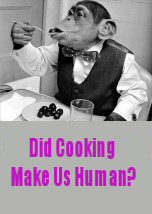
Did Cooking Make Us Human

   2010    Culture
We are the only species on earth that cooks its food - and we are also the cleverest species on the planet. The question is: do we cook because we're clever and imaginative, or are we clever and imaginative because our ancestors discovered cooking? Horizon examines the evidence that our ancestors' changing diet and their mastery of fire prompted anatomical and neurological changes that resulted in taking us out of the trees and into the kitchen.

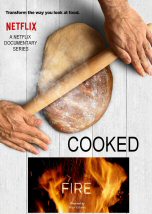
Cooked: Fire

   2016    Culture
As he tries his hand at baking, brewing and braising, acclaimed food writer Michael Pollan explores how cooking transforms food and shapes our world. In the first espisode, with help from Aboriginal hunters and a barbecue pit master, Pollan shows how fire shaped human gastronomy, and weighs our duty to the animals we eat.
Series: Cooked

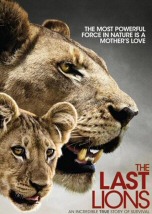
The Last Lions

   2011    Nature
Fifty years ago there were close to half-a-million lions in Africa. Today there are around 20,000. To make matters worse, lions, unlike elephants, which are far more numerous, have virtually no protection under government mandate or through international accords. This is the jumping-off point for a disturbing, well-researched and beautifully made cri de coeur from husband and wife team Dereck and Beverly Joubert, award-winning filmmakers from Botswana who have been Explorers-in-Residence at National Geographic for more than four years. Pointing to poaching as a primary threat while noting the lion's pride of place on the list for eco-tourists-an industry that brings in 200 billion dollars per year worldwide-the Jouberts build a solid case for both the moral duty we have to protect lions (as well as other threatened "big cats," tigers among them) and the economic sense such protection would make. And when one takes into account the fact that big cats are at the very top of the food chain-and that their elimination would wreak havoc on all species below them, causing a complete ecosystem collapse-the need takes on a supreme urgency.
Abraham Lincoln

Abraham Lincoln

2022  History
Human Planet

Human Planet

2011  Culture
Terror on the Space Station

Terror on the Space Station

2025  Technology
Monsters of God

Monsters of God

2026  Culture
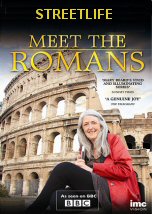
Meet the Romans

Meet the Romans

2012  History
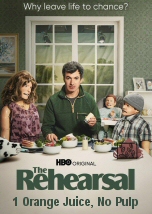
The Rehearsal

The Rehearsal

2022  Culture