In the final three episodes of the series, Chris Packham follows three extraordinary evolutionary journeys to discover how the relentless demands of survival transformed simple early animals into some of the most remarkable creatures alive today. In Borneo, the voracious appetite of the bat leads back more than half a billion years to the origins of the through-gut, the first anus, heads and jaws, revealing how the need to find and consume food helped reshape animal life and ultimately produced the bat’s extraordinary powers of hearing. In the Bahamas, the intelligence of dolphins opens an even deeper story: from ancient cells able to sense light to the evolution of eyes, complex brains, sophisticated senses and the remarkable minds of modern dolphins. The journey culminates with one of nature’s supreme athletes. Tracing the horse’s ancestry through hundreds of millions of years, Packham reveals how primitive muscle cells evolved into increasingly powerful systems for movement, how beating hearts supplied those muscles with oxygen, and how limbs became ever more effective tools for locomotion. Slithering, swimming, walking and running eventually converge in an animal built for extraordinary speed and endurance. Together, these final episodes reveal a breathtaking truth: hunger, perception and movement were not merely necessities of survival—they were powerful evolutionary forces that helped create the astonishing complexity of animal life.
The film, marking our first own production, embarks on an awe-inspiring journey, shedding light on one of science's most profound questions: How did life emerge from the non-living? With a focus on the intricate mechanisms that may have transformed simple molecules into the first microorganisms, this film explores the concept of a chemical evolution that meticulously selected increasingly complex molecules, eventually leading to the genesis of life. By delving into the pivotal role of RNA, viewers are invited to contemplate the plausibility of life spontaneously arising from the basic elements of the universe. The documentary meticulously illustrates a potential pathway for the emergence of life, emphasizing the significance of ribozymes—RNA molecules with catalytic abilities—and their role in a prebiotic chemical evolution. The film posits a compelling argument for the natural processes that might have led to the formation of the first complex lipid vesicles, a critical step towards cellular life. By presenting a theory that bridges gaps in our understanding with scientific ingenuity, ‘The Origin of Life’ invites viewers on an intellectual adventure to discover the origins of existence itself. More information on https://www.javier-serrano.blog/Evolucion/el_origen_de_la_vida_parteI.php
In households across the world, pets are at the heart of family life. They share our homes, but how well do we really know them? In this series we'll dig deep into our pets' inner lives to discover the secrets they've kept hidden until now. From spectacular feats of communication to extreme athleticism, extraordinary intelligence and incredible super senses. We'll meet remarkable pets from across the globe whose owners have harnessed their hidden skills and shared them with the world and will use groundbreaking technology to reveal how amazing their brains and bodies really are. In the first episode, a base-jumping border collie, a bopping cockatoo, and racing rats show that animal intelligence can get a big boost in the right enriched environment.
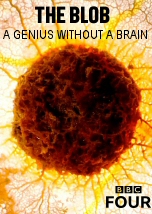
Not an animal, nor a plant, nor fungi, the blob is one giant single cell whose amazing capacities are leading pioneer scientists to a very new world – that of brainless intelligence. More commonly known as slime mould, this extraordinary one-billion-year-old organism challenges our understanding in many different fields. This fascinating documentary follows top experts from Europe, Japan and the US on a scientific investigation into this most surprising organism.
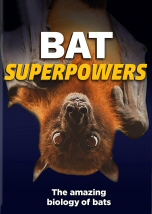
Could the source of the world’s deadliest viruses hold the secret to a healthier and longer life? Bats have a sinister reputation as potential sources for some of the deadliest disease outbreaks: Ebola, MERS, SARS, and most recently, the virus behind the COVID-19 global pandemic. Yet scientists are discovering new evidence that bats are biological marvels and may hold a key to longevity. They’re resistant to the diseases they carry and have freakishly long lifespans for their tiny size. So, what’s their secret? And what else can we learn from their peculiar biology? From caves in Thailand and Texas to labs around the globe, the films meets the scientists who are decoding the superpowers of the bat.
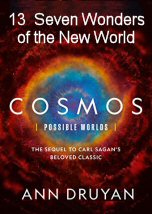
The final episode of the series ponders the fate of planet Earth. Neil deGrasse Tyson opens with a reflection on science and those who help us understand it: 'We all feel the weight of the shadows on our future, but in another time, every bit as ominous as our own, there were those who could see a way through the darkness to find a star to steer by.' The young Carl Sagan and Neil Tyson first discovered their passion for science at the NY World's Fairs of the past. We visit the dazzling Pavilions of the 2039 NY World's Fair, where problems we currently think intractable have been plausibly solved through public commitment and scientific imagination. And our baby is a woman now, with a baby of her own and a future bright with possibilities.














The journey culminates with one of nature’s supreme athletes. Tracing the horse’s ancestry through hundreds of millions of years, Packham reveals how primitive muscle cells evolved into increasingly powerful systems for movement, how beating hearts supplied those muscles with oxygen, and how limbs became ever more effective tools for locomotion. Slithering, swimming, walking and running eventually converge in an animal built for extraordinary speed and endurance. Together, these final episodes reveal a breathtaking truth: hunger, perception and movement were not merely necessities of survival—they were powerful evolutionary forces that helped create the astonishing complexity of animal life.