Geography has shaped the rise and fall of nations long before modern borders existed. Across the United States, Russia and China, mountains, rivers, deserts, oceans and natural resources have influenced migration, settlement, warfare, trade and political ambition. From the first peoples of North America and the waterways that helped build the United States into a superpower, to Russia’s vast exposed landmass and centuries-long search for secure borders and warm-water ports, the series reveals how physical geography repeatedly becomes political destiny. China completes the global picture, showing how the Himalayas, the Gobi Desert, the Yellow and Yangtze rivers and its position at the heart of Eurasian trade helped shape one of the world’s oldest civilizations and its modern rise. Presented here with all three episodes combined into a single video, the documentary connects ancient history with today’s struggle for global influence, revealing why the geography of the USA, Russia and China still plays a decisive role in the balance of world power.
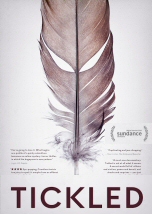
New Zealand journalist David Farrier believes he has found an amusing story when he discovers online videos of young athletic men taking part in “competitive endurance tickling.” But a simple request for an interview triggers homophobic insults, legal threats and an aggressive campaign to stop him asking questions. Intrigued rather than intimidated, Farrier joins forces with Dylan Reeve and begins investigating the mysterious company behind the videos. What starts as an eccentric curiosity soon becomes a disturbing journey into hidden identities, money, intimidation and online harassment. As former participants describe how their lives were targeted when they tried to walk away, the investigation grows darker and increasingly personal. With every new discovery, the film moves further from comedy and closer to a gripping real-life mystery about power, control and the destructive reach of the internet.
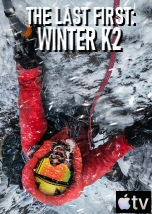
Click CC for subtitles. In the winter of 2021, K2 remained the last great prize of high-altitude mountaineering: the only 8,000-meter peak never climbed in winter. Icelandic climber John Snorri Sigurjónsson and the legendary Pakistani father-and-son team Ali and Sajid Sadpara arrive determined to claim that historic first, facing temperatures far below zero, hurricane-force winds, exhaustion and a mountain already infamous for killing even the strongest climbers. But the expedition soon becomes more than a battle against nature. Commercial teams, influencer climbers, professional film crews and a fiercely ambitious all-Nepalese team converge on the same slopes, turning the ascent into a tense contest of strategy, reputation and national pride. As the climb unfolds, the documentary exposes the changing culture of modern mountaineering: the pressure of social media, the commercialization of the world’s highest peaks, the unequal recognition historically given to Western climbers, and the determination of Nepali and Pakistani mountaineers to claim achievements in their own names. The race for the summit culminates in triumph for one team and tragedy for others, leaving five climbers dead and forcing survivors to confront questions of ambition, responsibility and what a “first” is really worth. Built from extraordinary footage shot during the expedition and testimony from those who were there, the film transforms one of mountaineering’s last untouched records into a gripping story about ego, class, nationalism, family and the deadly cost of pushing beyond human limits.
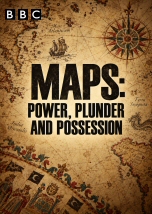
Professor Jerry Brotton reveals that maps are far more than neutral guides to places: they are expressions of the societies that create them and powerful instruments for shaping territory, belief and authority. Beginning with some of the earliest known maps, he traces how cartography evolved from marking land and ownership to serving kings, empires, scientists and governments. From Henry VIII’s coastal surveys and the Cassini family’s scientific breakthroughs to the drawing of modern national borders, the series shows how maps can define who controls land, who belongs where and even how entire peoples understand the world around them. Across the three episodes, presented here together in a single uninterrupted video, the journey moves from ancient and medieval worldviews to imperial expansion and the digital age. Brotton explores religious maps, Aztec symbolism, Victorian attempts to classify societies, the politics behind projections of the globe, and the rise of Google Earth and data-driven mapping. He then follows the mapmakers and explorers who turned distant lands into targets for conquest and profit, from Ptolemy and Columbus to Walter Raleigh and the trading empires that followed. The story ends in the Arctic, where new maps are once again being used to stake claims over oil, gas and minerals, proving that even in the twenty-first century, cartography remains inseparable from power, plunder and possession.
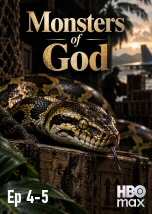
In the final two episodes of the series, the reptile trade enters a new and even more lucrative era. After prison, Tommy Crutchfield returns to find an industry transformed by the rise of genetically altered “morphs”, rare colour and pattern variations that can sell for enormous sums. What appears to be a more legitimate breeding business quickly collides again with illegal trafficking, as Operation Chameleon begins to expose the international network linking collectors, dealers and even major zoological institutions. The investigation then closes in on Anson Wong, the Malaysian trafficker described as one of the most powerful figures in the global reptile trade. As U.S. Fish and Wildlife agents work undercover to penetrate his organization, the story expands from rare snakes and lizards to critically endangered species such as the ploughshare tortoise, whose extraordinary black-market value has helped drive it toward extinction in the wild. These final episodes reveal how obsession, vast profits, corruption and international demand can turn the pursuit of exotic animals into a criminal empire with devastating consequences for wildlife.
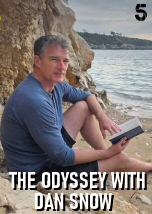
Dan Snow follows the route of Odysseus across the Mediterranean, beginning with the world of Troy and the Bronze Age warriors who inspired Homer’s epic. Sailing through Greece and the Ionian islands, he explores places traditionally associated with the Cyclops, Circe, the Sirens and other episodes of the hero’s long journey home, while examining the archaeology and historical evidence behind the legends. Along the way, Dan asks how much of the story may preserve memories of real places, peoples and events from the ancient Greek world. His voyage ends at Ithaca, where Odysseus’s struggle to return to his family reaches its climax. Combining myth, history, archaeology and travel, this documentary reveals how one ancient story became one of the most influential adventures ever told.










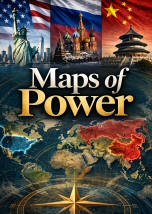

Presented here with all three episodes combined into a single video, the documentary connects ancient history with today’s struggle for global influence, revealing why the geography of the USA, Russia and China still plays a decisive role in the balance of world power.