





Last Watched

"Trial"  Sort by

The Great Survivors

   2011    Science
The final episode explores dinosaurs' extraordinary ability to survive. Featured dinosaurs include the bizarre magyarosaurus, which lived in the shadow of the biggest flying animal - hatzegopteryx - and showed an amazing adaptation to island life; and the weird nothronychus, a carnivore that gave up meat eating. This astonishing capacity to evolve into ever more diverse and bizarre forms meant that dinosaurs not only spread throughout the world, but also dominated life upon it for more than 160 million years. It was only an unprecedented extraterrestrial event that finally saw the end of planet dinosaur.
Series: Planet Dinosaur
The Immortals

   2014    Science
This episode covers the nature of how life may have developed on Earth and the possibility of life on other planets. Tyson begins by explaining how the human development of writing systems enabled the transfer of information through generations, describing how Princess Enheduanna ca. 2280 BCE would be one of the first to sign her name to her works, and how Gilgamesh collected stories, including that of Utnapishtim documenting a great flood comparable to the story of Noah's Ark. Tyson explains how DNA similarly records information to propagate life, and postulates theories of how DNA originated on Earth, including evolution from a shallow tide pool, or from the ejecta of meteor collisions from other planets. In the latter case, Tyson explains how comparing the composition of the Nakhla meteorite in 1911 to results collected by the Viking program demonstrated that material from Mars could transit to Earth, and the ability of some microbes to survive the harsh conditions of space. With the motions of solar systems through the galaxy over billions of years, life could conceivably propagate from planet to planet in the same manner. Tyson then moves on to consider if life on other planets could exist. He explains how Project Diana performed in the 1960s showed that radio waves are able to travel in space, and that all of humanity's broadcast signals continue to radiate into space from our planet. Tyson notes that projects have since looked for similar signals potentially emanating from other solar systems. Tyson then explains that the development and lifespan of extraterrestrial civilizations must be considered for such detection to be realized. He notes that civilizations can be wiped out by cosmic events like supernovae, natural disasters such as the Toba disaster, or even self-destruct through war or other means, making probability estimates difficult. Tyson describes how elliptical galaxies, in which some of the oldest red dwarf stars exist, would offer the best chance of finding established civilizations. Tyson concludes that human intelligence properly applied should allow our species to avoid such disasters and enable us to migrate beyond the Earth before the Sun's eventual transformation into a red giant.
Series: Cosmos: A Spacetime Odyssey

The Last Person to See Teresa Alive

   2015    History
In the fifth episode of the series, as Steven's trial begins, his attorneys argue that law enforcement officials framed him and were negligent in not pursuing other leads in the case.
Series: Making a Murderer

The Menendez Brothers

   2024    History
In 1996, the Menendez brothers' trial for the brutal murder of their parents shocked the nation and left a lasting mark on America's legal and cultural landscape. Now, decades later, this gripping documentary revisits the case that fascinated millions, providing unprecedented access to those closest to the brothers and the courtroom drama. Through exclusive interviews, newly uncovered details, and firsthand accounts, it sheds light on the motivations, emotions, and complex family dynamics that led to the shocking crime.
Lyle and Erik Menendez, serving life sentences in prison, break their silence to offer their perspective on the harrowing events that forever changed their lives. This documentary explores not only the chilling crime and sensational media coverage but also the brothers’ own reflections and the ongoing debate about justice, privilege, and the true nature of the tragedy. Prepare to witness a story of betrayal, power, and a search for answers that still haunts America to this day.

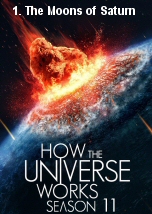
The Moons of Saturn

   2023    Science
The magnificent ringed planet Saturn, along with its more than 80 moons, forms the most dynamic planetary system in our neighborhood. With underground oceans and protective magnetic fields, experts are exploring how this collective of satellites has the potential to rewrite the rules of the Solar System.
The closer that we look, the more we see these extraordinary moons like worlds of their own -- so dynamic, so Earth-like. Almost a billion miles from the Sun, these icy worlds could be home for Life 2.0. The moons of Saturn offer possibly the best chance of finding extraterrestrial life in our solar system. With each new mission, we get closer to unraveling the mysteries of Saturn's moons.
Series: How the Universe Works Season 11

The New Industrial Revolution

   2021    Technology
This there-part series explores monumental changes in the workplace and the long-term impact on workers, employers, educators and communities. Employment is part of the American Dream. Will the future provide opportunities for jobs that sustain families and the nation?
The first episode illuminates disruptions to the world of work--AI, robotics, globalization and labor practices. The COVID-19 pandemic was a new driver of change; at the pandemic's height, unemployment flipped from its lowest rate in 50 years to its highest level in a century.
Series: Future of Work
Leaving Neverland

Leaving Neverland

2019  Culture
Inside the Medieval Mind

Inside the Medieval Mind

2008  History
Ancient Rome

Ancient Rome

2006  History
Ancient Apocalypse

Ancient Apocalypse

2024  History
Zeitgeist

Zeitgeist

2007  Culture
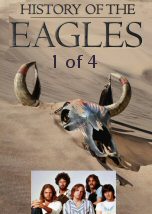
History of the Eagles

History of the Eagles

2013  History
The Last Dance

The Last Dance

2020  Culture