From the first flicker of life billions of years ago to the extraordinary diversity of animals alive today, Chris Packham embarks on an epic journey through evolution. Combining cutting-edge science, spectacular wildlife and vivid reconstructions of long-vanished creatures, he reveals how countless generations of innovation, adaptation and chance transformed simple cells into bodies capable of movement, reproduction, flight, intelligence and astonishing complexity. Along the way, familiar animals become gateways into some of the greatest mysteries in the history of life. In the first two episodes, Packham traces two remarkable evolutionary stories. In Kenya, he asks how a microscopic cell could ultimately give rise to the enormous, intelligent and highly social elephant, uncovering the crucial breakthroughs that made complex bodies, lungs, limbs and giant size possible. Then, in South Africa, the ostrich and its extraordinary egg open the door to the evolution of reproduction itself: From the origins of sex to the appearance of eggs, feathers and flight. Together, these episodes reveal that some of nature’s most spectacular creatures are the result of billions of years of unlikely experiments, lucky accidents and relentless adaptation.
In the final three episodes of the series, Chris Packham follows three extraordinary evolutionary journeys to discover how the relentless demands of survival transformed simple early animals into some of the most remarkable creatures alive today. In Borneo, the voracious appetite of the bat leads back more than half a billion years to the origins of the through-gut, the first anus, heads and jaws, revealing how the need to find and consume food helped reshape animal life and ultimately produced the bat’s extraordinary powers of hearing. In the Bahamas, the intelligence of dolphins opens an even deeper story: from ancient cells able to sense light to the evolution of eyes, complex brains, sophisticated senses and the remarkable minds of modern dolphins. The journey culminates with one of nature’s supreme athletes. Tracing the horse’s ancestry through hundreds of millions of years, Packham reveals how primitive muscle cells evolved into increasingly powerful systems for movement, how beating hearts supplied those muscles with oxygen, and how limbs became ever more effective tools for locomotion. Slithering, swimming, walking and running eventually converge in an animal built for extraordinary speed and endurance. Together, these final episodes reveal a breathtaking truth: hunger, perception and movement were not merely necessities of survival—they were powerful evolutionary forces that helped create the astonishing complexity of animal life.
What triggered the incredible diversity of life on Earth, and how have complex life forms, including humans, evolved? Is there direction to evolution? And is human intelligence inevitable? This program focuses on evolution's 'great transformations' —among them the development of a standard four-limbed body plan, the journey from water to land, the return of marine mammals to the sea, and the emergence of humans. Driven by a combination of opportunism and a genetic 'toolkit', these astounding leaps forward define the arc of evolution. And they suggest that every living creature on earth today, and every species that has ever existed, is a variation on a grand genetic theme—a member of one, and only one, tree of life
Survival of the fittest: Raw competition? Intense cooperation? Both are essential. Interactions between and within species are among the most powerful evolutionary forces on Earth, and understanding them may be a key to our own survival.
This series illuminates unique and bizarre evolutionary journeys that have brought forth some of the world’s most impressive animals. We unearth a 50-million-year-old mystery mammal sought out a new source of food in the water, starting a spectacular evolutionary journey so that today it looks like a fish. How did a creature built for land become master of the ocean?
The film takes viewers behind the scenes of one of the world’s greatest institutions of learning. The film examines how this legendary establishment has continued to go about its regular activities while adapting to the digital revolution. 'Ex Libris: The New York Public Library' explains how libraries inform and educate in many ways: books, concerts, conferences, classes and much more. This library strives to inspire the study of advanced knowledge and to strengthen the community.









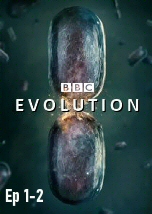


In the first two episodes, Packham traces two remarkable evolutionary stories. In Kenya, he asks how a microscopic cell could ultimately give rise to the enormous, intelligent and highly social elephant, uncovering the crucial breakthroughs that made complex bodies, lungs, limbs and giant size possible. Then, in South Africa, the ostrich and its extraordinary egg open the door to the evolution of reproduction itself: From the origins of sex to the appearance of eggs, feathers and flight. Together, these episodes reveal that some of nature’s most spectacular creatures are the result of billions of years of unlikely experiments, lucky accidents and relentless adaptation.