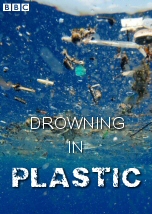
Our blue planet is facing one its biggest threats in human history. Trillions of pieces of plastic are choking the very lifeblood of our earth, and every marine animal, from the smallest plankton to the largest mammals, is being affected. But can we turn back this growing plastic tide before it is too late? Wildlife biologist Liz Bonnin visits scientists working at the cutting edge of plastics research. She works with some of the world's leading marine biologists and campaigners to discover the true dangers of plastic in our oceans and what it means for the future of all life on our planet, including us. Liz travels to a remote island off the coast of Australia that is the nesting site for a population of seabirds called flesh-footed shearwaters. Newly hatched chicks are unable to regurgitate effectively, so they are filling up on deadly plastic. She visits the Coral Triangle that stretches from Papua New Guinea to the Solomon Islands to find out more from top coral scientists trying to work out why plastic is so lethal to the reefs, fragile ecosystems that contain 25 per cent of all marine life.
Valeant Pharmaceuticals was a multinational specialty pharmaceutical company based in Canada. It grew rapidly through a series of mergers and acquisitions under the leadership of J. Michael Pearson. The company was involved in a number of controversies surrounding drug price hikes and the use of a specialty pharmacy for the distribution of its drugs, which led to an investigation by the U.S. Securities and Exchange Commission and caused its stock price to plummet more than 90 percent from its peak while its debt surpassed $30 billion. Wall Street short-sellers exposed a scam that regulators overlook: how Big Pharma gouges patients in need of life-saving drugs.
Follow the true stories of five of the world's most celebrated yet endangered animals: chimpanzees, penguins, lions, painted wolves, and tigers. These five extraordinary animals are each engaged in a heroic struggle against rivals and the forces of nature, fighting not only for their own survival but also for the future of their dynasties. Narrated by David Attenborough. In the first episode, we will explore the lives of a group of chimpanzees led by a male named David in Senegal, West Africa. He has already been alpha for three years - a time when leaders in this region are usually overthrown.
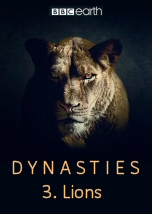
This episode delves into the captivating world of lions, and one of the most renowned lion prides in Africa, the Marsh Pride of Kenya Masai Mara. As the story unfolds, we find the Marsh Pride facing a unique and challenging situation. They have been left to fend for themselves, abandoned by all the adult males who had protected the pride. Witness their remarkable journey as they adapt, survive, and redefine the rules of life on the savanna. Narrated by the legendary David Attenborough, offers a mesmerizing glimpse into the lives of these majestic predators and their struggle for survival, making it a must-see for nature enthusiasts.
For the past century, Russian history has also been the history of its security services. They were used by the Soviet state to crush dissent. Millions suffered at their hands. Mass executions, secret wars, spies capable of stealing the atomic bomb, poisoning scandals all add up to the most extraordinary and dangerous security network the world has ever known. But even today, the security network is arguably stronger than ever. This is the History of the KGB, told through its veterans and its victims. Founded in 1917, Cheka was the predecessor organization of the KGB. Set up as a 'temporary' measure by Lenin, unknown number of Soviet citizens would die at the hands of the secret services as internal dissents in the 1920s. An inglorious chapter is the "Great Terror" phase, when millions of Soviet citizens were convicted and executed in mock trials under Stalin's rule in the 1930s. Outside the Soviet Union, during the WWII they were busy infiltrating German High Command, British Intelligence and America's Manhattan Project. The Cold War had begun in earnest.
We're unlocking the secrets of our planet's voyage and discovering that earth's journey affects us all. The Earth is extremely dynamic. It is spinning on its axis, it's whirling about the sun and it's corkscrewing throughout the this galaxy. And there is the fact than Andromeda and the Milky Way are currently 2.5 million light-years apart, but they're hurtling towards each other at over 250,000 miles an hour. A collision is inevitable. As stars, dust, and gas swirl around each other, gravitational interactions could slingshot our solar system out into intergalactic space.














Liz travels to a remote island off the coast of Australia that is the nesting site for a population of seabirds called flesh-footed shearwaters. Newly hatched chicks are unable to regurgitate effectively, so they are filling up on deadly plastic. She visits the Coral Triangle that stretches from Papua New Guinea to the Solomon Islands to find out more from top coral scientists trying to work out why plastic is so lethal to the reefs, fragile ecosystems that contain 25 per cent of all marine life.