Almost everything we know today about the beautiful giant ringed planet comes from Cassini, the NASA mission that launched in 1997 and arrived at Saturn in 2004. Since then, the space probe has been beaming home miraculous images and scientific data, revealing countless wonders about the planet, its rings and 62 moons - including some that could harbor life. When the mission approached its final days, it attempted one last set of daring maneuvers - diving between the innermost ring and the top of Saturn's atmosphere. Aiming to skim less than 2000 miles above the cloud tops, no spacecraft has ever gone so close to Saturn, and hopes were high for incredible observations that could solve major mysteries about the planet's core. But such a daring maneuver comes with many risks and is no slam dunk. In fact, slamming into rocks in the rings is a real possibility. Join NASA engineers for the tense and triumphant moments as they find out if their bold re-programming has worked, and discover the wonders that Cassini has revealed over the years.
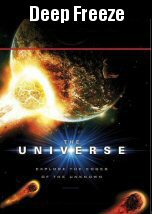
There is an extraordinary range of temperatures in the universe. This program examines the extreme lower temperature range, the temperature we live in and below, explaining how cold is essential for the formation of habitats suitable for life. Explore icy planets and moons, discover the role of cold in the Universe, and learn about the importance of ice to the development of habitable worlds.
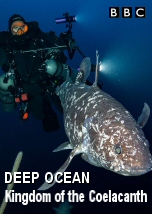
Deep beneath the Indian Ocean, a team of explorers embarks on a bold scientific mission to capture one of nature’s rarest survivors — the coelacanth, a fish unchanged for 400 million years. Narrated by David Attenborough, the film follows NHK’s deep-sea crew aboard the OceanX vessel as they attempt the world’s first 72-hour observation of this living fossil. Using cutting-edge submersibles, they descend into an ancient realm where time itself seems frozen. As the cameras reveal the coelacanth’s slow, graceful movements, scientists uncover vital clues about evolution’s greatest leap — the moment life crawled from sea to land. Blending adventure, technology, and breathtaking natural history, this deep-ocean odyssey illuminates how a single fish still holds the key to understanding our own beginnings.
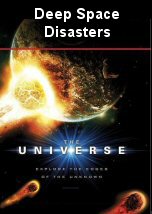
In space travel there is a saying that the first 50 miles and the last 50 miles are the most dangerous. Explore the controlled explosion of launch, the fiery crucible of re-entry and everything in between. See how a single spark inside a spacecraft or a micrometeoroid less than an inch wide hitting a space station can turn a routine mission into a lethal nightmare. As the missions become longer, venturing to Mars and beyond, the potential disasters will only become bigger. What would happen if a spacecraft ventured too close to a black hole or was hit by a gamma ray burst?
A featured documentary that explores the rise of a new Internet. Decentralized, encrypted, dangerous and beyond the law. The Deep Web, also called the Deep Net, Invisible Web, or Hidden Web is the part of the World Wide Web not indexed by search engines. The deep web was several orders of magnitude larger than the surface web. The majority of the information is hidden or locked inside databases and is growing exponentially at a rate that cannot be quantified. In 2008, to facilitate users of Tor hidden services in their access and search of a hidden .onion suffix, Aaron Swartz designed Tor2web, a proxy application able to provide access by means of common web browsers. Using this application, deep web links appear as a random string of letters followed by the .onion TLD.
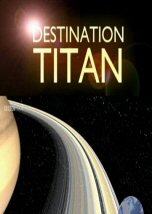
It's a voyage of exploration like no other - to Titan, Saturn's largest moon and thought to resemble our own early Earth. For a small team of British scientists this would be the culmination of a lifetime's endeavour - the flight alone, some 2 billion miles, would take a full seven years. This is the story of the space probe they built, the sacrifices they made and their hopes for the landing. Would their ambitions survive the descent into the unknown on Titan's surface?

















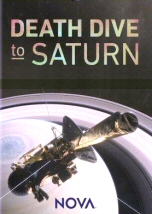








Aiming to skim less than 2000 miles above the cloud tops, no spacecraft has ever gone so close to Saturn, and hopes were high for incredible observations that could solve major mysteries about the planet's core. But such a daring maneuver comes with many risks and is no slam dunk. In fact, slamming into rocks in the rings is a real possibility. Join NASA engineers for the tense and triumphant moments as they find out if their bold re-programming has worked, and discover the wonders that Cassini has revealed over the years.