








Last Watched

"TT"  Sort by

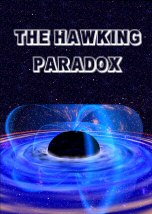
The Hawking Paradox

   2005    Science
Stephen Hawking is the most famous scientist on the planet. But behind the public face lies an argument that has been raging for almost 30 years. Has he been wrong for the last 30 years? Hawking shot to fame in the world of physics when he provided a mathematical proof for the Big Bang theory. This theory showed that the entire universe exploded from a singularity, an infinitely small point with infinite density and infinite gravity. Hawking was able to come to his proof using mathematical techniques that had been developed by Roger Penrose. These techniques were however developed to deal not with the beginning of the Universe but with black holes". Science had long predicted that if a sufficiently large star collapsed at the end of its life, all the matter left in the star would be crushed into an infinitely small point with infinite gravity and infinite density – a singularity. Hawking realised that the Universe was, in effect, a black hole in reverse. Instead of matter being crushed into a singularity, the Universe began when a singularity expanded to form everything we see around us today, from stars to planets to people. Hawking realised that to come to a complete understanding of the Universe he would have to unravel the mysteries of the black hole and its paradoxes

The History of the Red Army

   2022    History
The fascinating history of the military force of the Soviet Union. For 70 years, the Red Army was one of the foundations of the USSR, an instrument of fear as well as admiration, a symbol of liberation as well as coercion. While everyone knows that Trotsky's name is attached to its creation, most of its past is made up of military defeats and failures, contrary to the common idea. This documentary explores its history, combining epic narrative and deconstruction of the myth.

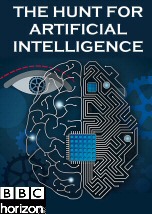
The Hunt for Artificial Intelligence

   2012    Technology
Marcus Du Sautoy wants to find out how close we are to creating machines that can think like us: robots or computers that have artificial intelligence. His journey takes him to a strange and bizarre world where AI is now taking shape. Marcus meets two robots who are developing their own private language, and attempts to communicate to them. He discovers how a super computer beat humans at one of the toughest quiz shows on the planet, Jeopardy". And finds out if machines can have creativity and intuition like us. Marcus is worried that if machines can think like us, then he will be out of business. But his conclusion is that AI machines may surprise us with their own distinct way of thinking.

The Hunt For Higgs

   2012    Science
Go with us behind the scenes at CERN to follow one of the most epic and expensive scientific quests of all time: the search for the Higgs particle, believed to give mass to everything in our universe. However, the hunt for Higgs is part of a much grander search for how the universe works. It promises to help answer questions like why we exist and is a vital part of a Grand Unified Theory of nature". At the heart of the pursuit of the elusive particle is the same feature that makes snowflakes beautiful and human faces attractive: the simple and enchanting idea of symmetry. Presenter Jim Al-Khalil

The Hunt The Hardest Challenge

   2015    Nature
The contests between predators and prey are the most dramatic events in nature. Taking an intimate and detailed look at the remarkable strategies employed by hunters to catch their prey and the hunted to escape. Sir David Attenborough narrates. "The Hardest Challenge" reveals the extraordinary range of techniques predators use to catch their prey - from a leopard using all its powers of stealth to stalk impala in broad daylight to wild dogs, whose tactic is to wear down their prey over long distances; from Nile crocodiles, the planet's most patient predators, to killer whales who use teamwork and intelligence to take on humpback whales. But even with these finely tuned strategies, the outcome is far from certain. Surprisingly, most predators fail most of the time.
Series: The Hunt

The Immortals

   2014    Science
This episode covers the nature of how life may have developed on Earth and the possibility of life on other planets. Tyson begins by explaining how the human development of writing systems enabled the transfer of information through generations, describing how Princess Enheduanna ca. 2280 BCE would be one of the first to sign her name to her works, and how Gilgamesh collected stories, including that of Utnapishtim documenting a great flood comparable to the story of Noah's Ark. Tyson explains how DNA similarly records information to propagate life, and postulates theories of how DNA originated on Earth, including evolution from a shallow tide pool, or from the ejecta of meteor collisions from other planets. In the latter case, Tyson explains how comparing the composition of the Nakhla meteorite in 1911 to results collected by the Viking program demonstrated that material from Mars could transit to Earth, and the ability of some microbes to survive the harsh conditions of space. With the motions of solar systems through the galaxy over billions of years, life could conceivably propagate from planet to planet in the same manner. Tyson then moves on to consider if life on other planets could exist. He explains how Project Diana performed in the 1960s showed that radio waves are able to travel in space, and that all of humanity's broadcast signals continue to radiate into space from our planet. Tyson notes that projects have since looked for similar signals potentially emanating from other solar systems. Tyson then explains that the development and lifespan of extraterrestrial civilizations must be considered for such detection to be realized. He notes that civilizations can be wiped out by cosmic events like supernovae, natural disasters such as the Toba disaster, or even self-destruct through war or other means, making probability estimates difficult. Tyson describes how elliptical galaxies, in which some of the oldest red dwarf stars exist, would offer the best chance of finding established civilizations. Tyson concludes that human intelligence properly applied should allow our species to avoid such disasters and enable us to migrate beyond the Earth before the Sun's eventual transformation into a red giant.
Series: Cosmos: A Spacetime Odyssey
Ancient Apocalypse

Ancient Apocalypse

2022  History
War of the Century

War of the Century

2005  History
The Human Body

The Human Body

1998  Medicine
Catalyst

Catalyst

2017  Science
Mind Field

Mind Field

2019  Medicine