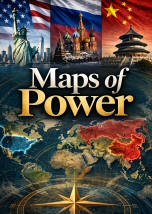
Geography has shaped the rise and fall of nations long before modern borders existed. Across the United States, Russia and China, mountains, rivers, deserts, oceans and natural resources have influenced migration, settlement, warfare, trade and political ambition. From the first peoples of North America and the waterways that helped build the United States into a superpower, to Russia’s vast exposed landmass and centuries-long search for secure borders and warm-water ports, the series reveals how physical geography repeatedly becomes political destiny. China completes the global picture, showing how the Himalayas, the Gobi Desert, the Yellow and Yangtze rivers and its position at the heart of Eurasian trade helped shape one of the world’s oldest civilizations and its modern rise. Presented here with all three episodes combined into a single video, the documentary connects ancient history with today’s struggle for global influence, revealing why the geography of the USA, Russia and China still plays a decisive role in the balance of world power.
Artificial intelligence has moved from a fringe scientific dream to a technology capable of reshaping work, politics, creativity and even human survival. Through rare interviews and archival footage, pioneers such as Geoffrey Hinton and Demis Hassabis trace the breakthroughs that made modern AI possible, while former OpenAI staff and other researchers reveal the fierce rivalry, ambition and commercial pressure driving the race toward ever more powerful systems. But the deeper the film goes, the more unsettling the questions become. Hinton explains why he left Google to warn about the technology he helped create, while examples of deceptive behaviour, threatening chatbots and real-world harm expose how little even experts fully understand or control these systems. Moving with the tension of a thriller, the documentary asks whether humanity is building its greatest tool or creating something it may one day be unable to contain.
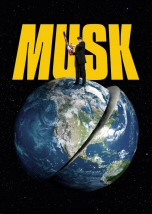
Filmmaker Alex Gibney examines how Elon Musk rose from the Silicon Valley start-up world to become one of the most powerful and influential figures of the 21st century. Through archival footage, interviews with former colleagues, partners and people who knew him closely, the documentary follows the creation of Zip2, PayPal, Tesla and SpaceX, exploring the ambition, risk-taking and carefully constructed image of the visionary entrepreneur who promised to transform life on Earth and beyond. But the film increasingly asks a more unsettling question: how did one businessman accumulate so much economic, technological and political power? Musk declined to be interviewed, so Gibney builds a simulated conversation from his own public statements while examining his takeover of Twitter/X, Starlink, artificial intelligence, his relationship with Donald Trump and his involvement with DOGE (Department of Government Efficiency). The result is a provocative portrait of innovation, wealth, influence and personal mythology, questioning where technological ambition ends and unchecked power begins.
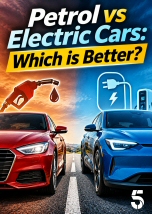
As electric vehicles rapidly reshape roads, drivers face a difficult question: is it really time to abandon petrol? Through real-world challenges, the documentary compares both technologies on the issues that matter most, including range, charging time, reliability, performance, running costs, city driving and the price of buying second-hand. From a 100-mile petrol-versus-electric road race to high-performance track tests and used-car comparisons, the film reveals where electric cars already have a clear advantage and where petrol still proves more practical. Along the way, it explores battery technology, charging infrastructure and the history of the motor car, offering a lively and surprisingly balanced look at which type of vehicle really makes more sense today.
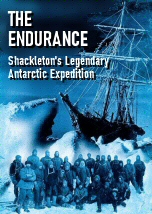
In 1914, Ernest Shackleton set out with 27 men aboard the Endurance on one of the boldest expeditions of the Heroic Age of Antarctic exploration: an attempt to cross the frozen continent from the Weddell Sea to the Ross Sea. But before they could even reach land, the ship became trapped in pack ice. Months later, crushed by the pressure, the Endurance was lost, leaving the crew stranded in one of the most hostile environments on Earth with no contact with the outside world. What follows is an extraordinary story of survival, leadership and endurance. Shackleton abandons the original goal and focuses entirely on bringing every man home alive, leading his crew across drifting ice, open ocean and some of the most dangerous seas on the planet. Using Frank Hurley’s remarkable original photographs and film footage, archived voices and letters from expedition members, interviews with their descendants and newly filmed images of the actual locations, the documentary brings this legendary 1914-1916 ordeal vividly back to life.
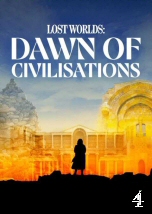
Historian Bettany Hughes journeys across ancient Anatolia, modern-day Türkiye, to uncover some of the earliest foundations of civilisation. From Göbeklitepe and Karahantepe to Sardis, Gordion, Ephesus and Cappadocia, she explores how the first settled communities developed agriculture, religion, trade and urban life, while remarkable discoveries such as early monumental buildings, ancient weapons and life-sized human sculptures reveal a world far more sophisticated than once imagined. Moving through landscapes where myth and history constantly overlap, Hughes follows the rise of kingdoms and empires, encounters the world of King Midas, and traces how Anatolia became a crossroads connecting cultures across continents. Presented here with both episodes combined into a single video, the series offers a sweeping archaeological journey into the places where some of humanity’s most important ideas, beliefs and institutions first began to take shape.






Presented here with all three episodes combined into a single video, the documentary connects ancient history with today’s struggle for global influence, revealing why the geography of the USA, Russia and China still plays a decisive role in the balance of world power.