In 1971, a group of friends sail into a nuclear test zone, and their protest captures the world's imagination. It was from these humble but courageous beginnings that the global organisation that we now know as Greenpeace was born. Chronicling the fascinating untold story behind the modern environmental movement, this gripping new film tells the story of eco-hero Robert Hunter and how he, alongside a group of like-minded and idealistic young friends in the '70s, would be instrumental in altering the way we now look at the world and our place within it. Using never before seen archive that brings their extraordinary world to life, How To Change The World is the story of the pioneers who founded Greenpeace and defined the modern green movement.
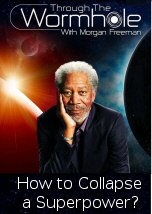
With a little imagination, could a few terrorists sabotage a mighty nation? Perhaps even tear down modern civilization? The stability of the US, Europe, China, or any global power depends on high-speed digital communication. Our increasing dependence on digital devices and global interactivity may be placing us in grave danger. Scientists around the world are dealing with new threats such as body hacking, Trojan horse viruses, and brain-damaging Internet addiction. But what if the ultimate threat isn’t an attack on technology, but the technology? Could the final superpower be the disembodied mind of the Internet itself?
In 1799, the German scientist Alexander von Humboldt embarked on a perilous journey of discovery across South America. It would take him to the deepest jungle near the Orinoco and to the heights of the Andes. His aim was twofold: to conduct the first scientific survey of South America and to discover how the natural world actually works — at a time when most scientists believed that the world was created less than 6,000 years ago. He later became a leading scientific figure and champion of the abolitionist movement in the US. This extremely visual docudrama follows Humboldt’s extraordinary path. Travelling in Humboldt’s footsteps is historian Andrea Wulf, whose book on Humboldt became a worldwide bestseller. For good reason, since Humboldt’s ideas on the planet’s fragile web of life are as important today as they were 220 years ago.
For decades, scientists have sought to unlock the secrets of ancient DNA, a fragile genetic blueprint that rarely survives millions of years. Danish biologist Eske Willerslev had a groundbreaking idea: instead of searching for DNA in fossils or ancient tissues, he looked to frozen sediment. Initially dismissed as impossible, his work led to the recovery of genetic traces from over two million years ago, revealing lush ecosystems that existed before the Ice Age. These discoveries offer unprecedented insights into long-extinct species that thrived in warm, verdant Arctic landscapes.
Willerslev’s perseverance revolutionized DNA research, enabling scientists to reconstruct vanished ecosystems and uncover the genetic secrets of ancient worlds. By examining the DNA of past climates, researchers are paving the way to better understand Earth's deep history and adapt to current environmental challenges. This landmark breakthrough demonstrates that ancient DNA acts as a "time machine," allowing humanity to explore its distant past and draw lessons for the future.
For more than 90 years, Abbey Road Studios has been at the heart of the music industry. In this personal film of memory and discovery, Mary McCartney guides us through nine decades to see and experience the creative magic that makes it the most famous and longest-running studio in the world. From classical to pop, film scores to hip-hop, ‘If These Walls Could Sing’ explores the breadth, diversity and ingenuity of Abbey Road Studios. The doc marks the first time Abbey Road has opened its doors to a feature doc, and will be the centrepiece of the legendary studio’s 90th anniversary celebrations. Billed as the untold story of the studio, the film will feature an all-star cast of interviews, and intimate access to the premises.
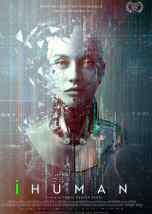
The documentary delves into the captivating world of Artificial Intelligence, exploring its rapid advancements, societal impact, and ethical dilemmas. Through interviews with experts, it highlights the potential for AI to learn like humans, revolutionizing our work and creations. It also raises critical questions about its regulation, the dangers of military applications, and the need for international cooperation. This thought-provoking documentary offers a deep dive into the AI revolution and the profound implications it holds for our future, making it a must-watch for anyone intrigued by the intersection of technology, ethics, and society. iHUMAN is a political thriller about artificial intelligence, power and social control. With unparalleled access to the inside of the booming AI industry, this film shows how the most powerful and far-reaching technology of our time is changing our lives, our society and our future.








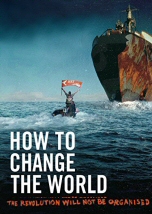







Using never before seen archive that brings their extraordinary world to life, How To Change The World is the story of the pioneers who founded Greenpeace and defined the modern green movement.