In the final three episodes, the investigation takes a decisive turn when the Frankfurt luggage records and bomb-damaged clothing recovered from the wreckage lead Scottish detectives to Malta. A small clothes shop and the memory of a mysterious customer begin to connect the bomb to a wider international network, while cooperation between Scottish police, the FBI and the CIA becomes increasingly strained. As investigators follow the trail toward Libya, a secret CIA source and similarities with another aircraft bombing appear to offer the breakthrough they have been searching for. More than a decade after Pan Am Flight 103 was destroyed, the case finally reaches the courtroom. Following years of political negotiation, two Libyan suspects stand trial under Scottish law at Camp Zeist in the Netherlands. But the prosecution still depends on fragile witness testimony and painstaking forensic evidence assembled across several countries. As key witnesses are challenged and doubts emerge, the series builds toward a tense question that has haunted the victims’ families since 1988: will the investigation finally deliver justice?
As artificial intelligence accelerates at a breathtaking pace, filmmaker Daniel Roher sets out to understand whether humanity is approaching an extraordinary new era or a catastrophe of its own making. What begins as a personal investigation becomes far more urgent when he and his wife learn they are expecting a child. Faced with predictions ranging from revolutionary medical breakthroughs and powerful new tools for creativity to mass unemployment, deepfakes, autonomous systems and even existential risk, he asks some of the world’s leading AI thinkers a deceptively simple question: should we be excited about the future, or terrified of it? The film explores how generative AI works, why its capabilities are advancing so quickly and what could happen if increasingly powerful systems become difficult to control. Experts debate AI safety and alignment, the race between competing companies, the possibility of machines seeking greater power, and the social consequences of automation and concentrated wealth. At the same time, the documentary confronts the technology’s remarkable promise, from personalized education to scientific discovery and potential cancer treatments. Moving between anxiety and hope, Roher ultimately searches for a way to face an uncertain future not as a pessimist or a blind optimist, but as something in between: an “Apocaloptimist.”
Click CC for subtitles. In the final three episodes of Season 1, Ari fully embraces his identity as Arminius and begins the dangerous task of turning divided Germanic tribes into a force capable of challenging Rome. While Varus believes he has placed a loyal Roman-trained leader at the head of the Cherusci, Arminius secretly works against him. Thusnelda and Folkwin seek support from the Bructeri, and Arminius realizes that defeating three Roman legions will require something almost impossible: convincing rival tribes to put aside their feuds and fight as one people. A political marriage between Arminius and Thusnelda strengthens their cause, while Folkwin, thought dead, is actually alive and enslaved in the Roman camp. Everything then moves toward the confrontation that will change history. Drawing on his intimate knowledge of Roman military tactics, Arminius persuades Varus to lead his legions through the forests and swamps of Germania, where their disciplined formations become a deadly weakness. As mistrust, betrayal and sacrifice threaten the fragile tribal alliance, Thusnelda takes an extreme step to preserve unity and Arminius prepares his ambush. The season culminates in the Battle of the Teutoburg Forest, where three Roman legions are drawn into a trap that will become one of the most devastating defeats in the history of the Roman Empire.
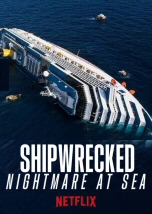
What begins as a dream Mediterranean holiday turns into an unimaginable fight for survival. On the night of January 13, 2012, passengers aboard the luxurious Costa Concordia are dining and putting children to bed when the ship sails dangerously close to the Italian island of Giglio and strikes underwater rocks. As the vessel loses power and begins to flood and tilt, confusion spreads through its glittering corridors. Passengers are initially told there is only an electrical problem, while precious minutes pass before an evacuation is ordered and lifeboats become increasingly difficult to launch. Through extraordinary footage recorded by those on board, black-box communications and deeply personal survivor testimony, the disaster unfolds almost minute by minute: Families desperately searching for a way off the ship, crew members risking their lives to help strangers, passengers trapped as corridors become walls, and rescuers entering the enormous wreck while it threatens to shift beneath them. Behind the terrifying struggle to survive emerges an equally disturbing question—how could a modern cruise ship carrying thousands of people end up on its side just metres from shore? The deaths of 32 people, the actions of Captain Francesco Schettino and the investigation that followed transform one catastrophic night at sea into a gripping story of human courage, fatal decisions and the consequences of failure when every second matters.
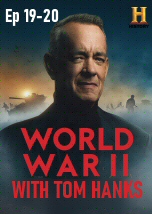
In the final two episodes of this series, the war enters its most devastating and transformative phase. As American forces endure the horrors of Okinawa and Japan refuses to surrender, President Harry Truman faces an almost unimaginable decision: whether to unleash the most terrible weapon ever created. The atomic bombings of Hiroshima and Nagasaki bring the conflict to a shocking end, but victory comes at a cost that will haunt humanity forever. With the Axis defeated, the world attempts to rebuild from unprecedented destruction. Yet the alliance between the United States and the Soviet Union rapidly collapses into suspicion and confrontation. From the division of Germany and the Berlin Blockade to the creation of NATO and the Soviet Union’s first atomic test, former allies become nuclear adversaries. The Second World War is over—but a new and even more dangerous struggle has begun, placing the entire world beneath the shadow of annihilation.
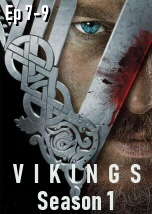
In the final three episodes of Season 1, Ragnar's ambition drives him toward his boldest gamble yet as a daring raid strikes at the heart of one of England's most powerful kingdoms. While victory promises unimaginable wealth and lasting fame, every decision carries devastating consequences, forcing alliances to shift and loyalties to be tested in ways no one expects. As the Vikings make their sacred pilgrimage to Uppsala, faith, sacrifice, and destiny collide in an unforgettable journey that changes the lives of Ragnar, Lagertha, and Athelstan forever. Political intrigue soon follows when Ragnar is sent to negotiate with the dangerous Jarl Borg, where diplomacy hangs by a thread and a single mistake could ignite a brutal conflict. Filled with epic battles, emotional turning points, and unforgettable characters, these episodes deliver a gripping conclusion that leaves you eager for the next season.











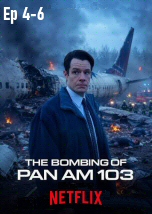







More than a decade after Pan Am Flight 103 was destroyed, the case finally reaches the courtroom. Following years of political negotiation, two Libyan suspects stand trial under Scottish law at Camp Zeist in the Netherlands. But the prosecution still depends on fragile witness testimony and painstaking forensic evidence assembled across several countries. As key witnesses are challenged and doubts emerge, the series builds toward a tense question that has haunted the victims’ families since 1988: will the investigation finally deliver justice?