In 1994, a thirteen year old boy disappeared from San Antonio, Texas. Three and a half years later, he is found alive and well thousands of miles away in a village in southern Spain with a story of kidnapping and torture. His family is overjoyed to bring him home. But all is not quite as it seems. The boy bears many of the same distinguishing marks he always had, but why does he now have a strange accent? Why does he look so different? Any why doesn't the family seem to notice these glaring inconsistencies? It's only when an investigator starts asking questions that this strange tale takes an even stranger turn.
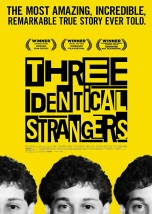
New York, 1980: three complete strangers accidentally discover that they are identical triplets, separated at birth. The 19-year-olds' joyous reunion catapults them to international fame, but it also unlocks an extraordinary and disturbing secret that goes beyond their own lives - and could transform our understanding of human nature forever.
By our third year, most of us will have learned to count. Once we know how, it seems as if there would be nothing to stop us counting forever. But, while infinity might seem like an perfectly innocent idea, keep counting and you enter a paradoxical world where nothing is as it seems. Mathematicians have discovered there are infinitely many infinities, each one infinitely bigger than the last. And if the universe goes on forever, the consequences are even more bizarre. In an infinite universe, there are infinitely many copies of the Earth and infinitely many copies of you. Older than time, bigger than the universe and stranger than fiction. This is the story of infinity.
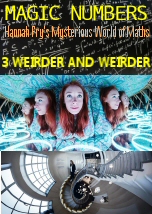
Dr Hannah Fry explores a paradox at the heart of modern maths, discovered by Bertrand Russell, which undermines the very foundations of logic that all of maths is built on. These flaws suggest that maths isn't a true part of the universe but might just be a human language - fallible and imprecise. However, Hannah argues that Einstein's theoretical equations, such as E=mc2 and his theory of general relativity, are so good at predicting the universe that they must be reflecting some basic structure in it. This idea is supported by Kurt Godel, who proved that there are parts of maths that we have to take on faith. Hannah then explores what maths can reveal about the fundamental building blocks of the universe - the subatomic, quantum world. The maths tells us that particles can exist in two states at once, and yet quantum physics is at the core of photosynthesis and therefore fundamental to most of life on earth - more evidence of discovering mathematical rules in nature. But if we accept that maths is part of the structure of the universe, there are two main problems: firstly, the two main theories that predict and describe the universe - quantum physics and general relativity - are actually incompatible; and secondly, most of the maths behind them suggests the likelihood of something even stranger - multiple universes. We may just have to accept that the world really is weirder than we thought, and Hannah concludes that while we have invented the language of maths, the structure behind it all is something we discover. And beyond that, it is the debate about the origins of maths that has had the most profound consequences: it has truly transformed the human experience, giving us powerful new number systems and an understanding that now underpins the modern world.
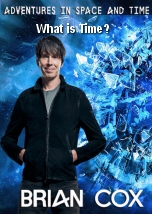
Time i s a concept which is so familiar, and yet recent discoveries have revealed it to be far stranger than we could have possibly imagined. In the final programme in the series, Brian explores the enigma of time - a phenomenon we take for granted but which is one of the biggest mysteries in the universe. He recalls highlights from his TV series that touch upon this conundrum.







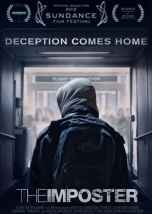



The boy bears many of the same distinguishing marks he always had, but why does he now have a strange accent? Why does he look so different? Any why doesn't the family seem to notice these glaring inconsistencies? It's only when an investigator starts asking questions that this strange tale takes an even stranger turn.