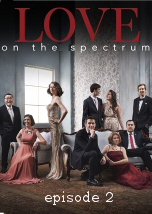
In this second episode, a woman recounts her journey to becoming a mouthpiece for white nationalist hate speech, work that culminates in high-profile violence and murder. Samantha confesses how she became a spokesperson on the Internet for the hate speech of one of the many white nationalist groups that swarm the United States. And this fact ended in racist violence and death during an event. 'I had to start to realize what I was supporting. Was I the victim or was I also a villain?' says Samantha, looking into the camera. Hand in hand with xenophobia, digital true crime seems to have no respite, and so it will be shown how those supremacists work with good Wi-Fi.
Leading authority on the Middle Ages, Professor Robert Bartlett, presents a series which examines the way we thought during medieval times. In the second episode, Bartlett unearths remarkable evidence of the complex passions of Medieval men and women. The Church preached hatred of the flesh, promoted the cult of virginity and condemned woman as the sinful heir to Eve. Yet this was the era that gave birth to the idea of romantic love.
Drawing from over 100 hours of never-before-seen footage that has been tucked away in the National Geographic archives for over 50 years, award-winning director Brett Morgen tells the story of Jane Goodall, a woman whose chimpanzee research challenged the male-dominated scientific consensus of her time and revolutionized our understanding of the natural world. Set to a rich orchestral score from legendary composer Philip Glass, the film offers an unprecedented, intimate portrait of Jane Goodall - a trailblazer who defied the odds to become one of the world's most admired conservationists, her early explorations and research in Tanzania, the relationship with her cameraman and husband Hugo Van Lawick, and the chimpanzees that were the subject of her study.
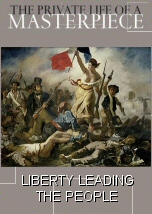
Artists, academics, and critics discuss the historical origins, original reception, and slow climb to critical acclaim for Eugene Delacroix's painting commemorating the Revolution of 1830, 'Liberty Leading the People.' A woman of the people with a phrygian cap personifying the concept of Liberty leads the people forward over a barricade and the bodies of the fallen, holding the flag of the French Revolution – the tricolour, which again became France's national flag after these events – in one hand and brandishing a bayonetted musket with the other. The figure of Liberty is also viewed as a symbol of France and the French Republic known as Marianne.
It's Valentine's Day and Maddi steps out on her first ever date with a romantic man. Kelvin works with a relationship specialist and puts his dating skills to the test. Michael is overwhelmed when he meets the woman of his dreams.
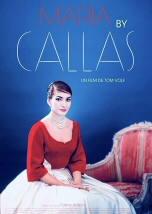
The film depicts the life and work of opera singer Maria Callas in her own words by using performances, TV interviews, home movies, family photographs, private letters and unpublished memoirs nearly all of which have never been shown to the public. Maria by Callas reveals the essence of an extraordinary woman who rose from humble beginnings in New York City to become a glamorous international superstar and one of the greatest artists of all time. Her letters and unpublished memoirs are read by opera singer Joyce DiDonato. (Click CC for subtitles)










'I had to start to realize what I was supporting. Was I the victim or was I also a villain?' says Samantha, looking into the camera. Hand in hand with xenophobia, digital true crime seems to have no respite, and so it will be shown how those supremacists work with good Wi-Fi.