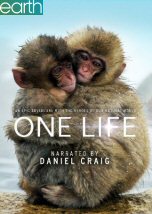
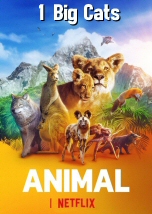
Growing up. Finding food. Seeking shelter. Finding a soul mate. Raising children. These universal themes touch the hearts of audiences everywhere. Parents will do anything to give their kids the best start in life. Witness the epic journey of a tiny poison arrow frog, scaling impossibly high trees to feed her tadpoles in the canopy. As the young grow, they confront the life long search for food. Capuchin monkeys spend up to eight years teaching their young the complex process of preparing a palm nut meal. For those creatures who successfully negotiated all the obstacles to adulthood, it’s time to face the ultimate test: to find a partner and to pass on their genes to the next generation. In what is one of the most spectacular and romantic courtship dances in the world, grebes step out across the surface of a lake in perfect unison. We see so much of ourselves in these different animals, and them in us – intelligence, strength, determination, courage, even love. The stories combine to reveal how every living thing on our planet shares the same desire – not just to live, but to foster new life. Relevant, engaging and above all, amazing. Narrated by Daniel Craig,
Filmed over four years, Our Planet is an eight-part series that combines the spectacular photography of Planet Earth with an unprecedented look at the planet's remaining wilderness areas and their animal inhabitants. With a cornucopia of visual wonder and environmental advocacy, the series explores more of this beautiful, blue marble while presenting an urgent call to action to its inhabitants. In the words of David Attenborough: 'This series will celebrate the natural wonders that remain, and reveal what we must preserve to ensure people and nature thrive'. The first episode explores the planet's breathtaking diversity -- from seabirds carpet-bombing the ocean to wildebeests eluding the wild dogs of the Serengeti.
Blue Planet II explores parts of the ocean that nobody has ever visited, encountered extraordinary animals, and discovered new insights into life beneath the waves. In Our Blue Planet, Sir David Attenborough examines the impact of human life on life in the ocean. In this final episode, we uncover the impact that our modern lives are having on our best-loved characters from across the series, including devoted albatross parents unwittingly feeding their chicks discarded plastic and mother dolphins potentially exposing their new born calves to pollutants through their contaminated milk. Scientists have even discovered that increasing noise levels may stop baby clownfish finding their way home.
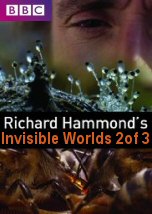
The human eye is a remarkable piece of precision engineering, but it is also extremely limited. Beyond the narrow range of light that makes up the familiar colours of the rainbow is a vast spectrum of light, entirely unseen. Richard Hammond does just that, using ground-breaking new imaging technologies to take the viewer on a breath-taking journey of discovery beyond the visible spectrum, seeing the world, quite literally, in a whole new light. From death-defying aerial repairmen in the United States using ultraviolet cameras to seek out an invisible force that lurks unseen on power lines, to German scientists unlocking the secrets of animal locomotion with the world's most powerful moving x-ray camera, to infrared cameras that can finally reveal the secrets within a humble beehive, he shows how new technologies are letting us see our world anew.
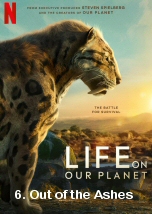
The sixth episode of the series narrates the fascinating story of the evolution and survival of life on our planet after the catastrophic event that marked the end of the era of dinosaurs, 66 million years ago. Through a visually stunning journey, we will see the impact of the meteorite and all its consequences in detail. We will also discover how the animals and plants that survived the mass extinction adapted, evolved, and diversified to fill the ecological niches left by the dinosaurs. From the first mammals and birds that emerged from the ashes to dominate the Earth, to the formation of complex ecosystems in the oceans and on land, the documentary offers a unique vision of the resilience and innovation of life on our planet. With impressive imagery and exciting stories, it reveals how life, against all odds, thrived after one of the most devastating events in Earth's history. This documentary is a testament to the unbreakable strength of life and its ability to adapt and flourish even in the most adverse conditions.
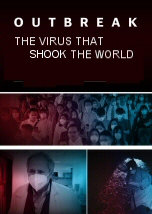
This is the dramatic global story of the first year of COVID-19, tracing the devastation caused by the spread of the virus across four continents. The way in which this coronavirus became COVID-19, transmission from animals to humans, is going on all the time. Habitat loss and live animal trading around the world that foster this is continuing. And therefore, we've got to expect that this will happen again.








For those creatures who successfully negotiated all the obstacles to adulthood, it’s time to face the ultimate test: to find a partner and to pass on their genes to the next generation. In what is one of the most spectacular and romantic courtship dances in the world, grebes step out across the surface of a lake in perfect unison. We see so much of ourselves in these different animals, and them in us – intelligence, strength, determination, courage, even love. The stories combine to reveal how every living thing on our planet shares the same desire – not just to live, but to foster new life. Relevant, engaging and above all, amazing. Narrated by Daniel Craig,