Led by Prince William, founder of The Earthshot Prize and featuring Sir David Attenborough and other members of the Earthshot Prize Council, the series looks past the problems we face and onto the solutions that promise to deliver us all a sustainable world in which both nature and humanity can thrive. In the first episode, David Attenborough introduces us to inspiring people with solutions to help restore nature, and reveals the three finalists of the first ever Earthshot Prize for Nature.
During 1959-1961 both the Americans and Soviets are planning manned space flight, and we see both sides preparing to do so with the development of the Vostok programme (Russia) and Project Mercury (USA). After difficulties and failures on both sides, the Soviets succeed in putting Yuri Gagarin into space first, with the Americans putting Alan Shepard up shortly afterwards.
During 1964-1969 both sides now plan to put a man on the Moon - while the Soviets struggle, the Americans pull ahead in the space race with Project Gemini, but then suffer a disaster with the Apollo 1 fire. The Soviet space programme suffers its own blows: Sergei Korolev dies when his heart fails during an operation, Soyuz 1 crashes and kills cosmonaut Vladimir Komarov, and their planned moon rocket, the N-1 rocket, fails to successfully launch. In America, von Braun has difficulties with the Saturn V, but they are overcome, and the rocket successfully launches the first manned lunar mission, Apollo 8, and the first manned lunar landing, Apollo 11.
The fourth episode plunges us into the heart of the jungle for an exciting story of power, politics, and survival. Days after a fierce battle with Western rivals, Jackson, the alpha male, grapples with the aftermath of his injuries. The strength of an alpha is paramount, and physical frailty can quickly translate into political vulnerability. While Jackson's allies waver, Abrams and Wilson see a golden opportunity to seize control.
As Abrams makes strategic moves against Jackson, the forest resonates with news of the ongoing power struggle, attracting the attention of external threats. Battles for leadership are perilous, with uncertain outcomes for both the reigning alpha and the ambitious challenger. This episode promises an intriguing exploration of chimpanzee society and their relentless pursuit of dominance.
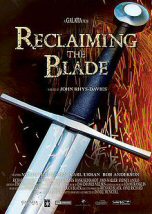
Filmmaker Daniel McNicoll explores the emerging movement to reclaim the ancient medieval and renaissance martial arts in this documentary narrated by Welsh actor John Rhys-Davies, and produced on corroboration with Lord of the Rings director Peter Jackson. The Medieval and Renaissance blade was a remarkable weapon crafted with the utmost attention to detail. Though the history of the sword remains largely shrouded in mystery for younger moviegoers, their presence on the big screen can still be felt in the Star Wars saga, as well as films like Chronicles of Narnia and The Pirates of the Caribbean. Join host Davies as he traces the history of this remarkable weapon throughout the ages, in the process giving us a better understanding of the sword's unique role in both history, and films.
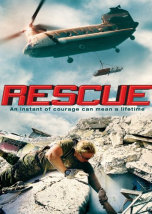
The film captures the dynamics and drama of disaster response, giving the audience an insiders view of a truly remarkable force for good in a world that is increasingly in need of it. From the individual civilian at risk for their life adrift at sea to a massive natural disaster threatening thousands of lives, there is a mechanism and resources in place to help save lives. Oddly, the instrument of hostility, the military, is even more often the instrument for saving civilian lives on both a smaller and larger scale. Disaster Response commands are in place to deploy appropriate resources to trouble spots at a moment's notice, often requiring split second decisions with many lives at stake.

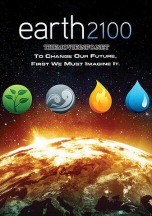



In the first episode, David Attenborough introduces us to inspiring people with solutions to help restore nature, and reveals the three finalists of the first ever Earthshot Prize for Nature.